Caregiving Conversation & Addressing (Situation-Specific Phrases and Reporting, Contacting, Consulting)
介護の会話・声かけ(場面別の声かけと報告・連絡・相談)
Nursing Care · 介護 - Kaigo · Written by Tokutei Pass based on the official study texts; not copied verbatim.
声かけの基本原則(丁寧語・自立支援・自己決定・事前説明)
Core Principles of Addressing Users (Polite Speech, Independence Support, Self-Determination, Prior Notice)
利用者への「声かけ」では、相手への敬意を表すため、常に「〜です・〜ます」「〜ましょうか」「〜てくださいね」「〜ていただけますか」などの丁寧な言葉遣い(丁寧語)で話します。「早く座って」のような命令口調やため口は使いません。
When addressing care users (Koe-kake), always use polite speech (Teineigo) such as ~desu, ~masu, ~mashouka (shall we ~?), ~te kudasaine, and ~te itadakemasuka (could you please ~?) to show respect. Never use commanding tones like 'Sit down quickly' or casual slang.
「自立支援」の基本として、介護職が最初からすべて手を出すのではなく、まず「ご自分で〜できますか」と確かめ、利用者が難しい部分に「お手伝いしましょうか」と声をかけて支えます。
As the foundation of Independence Support (Jiritsu shien), do not do everything for the user from the start; first ask Go-jibun de ~ dekimasuka (Can you do ~ by yourself?) and offer help only for difficult parts by saying Otetsudai shimashouka (Shall I help you?).
また「どの服を着ますか」「お飲み物は何にしますか」のように利用者自身に選んでもらい、「〜してもよろしいですか」と同意を得る「自己決定の尊重」を大切にします。
Respect the user's self-determination (Jiko kettei) by asking them to choose—such as 'Which clothes would you like to wear?' or 'What would you like to drink?'—and obtain consent beforehand with ~ shitemo yoroshii desuka (May I ~?).
からだに触れる前や車いすを動かす前には、驚かせないよう必ず「これから〜しますね」と事前に伝えます。ケアの最中や終わったあとも「ご気分はいかがですか」「痛みはありませんか」と確認します。
Before touching a user's body or moving a wheelchair, always give prior notice by saying Korekara ~ shimasune (I am going to ~ now) so you do not startle them. During and after care, check their condition with Go-kibun wa ikaga desuka (How do you feel?) or Itami wa arimasenka (Do you have any pain?).
Key points
- 利用者には常に丁寧語(「〜ましょうか」「〜ていただけますか」)で話し、命令形や乱暴な言い方は使わない。
Always speak to users in polite form (~mashouka, ~te itadakemasuka) and never use imperative or rough language. - まず「ご自分で〜できますか」と確かめてできる部分は見守り、難しい部分に「お手伝いしましょうか」と声をかける。
First ask Go-jibun de ~ dekimasuka to watch over what they can do, and offer Otetsudai shimashouka for parts that require help. - 動作の前には「これから〜しますね」と予告し、ケア中・ケア後は「体調(ご気分)はいかがですか」と状態を確かめる。
Give prior notice before any action with Korekara ~ shimasune, and check how the user feels with Taichou (Go-kibun) wa ikaga desuka.
| Word | Meaning |
|---|---|
| 声かけ・丁寧語(〜です・〜ます) | Addressing users (Koe-kake) and Polite speech (Teineigo: ~desu, ~masu) |
| ご自分で〜できますか(自立支援の声かけ) | Can you do ~ by yourself? (Go-jibun de ~ dekimasuka) |
| お手伝いしましょうか(介助の申し出) | Shall I help you? (Otetsudai shimashouka) |
| 〜してもよろしいですか(同意の確認) | May I do ~? (~ shitemo yoroshii desuka) |
| これから〜しますね(動作前の予告) | I am going to do ~ now (Korekara ~ shimasune) |
| ご気分(体調)はいかがですか | How are you feeling? (Go-kibun / Taichou wa ikaga desuka) |
起居・移乗・車いす移動の声かけ(起き上がり・靴履き・段差と坂道)
Addressing Users for Getting Up, Transfers, and Wheelchair Mobility (Shoes, Steps, and Slopes)
ベッドから車いすへ移るときは、まず「ご自分でベッドから起き上がれますか」と尋ねます。利用者が一人で起き上がって端座位になり、「靴を履くのを手伝ってください」と頼まれたら、「はい、お手伝いしますね」と靴を履かせます。
When transferring from a bed to a wheelchair, first ask: Can you sit up from the bed by yourself? (Bed kara okiagaremasuka). If the user sits up alone on the edge of the bed and asks for help putting on shoes, reply: Yes, let me help you and assist with their shoes.
立ち上がって車いすへ移乗するときは、「車いすのブレーキをかけますね」と安全を確かめ、「私の肩につかまってください」「手すりを握ってくださいね」と声をかけてゆっくり座ってもらいます。
When standing up to transfer into the wheelchair, ensure safety by saying: I am locking the wheelchair brakes now (Kurumaisu no brake wo kakemasune), then guide them gently: Please hold onto my shoulders or Please grip the handrail as they sit down slowly.
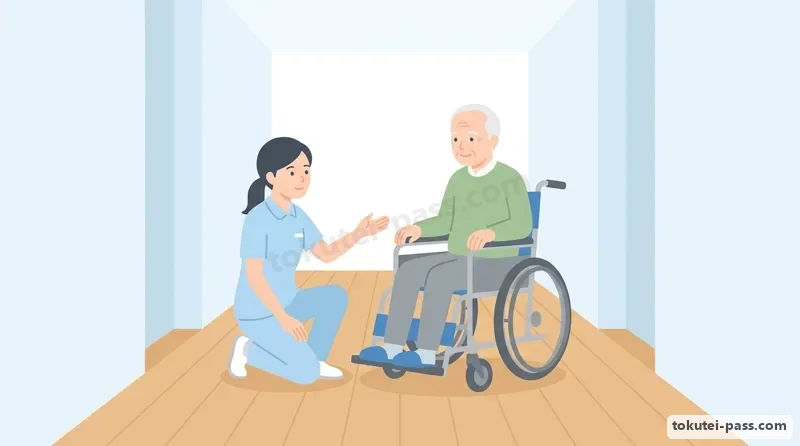
車いすで移動するときは、足をフットサポートにのせたあと、目線を合わせて「これから車いすを押しますよ」「動きますよ」と必ず声をかけてから静かに出発します。
Before moving in a wheelchair, place the user's feet on the foot supports, make eye contact, and always announce: I am going to push the wheelchair now (Korekara kurumaisu wo oshimasuyo) before starting smoothly.
段差を上がるときは「前輪を上げますね。少し傾きますよ」と伝えます。急な坂道を下りるときは前向きだと危険なため、「後ろ向きでゆっくり下りますね」と声をかけて介護職が下側に立ち後ろ向きで進みます。
When going up a step or curb (Dansa), say: I am going to lift the front wheels now; it will tilt slightly. When going down a steep slope (Sakamichi), going forward is dangerous, so say: We will go down slowly facing backward (Ushiromuki de yukkuri orimasune) while standing below the wheelchair.
Key points
- 起き上がりは本人ができるか確かめ、靴を履く手伝いや肩・手すりにつかまる誘導を丁寧に行う。
Check whether the user can sit up on their own, assist with putting on shoes when asked, and guide them to hold onto your shoulders or the handrail. - 車いすを押す前には必ず「車いすを押しますよ」と声をかけ、突然動かして驚かせないようにする。
Always announce Kurumaisu wo oshimasuyo before pushing a wheelchair so the user is never startled by sudden movement. - 段差では「前輪を上げますね」、坂道を下りるときは「後ろ向きでゆっくり下りますね」と伝えて安全に操作する。
Announce lifting the front wheels at a step, and say Ushiromuki de yukkuri orimasune when descending a slope backward.
| Word | Meaning |
|---|---|
| ベッドから起き上がれますか | Can you sit up from the bed? (Bed kara okiagaremasuka) |
| 靴を履くのを手伝いましょうか | Shall I help you put on your shoes? (Kutsu wo haku no wo tetsudaimashouka) |
| 肩につかまる・手すりを握る | Hold onto my shoulder (Kata ni tsukamaru), Grip the handrail (Tesuri wo nigiru) |
| 車いすを押しますよ(出発前の声かけ) | I am going to push the wheelchair now (Kurumaisu wo oshimasuyo) |
| 段差を上がりますね(前輪を上げる) | We are going up the step now / Lifting the front wheels (Dansa wo agarimasune) |
| 後ろ向きでゆっくり下りますね(坂道の下り) | We will go down slowly facing backward (Ushiromuki de yukkuri orimasune) |
歩行練習・杖歩行・外出(散歩とシルバーカー)の声かけ
Addressing Users for Walking Practice, Cane Walking, and Outings (Walks and Silver Car)
機能訓練室や廊下で手すりを使って歩く練習をするときは、「足の痛みはありませんか」「手すりをしっかり握って、ゆっくり歩きましょう」と声をかけ、疲れたらすぐに椅子を持ってきて休んでもらいます。
During walking practice using a handrail in the functional training room or hallway, ask: Do you have any pain in your legs? (Ashi no itami wa arimasenka) and encourage them: Please grip the handrail firmly and walk slowly. If they get tired, immediately bring a chair for them to rest.
片麻痺のある利用者が杖を使って平らな床を歩く(三動作歩行)ときは、健側の手に杖を持ち、「はじめに杖を前に出して、次に患側(麻痺側)の足、そして最後に健側の足を出しますよ」と順番を伝えます。
When a user with hemiplegia walks on a flat floor with a cane (three-step gait), they hold the cane in the unaffected hand (Kensoku), and the caregiver guides the exact order: First place the cane forward, next step with your affected leg (Kansoku), and finally step with your unaffected leg (Kensoku).
階段を上がるときは「杖→健側の足→患側の足」、階段を下りるときは「杖→患側の足→健側の足」の順になるため、患側と健側を逆に言わないよう注意します。
When going up stairs, the order is Cane -> Unaffected leg -> Affected leg; when going down stairs, the order is Cane -> Affected leg -> Unaffected leg. Be careful never to mix up Kansoku (affected side) and Kensoku (unaffected side).
天気のよい昼食後などに散歩へ誘うときは、「いい天気ですから、外へ散歩に行きませんか」と声をかけます。利用者がシルバーカーを使う場合は、「玄関にシルバーカーを用意しておきますね」と伝えて準備します。
When inviting a user for a walk after lunch on a sunny day, say: The weather is lovely, so would you like to go outside for a walk?. If the user uses a Silver car (senior pushcart), tell them: I will prepare your Silver car at the entrance (Genkan).
Key points
- 歩行練習中は「足の痛みはありませんか」と確かめ、疲れたときは無理をさせず椅子で休んでもらう。
During walking practice, check whether the user has leg pain and bring a chair immediately if they feel tired. - 平地の杖歩行の声かけは「①杖→②患側の足→③健側の足」の順番であることを正確に覚える。
Remember the exact verbal cue for cane walking on flat ground: (1) Cane forward -> (2) Affected leg (Kansoku) -> (3) Unaffected leg (Kensoku). - 散歩に誘うときは天気や体調に合わせて提案し、玄関にシルバーカーや靴を用意して安全に誘導する。
Invite users for walks according to weather and condition, and prepare their Silver car or shoes at the entrance (Genkan).
| Word | Meaning |
|---|---|
| 足の痛みはありませんか | Do you have any pain in your legs? (Ashi no itami wa arimasenka) |
| はじめに杖、次に患側の足、そして健側の足 | First the cane, next the affected leg, and then the unaffected leg |
| 椅子を持ってきますから休みましょう | I will bring a chair so let's take a rest |
| いい天気ですから散歩に行きませんか | The weather is nice, so would you like to go for a walk? |
| 玄関にシルバーカーを用意しますね | I will prepare your Silver car at the entrance (Genkan) |
| ゆっくり歩いてくださいね | Please walk slowly (Yukkuri aruite kudasaine) |
食事の声かけ①:食事開始・食具の変更・選択メニューと温冷確認
Mealtime Addressing 1: Starting Meals, Changing Utensils, Menu Choices, and Hot/Cold Checks
食事を始めるときは、唾液を出して口の中を潤し飲み込みやすくするため、「まずお茶(または汁物)から飲んでみましょうか」と声をかけ、献立の内容や食器の位置をわかりやすく説明します。
When starting a meal, encourage saliva secretion and moisten the mouth for easier swallowing by saying: Shall we start by drinking some tea (or soup) first? (Mazu ocha kara nonde mimashouka), and clearly explain the menu items and dish positions.
食事中に利用者があまり食べていないときは理由を尋ねます。「右手が痛くて箸が持てない」と言われたときは、すぐに全部食べさせるのではなく、「スプーンを持ってきますね」と道具を工夫して自分で食べられるよう支援します。
If a user is eating very little during a meal, gently ask the reason. If they say: My right hand hurts so I cannot hold chopsticks, do not immediately feed them everything; instead say: I will bring a spoon for you (Spoon wo motte kimasune) so they can eat by themselves.
特別メニューやデザートを選べる日には、「今日の昼食は天ぷらとハンバーグがありますが、どちらになさいますか」「デザートはプリンとゼリーのどちらがよろしいですか」と尋ねて選んでもらいます。
On days with selectable menus or desserts, ask the user to choose: For lunch today we have Tempura and Hamburger steak; which would you prefer? or For dessert, would you like pudding or jelly?.
食後の飲み物を聞くときも、「冷たい麦茶と温かい紅茶のどちらがいいですか」と温度と種類を確かめます。また汁物が冷めているときは「温めましょうか」、熱すぎるときは「少し冷ましましょうか」と声をかけます。
When asking about after-meal drinks, confirm both temperature and type: Would you prefer cold barley tea (Tsumetai mugicha) or warm black tea (Atatakai koucha)?. If soup has cooled down, ask: Shall I warm it up? (Atatamemashouka), and if it is too hot, ask: Shall I cool it down a little? (Sukoshi samashimashouka).
Key points
- 食事開始時は誤嚥予防のため「お茶から飲んでみましょうか」と声をかけて口の中を潤す。
At the start of a meal, suggest drinking tea or soup first (Ocha kara nonde mimashouka) to moisten the mouth and prevent aspiration. - 手が痛くて箸が使えないときは「スプーンを持ってきますね」と提案し、自分で食べる力(自立支援)を支える。
When hand pain prevents chopstick use, offer to bring a spoon (Spoon wo motte kimasune) to support independent eating. - メニューや飲み物は本人に選んでもらい、「温める(冷めたとき)」と「冷ます(熱いとき)」を逆にしないよう注意する。
Let the user choose menu items and drinks, and never confuse Atatameru (warming up cold food) with Samasu (cooling down hot food).
| Word | Meaning |
|---|---|
| お茶から飲んでみましょうか | Shall we try drinking some tea first? (Ocha kara nonde mimashouka) |
| スプーンを持ってきますね(食具の工夫) | I will bring a spoon for you (Spoon wo motte kimasune) |
| 天ぷらとハンバーグのどちらになさいますか | Which would you prefer, Tempura or Hamburger steak? |
| 冷たい麦茶と温かい紅茶 | Cold barley tea (Tsumetai mugicha) and Warm black tea (Atatakai koucha) |
| 温めましょうか・少し冷ましましょうか | Shall I warm it up? (Atatamemashouka) / Shall I cool it down a little? (Sukoshi samashimashouka) |
| 一口大に切りましょうか | Shall I cut it into bite-sized pieces for you? |
食事の声かけ②:下膳・食後の座位保持とリーダーへの報告(むせ・とろみ)
Mealtime Addressing 2: Clearing Dishes, Post-Meal Sitting Posture, and Reporting to the Leader
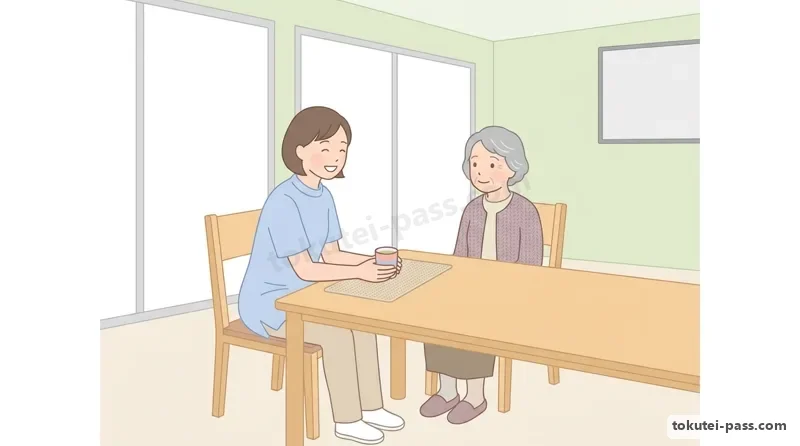
食事が終わったように見えても、黙って食器を片付けてはいけません。必ず「お食事を終わりにしますか」「ごちそうさまでした。食器を下げますね」と本人に確認してから下膳します。
Even when a user appears to have finished eating, never clear the tray silently. Always confirm with the user first by asking: Would you like to finish your meal now? (Oshokuji wo owari ni shimasuka) and saying: I will clear the dishes now (Shokki wo sagemasune).
食後すぐにベッドで横になると、胃の中の食べ物が逆流して誤嚥や胸やけを起こしやすく危険です。そのため「食後は30分ほどそのまま座って休みましょうね」と声をかけて座位を保ちます。
Lying down in bed immediately after eating is dangerous because stomach contents can reflux and cause aspiration or heartburn. Therefore, encourage the user: Let's stay seated and rest for about 30 minutes after the meal to maintain a sitting posture.
食事中に利用者が「お茶やみそ汁を飲むとむせる」様子が見られたときは、食事量とあわせて「Aさんは全部食べましたが、お茶やみそ汁を飲むとむせることがあります」とリーダーや看護師へ正確に報告します。
If you observe a user coughing or choking when drinking tea or miso soup during a meal, accurately report both intake amount and symptoms to the Leader or Nurse: Ms. A ate all her food, but she sometimes chokes when drinking tea or miso soup (museru koto ga arimasu).
リーダーから「むせを防ぐために、お茶にとろみをつけたほうがいいですね。また食べた量と水分量を必ず記録してください」と指示を受けたら、「はい、わかりました。とろみをつけて、量を記録します」と復唱して実行します。
When the Leader instructs: To prevent choking, it is better to add thickener (Toromi) to her tea, and please be sure to record the amount of food and fluids consumed, repeat the instruction to confirm: Yes, I understand. I will add thickener and record the amounts and carry it out.
Key points
- 下膳のときは無言で片付けず、「お食事を終わりにしますか」「食器を下げますね」と確認する。
Before clearing dishes, always ask Oshokuji wo owari ni shimasuka and say Shokki wo sagemasune rather than clearing silently. - 逆流や誤嚥を防ぐため、食後はすぐに寝かせず30分程度座った姿勢(座位)を保つよう声をかける。
To prevent reflux and aspiration, advise the user to remain seated for about 30 minutes after eating. - 水分でむせる様子はリーダーへ報告し、指示に従って「とろみをつける」対応と「食事量・水分量の記録」を行う。
Report choking on liquids to the Leader or Nurse, follow instructions to add thickener (Toromi), and always record food and fluid intake.
| Word | Meaning |
|---|---|
| お食事を終わりにしますか | Would you like to finish your meal? (Oshokuji wo owari ni shimasuka) |
| 食器を下げますね(下膳の声かけ) | I will clear the dishes now (Shokki wo sagemasune) |
| 食後しばらく座って休みましょう | Let's stay seated and rest for a while after eating |
| お茶やみそ汁を飲むとむせることがあります | She sometimes chokes when drinking tea or miso soup |
| とろみをつけたほうがいいですね | It is better to add thickener (Toromi) |
| 食べた量を必ず記録してください | Please be sure to record the amount eaten |
排泄の声かけ(食前のトイレ誘導・呼び出しボタン・尿器とお尻の発赤報告)
Excretion Addressing (Pre-Meal Toilet Guidance, Call Button, Urinal, and Reporting Redness)
散歩から帰ってすぐ食堂へ入ろうとする利用者にトイレを勧めるときは、周囲の人に聞こえないよう配慮しながら、「お食事の前にトイレに行ったほうが安心ですよ。いっしょに行きましょうか」とやさしく声をかけます。
When a user returns from a walk and is about to enter the dining hall directly, consider their modesty so others do not overhear and gently suggest: You will feel more at ease if you use the restroom before the meal. Shall we go together?.
トイレの中まで誘導し、「ズボンを下げますね」と声をかけて便座に安定して座ったことを確かめたら、「終わったらこの呼び出しボタンを押して知らせてくださいね。ドアの外で待っています」と伝えて退室します。
After guiding the user into the restroom, saying: I will pull your pants down now (Zubon wo sagemasune), and confirming they are seated stably on the toilet seat (Benza), instruct them: Please press this call button (Yobidashi button) to let me know when you finish. I will wait outside the door.
夜中や腰痛があるときに「腰が痛くてトイレまで歩けない」と言われたときは、我慢させたり無理に歩かせたりせず、「ベッドのそばのポータブルトイレを使いましょうか」「ベッドの上で尿器を使いましょうか」と提案します。
At night or when a user has lower back pain and says: My back hurts so I cannot walk to the restroom, do not force them to walk or hold it in; instead suggest: Shall we use the portable toilet beside the bed? or Shall we use the urinal bottle (Nyouki) in bed?.
排泄介助やおむつ交換のときに臀部(お尻)の皮膚が赤くなっている(発赤)のを見つけたら、「お尻が少し赤くなっていますね。痛いですか」と確認し、褥瘡を防ぐため直ちに「看護師」やリーダーに報告します。
If you notice redness (Hosseki) on the skin of the buttocks (Denbu / Oshiri) during excretion care or diaper change, check with the user: Your bottom is slightly red. Does it hurt?, and report it immediately to the Nurse (Kangoshi) or Leader to prevent a pressure ulcer.
Key points
- 食前のトイレ誘導は羞恥心に配慮し、「食事の前にトイレに行ったほうが安心ですよ」と穏やかに勧める。
When guiding a user to the toilet before a meal, protect their modesty and gently say: Going to the restroom before eating will help you feel at ease. - 便座に座ったあとは「終わったら呼び出しボタンを押して知らせてください」と伝え、ドアを閉めて外で待つ。
After the user sits stably on the toilet seat, explain how to press the call button (Yobidashi button) when done and wait outside the closed door. - 腰痛時は「尿器」や「ポータブルトイレ」を提案し、お尻の発赤を見つけたら本人に痛みを確かめて看護師へ報告する。
Suggest a Nyouki or Portable toilet when back pain prevents walking, and immediately report any buttock redness (Hosseki) to the Nurse.
| Word | Meaning |
|---|---|
| 食事の前にトイレに行ったほうが安心ですよ | You will feel more at ease if you use the restroom before the meal |
| ズボンを下げますね・ズボンを上げますね | I will pull your pants down now / I will pull your pants up now |
| 終わったら呼び出しボタンを押して知らせてください | Please press the call button (Yobidashi button) to let me know when you finish |
| そのままお待ちくださいね(ドアの外で待つ) | Please wait just as you are (waiting outside the door) |
| 尿器(またはポータブルトイレ)を使いましょうか | Shall we use the urinal bottle (Nyouki) or portable toilet? |
| お尻がちょっと赤くなっていますね(看護師への連絡) | Your bottom is a little red (Report to the Nurse) |
みじたく・更衣の声かけ(服選び・脱健着患・歯痛対応・整髪)
Grooming and Dressing Addressing (Choosing Clothes, Dakken Chakkan, Toothache, and Hair Care)
朝の着替えや外出前には、「今日は少し寒いですが、どのセーターを着ますか」と本人に選んでもらいます。「娘にもらった引き出しの黄色いセーターを着たい」と言われたら、それを持ってきて着替えたあとに「とてもお似合いですよ」と声をかけます。
During morning dressing or before going out, let the user choose their clothes: It is a little chilly today; which sweater would you like to wear?. If the user wants to wear the yellow sweater in the drawer gifted by their daughter, bring it and compliment them after dressing: It looks wonderful on you (Totemo oniai desuyo).
左片麻痺のある利用者が上着を着るときは、「脱健着患(着るときは患側から)」の原則に従い、「まず左(患側)の袖を通しますね。次にご自分で右(健側)の袖を通していただけますか」と声をかけ、最後に「着心地はいかがですか」と確認します。
When a user with left-side hemiplegia puts on a jacket or top, follow the principle of Dakken chakkan (dress the affected side first): First I will put your left (affected) arm through the sleeve. Next, could you put your right (unaffected) arm through by yourself?, and finish by asking: How does it feel to wear? (Kigokochi wa ikaga desuka).
口腔ケアのときに利用者が「きのうの夜から歯が痛いから歯を磨きたくない」と言ったときは、無理に歯ブラシを使わず、「今日は水で口をゆすぐだけにしましょう。歯医者に診察してもらいますから、看護師に伝えますね」と対応します。
During oral care, if a user says: My tooth has been hurting since last night so I don't want to brush my teeth, do not force brushing; respond: Let's just rinse your mouth with water today (Kuchi wo yusugu dake ni shimashou). I will inform the Nurse so you can be examined by a dentist.
また歯磨きのあとに口の中を見て食べかすが残っていたら、うがいやスポンジブラシで丁寧に取り除きます。洗髪後は「ドライヤーで髪を乾かしますね」と乾かし、「くしを渡しますから、ご自分で髪をとかせますか」と声をかけます。
After toothbrushing, check inside the mouth and gently remove any remaining food debris by rinsing or using a sponge brush. After washing hair, say: I will dry your hair with the hair dryer now, and hand them a comb: Here is a comb; can you comb your hair by yourself?.
Key points
- 服選びは本人の希望(家族からのプレゼントなど)を尊重し、着替えたあとは「お似合いですよ」「着心地はいかがですか」と声をかける。
Respect the user's clothing preferences (such as a gift from family), and after dressing say Oniai desuyo and ask Kigokochi wa ikaga desuka. - 片麻痺の更衣では「まず患側の袖を通し、次に健側の袖を通す」声かけを行う(脱ぐときは健側から)。
When dressing a user with hemiplegia, guide the affected arm (Kansoku) into the sleeve first, then ask them to put the unaffected arm (Kensoku) through. - 歯が痛いときは無理に磨かず「口をゆすぐ(うがい)」だけにして、看護師へ報告し歯科受診(診察)につなげる。
When a user has a toothache, have them rinse their mouth with water (Kuchi wo yusugu) instead of brushing, and report to the Nurse for a dental checkup.
| Word | Meaning |
|---|---|
| どのセーターを着ますか・お似合いですよ | Which sweater would you like to wear? / It looks great on you |
| 左(患側)の袖を通しますね | I will put your left (affected) arm through the sleeve now |
| ご自分で右(健側)の袖を通していただけますか | Could you put your right (unaffected) arm through the sleeve by yourself? |
| 着心地はいかがですか | How does it feel to wear? / Is it comfortable? (Kigokochi wa ikaga desuka) |
| 今日は口をゆすぎましょう・歯医者に診察してもらいますか | Let's just rinse your mouth today / Would you like a dentist to examine it? |
| ドライヤーで髪を乾かす・くしで髪をとかす | Dry hair with a hair dryer (Dryer) / Comb hair with a comb (Kushi) |
入浴・清拭・部分浴の声かけ①:体調確認・室温とお湯の温度調整
Bathing and Bed Bath Addressing 1: Health Check, Room Temperature, and Water Temperature
入浴前にリーダーから「看護師がAさんは入浴できると言いましたが、入浴の前にもう一度Aさんに体調を確かめてください」と指示されたら、「はい、入浴前にAさんに体調を確認します」と復唱し、本人に「ご気分はいかがですか」と尋ねます。
Before bathing, if the Leader instructs: The Nurse said Mr. A can take a bath today, but please check Mr. A's physical condition with him once more before bathing, repeat to confirm: Yes, I will check Mr. A's condition before bathing, and ask the user: How are you feeling today?.
居室で清拭(からだを拭くケア)を始める前に、利用者が「部屋が少し寒い」と言ったときは、すぐに服を脱がせず、「エアコンをつけて部屋を暖かくしますね。暖かくなってから拭きましょう」と室温を整えます。
Before starting a bed bath (Seishiki) in a user's room, if the user says: The room is a bit cold, do not undress them right away; say: I will turn on the air conditioner (Aircon) to warm up the room. Let's wipe your body after it gets warm.
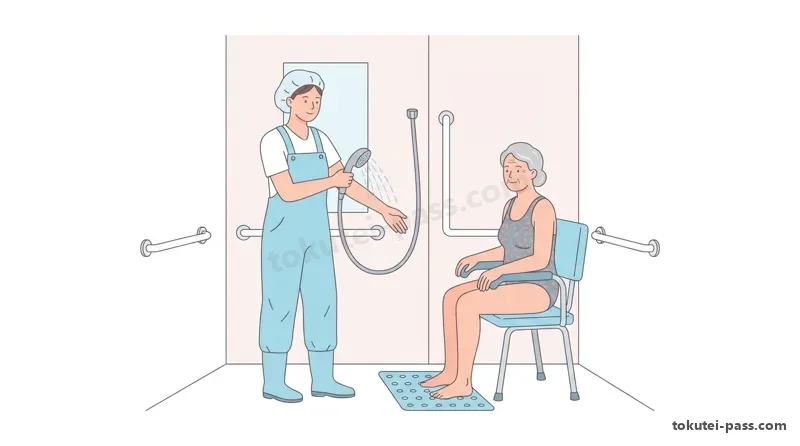
浴室でシャワーやかけ湯をするときは、まず介護職が自分の手にお湯をかけて温度を確かめてから、足先にかけつつ「お湯をかけますね。お湯の温度はいかがですか」と声をかけます。利用者が「少しぬるいです」と言ったら、「少し熱く(温かく)しますね」と調整します。
In the bathroom, always test the shower water temperature on your own hand first, then pour water from the feet while asking: I am pouring warm water now. How is the water temperature? (Oyu no ondo wa ikaga desuka). If the user says: It is a little lukewarm (Sukoshi nurui desu), reply: I will make it a little warmer for you.
浴槽から出るときや浴室を歩くときは、床が濡れて転倒しやすいため、「浴室の床が滑りやすいですから、手すりにつかまってゆっくり歩いてくださいね」と声をかけて支えます。
When getting out of the bathtub or walking in the bathroom, the wet floor is very slippery, so support the user and remind them: The bathroom floor is slippery, so please hold onto the handrail and walk slowly.
Key points
- 看護師の許可があっても、入浴直前には必ず利用者本人に「体調(ご気分)はいかがですか」と確認する。
Even when the Nurse has approved bathing, always reconfirm the user's physical condition directly with the user right before bathing. - 清拭前に部屋が寒いときは「エアコンをつけますね」と室温を暖め、お湯が「ぬるい」と言われたら「少し温かく(熱く)しますね」と調整する。
Warm up a chilly room with the air conditioner before a bed bath, and adjust the water warmer if the user says it feels lukewarm (Nurui). - 浴室では「床が滑りやすいですから、ゆっくり歩いてくださいね」と声をかけて転倒を防ぐ。
In the bathroom, prevent falls by reminding the user: The floor is slippery, so please walk slowly.
| Word | Meaning |
|---|---|
| 入浴前にもう一度体調を確認します | I will check your physical condition once more before bathing |
| エアコンをつけて部屋を暖かくしますね | I will turn on the air conditioner to warm up the room |
| お湯をかけますね・お湯の温度はいかがですか | I am pouring warm water now / How is the water temperature? |
| 少しぬるいですか・少し熱くしますね | Is it a little lukewarm? / I will make it a little warmer |
| 床が滑りやすいですから、ゆっくり歩いてくださいね | The floor is slippery, so please walk slowly |
| お風呂のあとにお茶を飲んで水分補給をしましょう | Let's drink some tea to rehydrate after your bath |
入浴・清拭・部分浴の声かけ②:皮膚観察・洗髪・足浴とリーダーの指導
Bathing and Bed Bath Addressing 2: Skin Observation, Hair Washing, Foot Bath, and Leader Guidance
入浴や着替えのときに、利用者が「きのうより背中が赤くてかゆい」と言ったときは、自己判断でそのまま入浴させたり薬を塗ったりせず、「背中を見せてくださいね。お風呂に入る前に看護師に相談しますね」と伝えます。
During bathing preparation or dressing, if a user says: My back is redder and itchier than yesterday, do not let them bathe or apply ointment on your own judgment; say: Let me check your back. Before taking a bath, I will consult the Nurse (Kangoshi).
利用者が「先週から髪を洗っていないので頭がかゆい」と話したときは、「今日はシャンプーでしっかり髪を洗いましょうね。かゆいところはありませんか」と声をかけて丁寧に洗髪します。
If a user says: My head is itchy because I haven't washed my hair since last week, respond warmly: Let's wash your hair thoroughly with shampoo today. Please tell me if any spot feels itchy and wash their hair carefully.
風邪ぎみなどで全身の入浴ができない日には、「今日はお風呂をお休みして、温かいお湯で足を洗う足浴をしましょうか」「温かいタオルでからだを拭きましょうか(清拭)」と提案します。
On days when a user has a mild cold and cannot take a full bath, suggest an alternative: Today let's skip the bath and soak your feet in warm water (Sokuyoku) instead? or Shall I wipe your body with a warm towel (Seishiki)?.
また清拭の手順についてリーダーから「顔を拭くときは、温かいタオルで目頭から目尻に向かってやさしく拭いてください」と指導を受けたら、方向を間違えないよう目頭から目尻へと拭きます。
When the Leader instructs on facial wiping technique: When wiping the user's face, gently wipe with a warm towel from the inner corner of the eye (Megashira) toward the outer corner (Mejiri), be sure to follow the exact direction from Megashira to Mejiri.
Key points
- 背中の発赤やかゆみが強くなっているときは、入浴前に必ず「看護師に相談・報告」して指示を仰ぐ。
If redness or itching on the back is worse than yesterday, always consult and report to the Nurse before bathing. - 洗髪時は「かゆいところはありませんか」と声をかけ、入浴できないときは「清拭」や「足浴」を提案する。
Ask about itchy spots while washing hair, and propose a bed bath (Seishiki) or foot bath (Sokuyoku) when full bathing is not possible. - 顔の清拭では、必ず「目頭(鼻側)から目尻(耳側)に向かって」拭く。
When wiping the eyes during facial care, always wipe from the inner corner (Megashira) toward the outer corner (Mejiri).
| Word | Meaning |
|---|---|
| きのうより背中がかゆいですか(皮膚の確認) | Is your back itchier than yesterday? (Checking skin condition) |
| お風呂に入る前に看護師に聞きますね | I will ask the Nurse before you take a bath |
| 今日はしっかり髪を洗いましょうね(洗髪) | Let's wash your hair thoroughly today (Senpatsu) |
| 温かいお湯で足を洗いましょうか(足浴) | Shall we wash your feet in warm water? (Sokuyoku - Foot bath) |
| 温かいタオルでからだを拭きましょうか(清拭) | Shall I wipe your body with a warm towel? (Seishiki - Bed bath) |
| 目頭から目尻に向かって拭く | Wipe from the inner corner of the eye (Megashira) toward the outer corner (Mejiri) |
家事・生活環境・検温・夜間とナースコール・申し送りの会話
Conversations on Housework, Environment, Temperature Check, Night Calls, and Handover
居室の窓を開けて「換気」をしようとしたとき、利用者が「今は寒いから開けないでほしい」と言ったら無理に開けず、「わかりました。あとで食堂に行っているときに換気をしますね」と時間帯を工夫します。
When you are about to open a window for ventilation (Kanki) and the user says: It's cold right now, so please don't open it, do not open it forcibly; adjust the timing by saying: I understand. I will ventilate the room later while you are in the dining hall (Shokudou).
家事では残存機能を活かすため、「いっしょにおしぼりをたたみませんか」「洗濯物のたたみ方を教えてもらえませんか」と誘い、机を拭いてくれたら「テーブルがきれいになりましたね」と感謝を伝えます。また「明日の昼食はいっしょに野菜の煮物と焼き魚を作りましょう」と相談します。
In housework scenes, utilize the user's remaining abilities and strengths by inviting them: Would you like to fold wet hand towels (Oshibori) together? or Ms. A, you are so good at this—could you teach me how to fold the laundry?. When they wipe the table, express gratitude: Thank you very much; the table is nice and clean now. You can also plan tomorrow's cooking together, such as simmered vegetables and grilled fish.
体温測定では「脇に体温計をはさみますね。36度5分です、平熱ですね」と結果を伝えます。夜間の就寝前や巡視時には「おやすみのところすみません」「何かあったらナースコールを押してくださいね」と声をかけます。
When measuring body temperature, say: I will place the thermometer under your arm. It is 36.5 degrees—your normal temperature. Before bedtime or during night rounds, speak softly: Excuse me for disturbing your rest (Oyasumi no tokoro sumimasen). Please press the Nurse call button if you need anything.
ナースコールで「気分が悪い」と呼ばれたら直ちに訪室して様子を確かめ、すぐにリーダーや看護師へ報告します。また職場では出勤時や業務中に「お疲れ様です」、退勤時に「お先に失礼します」と挨拶し、申し送りの指示(「背中の観察」など)を確実に引き継ぎます。
If a user presses the Nurse call saying they feel unwell, visit the room immediately to check on them and report right away to the Leader or Nurse. In the workplace, greet colleagues with Otsukaresama desu during shifts, say Osaki ni shitsurei shimasu when leaving work, and reliably carry out handover instructions (such as observing a user's back).
Key points
- 換気時に利用者が寒がるときは無理に窓を開けず、「食堂に行っているときに換気をしますね」と提案する。
If a user feels cold during ventilation, offer to ventilate later while they are in the dining hall (Shokudou ni itte iru toki ni kanki wo shimasune). - おしぼりや洗濯物たたみ・テーブル拭き・調理などは「いっしょに〜しませんか」「教えてもらえませんか」と誘い、感謝を伝える。
Invite users to join in folding towels or laundry, wiping tables, or cooking with polite invitations and warm gratitude. - ナースコールで体調不良の訴えがあったときはすぐにリーダー・看護師へ報告し、職場の挨拶(「お疲れ様です」「お先に失礼します」)を守る。
Immediately report any unwellness from a Nurse call to the Leader/Nurse, and observe workplace greetings (Otsukaresama desu, Osaki ni shitsurei shimasu).
| Word | Meaning |
|---|---|
| 食堂に行っているときに換気をしますね | I will ventilate the room while you are in the dining hall |
| いっしょにおしぼりをたたみませんか・洗濯物のたたみ方を教えてもらえませんか | Shall we fold Oshibori towels together? / Could you teach me how to fold the laundry? |
| テーブルがきれいになりましたね(感謝の声かけ) | Thank you, the table has become very clean |
| 体温を測りますね・36度5分です | I will measure your temperature now / It is 36.5 degrees |
| おやすみのところすみません・ナースコールを押してくださいね | Excuse me while you are resting / Please press the Nurse call button |
| お疲れ様です・お先に失礼します | Thank you for your hard work (Otsukaresama desu) / Excuse me for leaving first (Osaki ni shitsurei shimasu) |
試験によく出るポイントと覚え方
Frequently Tested Points & Memory Tips
「会話・声かけ」では、場面(食事・入浴・排泄・移乗・居室訪問)ごとに、利用者の意思や体調を尊重する丁寧な声かけを選ぶ問題が出ます。
In 'Conversations & Verbal Cues', questions ask you to choose polite expressions that respect the user's wishes and physical condition across situations (meals, bathing, toileting, transfers, entering rooms).
正解を選ぶ鉄則は「命令形・禁止形・急かす言葉(『早くして』『動かないで』)は必ず誤り」で、「相手の意向を確かめる疑問形・依頼形(『〜しましょうか』『〜はいかがですか』)が正解」というパターンです。
Golden rule for picking the right answer: 'Commands, prohibitions, or rushing phrases (Hurry up, Don't move) are ALWAYS wrong'; 'Polite suggestions or consent-seeking questions (~shimashou ka / ~wa ikaga desu ka / yoroshii desu ka) are right'.
また、職員同士の申し送り・報告の会話では、「結論(いつ・誰が・どうしたか)を簡潔に伝え、リーダーや看護師に指示を仰ぐ表現」を選びましょう。
In staff handovers and reporting dialogues, choose expressions that 'concisely state the facts and numbers (who, when, what happened) and ask the leader or nurse for instructions'.
Key points
- 声かけの基本ルール:「『〜してください』『早く〜して』と一方的に指示せず、『〜しましょうか』『よろしいですか』と本人の同意を得る表現を選ぶ」。
Basic verbal cue rule: 'Avoid one-sided commands or rushing; choose consent-seeking phrases like ~shimashou ka (Shall we...?) or Yoroshii desu ka (Is it alright?)'. - 居室訪問・入室時の定型句:「ノック→『失礼します、〇〇です。入ってもよろしいですか』と名乗り、同意を確認する」。
Standard phrase when entering a room: 'Knock -> Shitsurei shimasu, (Name) desu. Haittemo yoroshii desu ka? (Excuse me, it is (Name). May I come in?)'. - 入浴・清拭・排泄時の声かけ:「『お湯の熱さはいかがですか』『寒くないですか』『お腹の調子はどうですか』と体調や感覚を確かめる」。
Checking comfort during bathing/hygiene: 'Oyu no atsusa wa ikaga desu ka (How is the water temperature?)', 'Samukunai desu ka (Are you cold?)', 'Onaka no choushi wa dou desu ka'. - 体調不良・拒否があるときの対応:「無理に勧めず、『どこか痛みますか』『後にしましょうか』と気持ちを受け止めて状態を観察する」。
When a user feels unwell or refuses care: 'Do not force them; accept their feelings with Dokoka itamimasu ka (Does it hurt anywhere?) or Ato ni shimashou ka (Shall we do it later?)'. - リーダー・看護師への報告表現:「『〇〇さんの体温が38.2度あります。どうしたらよいでしょうか』のように、事実と数値を伝えて指示を求める」。
Reporting to a leader or nurse: 'State objective facts and numbers, then ask for guidance, e.g., Mr./Ms. A has a temperature of 38.2°C. What should I do?'
| Word | Meaning |
|---|---|
| 同意と意向確認の声かけ | Verbal cues to confirm consent and wishes |
| 入室時の挨拶と名乗り | Greeting and stating one's name when entering a room |
| 湯温・体調確認の表現 | Expressions for checking water temperature and condition |
| 事実の報告と指示の仰ぎ方 | Reporting facts and asking for instructions |
Caregiving Conversation & Addressing
Practice this chapter in the appOfficial references
- 厚生労働省「介護分野における特定技能外国人の受入れについて」 — https://www.mhlw.go.jp/stf/newpage_000117702.html
- 日本介護福祉士会『介護の特定技能評価試験 学習テキスト 改訂2版 ~介護技能・介護の日本語~』 — https://www.mhlw.go.jp/content/12000000/001253126.pdf
- 日本介護福祉士会『介護の日本語』テキスト — https://www.mhlw.go.jp/content/12000000/001184460.pdf
- 厚生労働省「介護特定技能評価試験(日本語)サンプル問題」 — https://www.mhlw.go.jp/content/12000000/001745561.pdf