Caregiving Vocabulary (Body Parts, Symptoms, Equipment, and Care Actions)
介護のことば(身体・症状・用具・介護動作の専門用語)
Nursing Care · 介護 - Kaigo · Written by Tokutei Pass based on the official study texts; not copied verbatim.
身体の部位①:頭部・顔面・頸部・体幹のことば
Body Parts 1: Vocabulary for the Head, Face, Neck, and Trunk
介護現場では、利用者の身体の状態を正確に観察して伝達するため、身体の部位を表すことばを正しく覚える必要があります。頭部と顔面では「頭」「顔」「額(おでこ)」「唇」「顎」をよく使います。
In caregiving settings, care workers must accurately learn terms for body parts to observe and report users' physical conditions properly. For the head and face, Atama (head), Kao (face), Hitai (forehead, also called Odeko), Kuchibiru (lips), and Ago (chin/jaw) are frequently used.
目のまわりには、鼻に近い内側の端を指す「目頭」と、耳に近い外側の端を指す「目尻」があります。洗顔や清拭で顔を拭くときは、目頭から目尻に向かってやさしく拭き取ります。
Around the eyes, Megashira refers to the inner corner of the eye near the nose, while Mejiri refers to the outer corner near the ears. When wiping the face during face washing or bed bathing, gently wipe from the inner corner (Megashira) toward the outer corner (Mejiri).
首のまわりでは、頭を支える「首(頸部)」と、食べ物や空気が通る「喉」を区別します。また腕の付け根の下側は「脇(腋窩)」と呼び、体温計をはさんで体温を測る大切な部位です。
Around the neck, distinguish between Kubi (the neck supporting the head) and Nodo (the throat through which food and air pass). The hollow beneath the base of the arm is called Waki or the medical term Ekika (armpit/axilla), an important site for placing a thermometer to measure body temperature.
体幹(胴体)では、前側の上部が「胸」、下部が「腹(おなか)」、後ろ側の上部が「背中」、下部が「腰」、そして座るときに椅子に当たる部分が「臀部(お尻)」です。
On the trunk (Taikan), the upper front is Mune (chest) and the lower front is Hara or Onaka (abdomen); the upper back is Senaka (back), the lower back is Koshi (waist/lower back), and the area touching a chair when seated is Denbu (buttocks, or Oshiri).
Key points
- 「額」はおでこ、「目頭」は鼻に近い目の端、「目尻」は耳に近い目の端を表す。
Hitai means forehead (Odeko), Megashira is the inner corner of the eye near the nose, and Mejiri is the outer corner near the ear. - 「腋窩」は脇の下のことであり、体温測定や清拭でよく使われる。
Ekika means the armpit (Waki no shita) and is commonly used in temperature measurement and bed bathing. - 「臀部」はお尻のことであり、長い時間座ったり寝たりすると赤くなりやすい部位である。
Denbu means the buttocks (Oshiri), an area prone to redness when sitting or lying in the same position for a long time.
| Word | Meaning |
|---|---|
| 額(おでこ)・顎・唇 | Forehead (Hitai / Odeko), Chin/Jaw (Ago), Lips (Kuchibiru) |
| 目頭(鼻側の目の端) | Inner corner of the eye near the nose (Megashira) |
| 目尻(耳側の目の端) | Outer corner of the eye near the ear (Mejiri) |
| 首(頸部)・喉 | Neck (Kubi / Keibu), Throat (Nodo) |
| 脇(腋窩:わきの下) | Armpit / Axilla (Waki / Ekika) |
| 胸・腹・背中・腰 | Chest (Mune), Abdomen (Hara), Back (Senaka), Lower back (Koshi) |
| 臀部(尻・お尻) | Buttocks (Denbu / Shiri / Oshiri) |
| 顔色(顔の血色・様子) | Facial complexion (Kaoiro) |
身体の部位②:上肢・下肢・からだの中と患側・健側
Body Parts 2: Upper Limbs, Lower Limbs, Internal Organs, and Affected vs. Unaffected Side
上肢(手・腕)の部位には、「肩」「腕」、腕の真ん中で曲がる「肘」、手と腕の境目である「手首」があります。手の内側を「手のひら(手の平)」、外側を「手の甲」、指の先端を「指先」といいます。
Parts of the upper limb (arm and hand) include Kata (shoulder), Ude (arm), Hiji (the elbow joint in the middle of the arm), and Tekubi (the wrist between the hand and arm). The inner surface of the hand is Tenohira (palm), the outer surface is Tenokou (back of the hand), and the tips of the fingers are Yubisaki (fingertips).
下肢(足・脚)では、腰から膝までの「太もも」、脚の真ん中で曲がる「膝」、その下の「足首」があります。足のうしろの端を「踵」、床に接する裏側を「足底(足の裏)」、足の指の先端を「つま先」と呼びます。
In the lower limb (leg and foot), Futomomo is the thigh from hip to knee, Hiza is the knee joint, and Ashikubi is the ankle below it. The back end of the foot is Kakato (heel), the underside touching the floor is Sokutei or Ashi no ura (sole of the foot), and the tips of the toes are Tsumasaki (tiptoes).
脳梗塞などで身体の片側に麻痺がある場合、麻痺や痛みがある側を「患側」、麻痺がなく動かしやすい健康な側を「健側」といいます。着替えや移乗・歩行介助では患側と健側の区別が不可欠です。
When one side of the body is paralyzed due to cerebral infarction or similar conditions, the paralyzed or painful side is called Kansoku (affected side), and the healthy, movable side is called Kensoku (unaffected/healthy side). Distinguishing Kansoku and Kensoku is essential during dressing, transfers, and walking assistance.
からだの中の器官としては、血液を送り出す「心臓」と「血管」、呼吸をする「肺」、食べ物を消化・吸収する「胃」と「腸」、尿をためる「膀胱」、骨と骨をつなぐ「関節」を押さえておきます。
Key internal organs include Shinzou (heart) and Kekkan (blood vessels) that pump and carry blood, Hai (lungs) for breathing, I (stomach) and Chou (intestines) for digesting and absorbing food, Boukou (bladder) for storing urine, and Kansetsu (joints) connecting bones.
Key points
- 手の内側は「手のひら」、外側は「手の甲」であり、足の裏側は「足底」、うしろの端は「踵」という。
The inner hand is Tenohira (palm) and the outer hand is Tenokou (back of the hand); the underside of the foot is Sokutei (sole) and the back is Kakato (heel). - 麻痺や障害がある側を「患側」、麻痺がない健康な側を「健側」と呼ぶ。
The side with paralysis or impairment is called Kansoku (affected side), while the healthy side without paralysis is called Kensoku (unaffected side). - 内部器官では「心臓・肺・胃・腸・膀胱・血管・関節」の読み方と働きを覚える。
Remember the readings and functions of internal organs: Shinzou (heart), Hai (lungs), I (stomach), Chou (intestines), Boukou (bladder), Kekkan (blood vessels), and Kansetsu (joints).
| Word | Meaning |
|---|---|
| 肩・腕・肘・手首 | Shoulder (Kata), Arm (Ude), Elbow (Hiji), Wrist (Tekubi) |
| 手のひら(手の平)・手の甲・指先 | Palm (Tenohira), Back of the hand (Tenokou), Fingertips (Yubisaki) |
| 太もも・膝・足首 | Thigh (Futomomo), Knee (Hiza), Ankle (Ashikubi) |
| 踵・足底(足の裏)・つま先 | Heel (Kakato), Sole of the foot (Sokutei / Ashi no ura), Toes/Tiptoes (Tsumasaki) |
| 患側(麻痺がある側) | Affected / Paralyzed side (Kansoku) |
| 健側(麻痺がない健康な側) | Unaffected / Healthy side (Kensoku) |
| 心臓・肺・血管・関節 | Heart (Shinzou), Lungs (Hai), Blood vessels (Kekkan), Joints (Kansetsu) |
| 胃・腸・膀胱 | Stomach (I), Intestines (Chou), Urinary bladder (Boukou) |
基本の体位(姿勢)と起居・移動動作のことば
Basic Body Positions (Taii) and Vocabulary for Posture and Mobility Actions
ベッドで寝るときの体位(からだの向き・姿勢)は3つあります。背中を下にして上を向いて寝る姿勢を「仰臥位(あおむけ)」、横向きに寝る姿勢を「側臥位(よこむき)」、おなかを下にして寝る姿勢を「腹臥位(うつぶせ)」といいます。
There are three basic lying positions (Taii) in bed: lying on one's back facing upward is Gyougai (Aomuke - supine position); lying facing sideways is Sokugai (Yokomuki - lateral position); and lying with the stomach facing downward is Fukugai (Utsubuse - prone position).
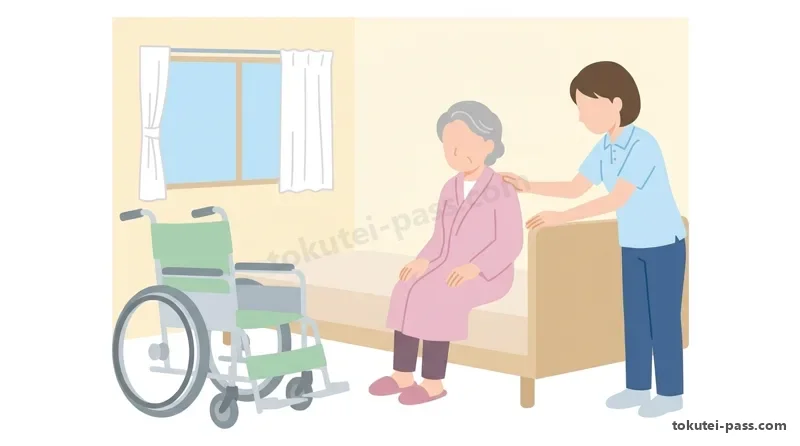
座る姿勢と立つ姿勢では、ベッドの端に腰をかけて両足を床におろして座る姿勢を「端座位」、椅子や車いすに座る姿勢を「椅座位」、ベッドの背を少し起こして座る姿勢を「半座位(ファーラー位)」、立った姿勢を「立位」といいます。
For sitting and standing postures: sitting on the edge of the bed with both feet lowered to the floor is Tanzai (edge-of-bed sitting); sitting in a chair or wheelchair is Izai; sitting with the head of the bed slightly raised is Hanzai (Fowler's position); and standing upright is Ritsui (standing position).
ベッドの上で寝たままからだの向きを変えることを「寝返り」といい、褥瘡(床ずれ)を防ぐために定期的に体位を変える介助を「体位変換」といいます。またベッドに寝ることを「臥床」、ベッドから起きて離れることを「離床」といいます。
Turning over in bed while lying down is called Negaeri (rolling over), and regularly changing a user's lying posture to prevent pressure ulcers is called Taii henkan (postural change/repositioning). Lying in bed is Gashou (bed rest), and getting up and away from the bed is Rishou (getting out of bed).
寝た姿勢から座る動作は「起き上がる」、座った姿勢から上体を前に傾ける「前屈み」になって立つ動作は「立ち上がる」です。ベッドから車いすやポータブルトイレへ乗り移ることを「移乗」、ある場所から別の場所へ動くことを「移動」といいます。
Moving from lying down to a sitting posture is Okiagaru (sitting up), and leaning the upper body forward (Maekagami) from sitting to stand up is Tachiagaru (standing up). Transferring from a bed to a wheelchair or portable toilet is Ijou (transfer), whereas moving from one place to another is Idou (movement/mobility).
Key points
- 上を向いて寝る姿勢は「仰臥位(あおむけ)」、横向きは「側臥位」、おなかを下にする姿勢は「腹臥位(うつぶせ)」である。
Lying face up is Gyougai (Aomuke / supine), lying on the side is Sokugai (Yokomuki / lateral), and lying face down on the stomach is Fukugai (Utsubuse / prone). - ベッドの端に座って足を床におろす姿勢を「端座位」、ベッドから起きて離れることを「離床」という。
Sitting on the edge of the bed with feet on the floor is Tanzai, and getting out of bed is Rishou. - ベッドから車いすやトイレなどへ乗り移る動作を「移乗」といい、場所を動く「移動」と区別する。
Moving between a bed and a wheelchair or toilet is called Ijou (transfer), which is distinguished from Idou (moving between locations).
| Word | Meaning |
|---|---|
| 仰臥位(あおむけ) | Supine position / Lying on the back (Gyougai / Aomuke) |
| 側臥位(よこむき)・腹臥位(うつぶせ) | Lateral position (Sokugai / Yokomuki), Prone position (Fukugai / Utsubuse) |
| 端座位・椅座位・半座位・立位 | Sitting on bed edge (Tanzai), Chair sitting (Izai), Semi-sitting (Hanzai), Standing position (Ritsui) |
| 体位変換・寝返り | Repositioning / Postural change (Taii henkan), Turning over in bed (Negaeri) |
| 臥床(ベッドに寝る)・離床(ベッドから離れる) | Lying in bed (Gashou), Getting out of bed (Rishou) |
| 起き上がる・立ち上がる・前屈み | Sitting up (Okiagaru), Standing up (Tachiagaru), Leaning forward (Maekagami) |
| 移乗(乗り移る)・移動 | Transferring between surfaces (Ijou), Moving / Locomotion (Idou) |
| 誘導・支える・つかまる・握る | Guiding (Yuudou), Supporting (Sasaeru), Holding onto (Tsukamaru), Gripping (Nigiru) |
バイタルサインと全身・消化器・呼吸器の症状
Vital Signs and Systemic, Digestive, and Respiratory Symptoms
人間が生きている状態を示す「バイタルサイン(生命徴候)」には、「体温」「脈拍」「呼吸」「血圧」の4つがあります。介護職はこれらを測定するとともに、普段の「体調」や「顔色」の変化を丁寧に観察します。
Vital signs indicating a person's living state consist of four measurements: Taion (body temperature), Myakuhaku (pulse), Kokyuu (respiration), and Ketsuatsu (blood pressure). Care workers measure these and carefully observe changes in the user's usual Taichou (physical condition) and Kaoiro (complexion).
全身の症状では、体温が普段より高くなる「発熱」、汗をかく「発汗」、からだの中の水分が不足する「脱水」、頭がくらくらする「めまい」、夜よく眠れない「不眠」などがあります。
Common systemic symptoms include Hatsunetsu (fever higher than usual), Hakkan (sweating/perspiration), Dassui (dehydration from insufficient body fluids), Memai (dizziness), and Fumin (insomnia/sleeplessness at night).
消化器の症状では、胃の中のものを吐き出しそうになる感じを「吐き気」、実際に吐いてしまうことを「嘔吐」といいます。また水分の多いやわらかい便が出ることを「下痢」、便が何日も出ずおなかが張る状態を「便秘」といいます。
Digestive symptoms include Hakike (nausea—the feeling of being about to vomit stomach contents) and Outo (vomiting—actually throwing up). Passing watery or loose stools is Geri (diarrhea), while having no bowel movement for days with abdominal bloating is Benpi (constipation).
呼吸や飲み込みに関することばでは、食べ物や飲み物を飲み込む働きを「嚥下」といい、それらや唾液が食道ではなく気管に入ってしまうことを「誤嚥」といいます。飲んだときに激しく「むせる」ことや、「咳(咳込む)」「痰」は誤嚥の大切なサインです。
Regarding breathing and swallowing, the action of swallowing food or drink is Enge (deglutition/swallowing), and when food, liquid, or saliva enters the trachea instead of the esophagus, it is called Goen (aspiration). Choking or coughing while drinking (Museru), coughing fits (Seki / Sekikomu), and phlegm (Tan) are key warning signs of aspiration.
Key points
- バイタルサインは「体温・脈拍・呼吸・血圧」の4つであり、発熱や発汗・脱水の有無とあわせて観察する。
The four vital signs are body temperature, pulse, respiration, and blood pressure; observe them alongside fever (Hatsunetsu), sweating (Hakkan), and dehydration (Dassui). - 「吐き気」は吐きそうな気持ち、「嘔吐」は実際に吐くこと、「下痢」と「便秘」は排便の異常を表す。
Hakike is nausea, Outo is actual vomiting, and Geri (diarrhea) and Benpi (constipation) represent bowel movement abnormalities. - 「嚥下」は飲み込むこと、「誤嚥」は食べ物や水分が気管に入ることであり、「むせる」「咳込む」「痰」に注意する。
Enge means swallowing and Goen means aspiration into the windpipe; pay close attention to choking (Museru), coughing fits (Sekikomu), and phlegm (Tan).
| Word | Meaning |
|---|---|
| バイタルサイン(体温・脈拍・呼吸・血圧) | Vital signs (Body temperature, Pulse, Respiration, Blood pressure) |
| 測定・体調・めまい・不眠 | Measurement (Sokutei), Physical condition (Taichou), Dizziness (Memai), Insomnia (Fumin) |
| 発熱・発汗・脱水 | Fever (Hatsunetsu), Sweating (Hakkan), Dehydration (Dassui) |
| 嘔吐(吐くこと)・吐き気 | Vomiting (Outo), Nausea (Hakike) |
| 下痢・便秘 | Diarrhea (Geri), Constipation (Benpi) |
| 嚥下(飲み込むこと) | Swallowing / Deglutition (Enge) |
| 誤嚥(気管に入ること) | Aspiration into the trachea (Goen) |
| むせる・咳(咳込む)・痰 | Choking on food/drink (Museru), Cough / Coughing fit (Seki / Sekikomu), Phlegm / Sputum (Tan) |
皮膚・感覚・運動器の症状と高齢者に多い病気
Skin, Sensory, and Musculoskeletal Symptoms and Common Diseases in Older Adults
皮膚の症状では、皮膚が赤くなる「発赤」、ぶつぶつが出る「発疹」、かゆい感じを指す「掻痒感(かゆみ)」があります。また血液中の酸素が不足して唇や指先が青紫色になる状態を「チアノーゼ」といいます。
Skin symptoms include Hosseki (skin redness/erythema), Hosshin (skin rash), and Souyoukan (itching sensation, or Kayumi). A condition in which the lips or fingertips turn bluish-purple due to lack of oxygen in the blood is called Cyanosis.
手足や顔に水分がたまって腫れることを「浮腫(むくむ)」といいます。また寝たきりで同じ部位が長い時間圧迫され、血流が悪くなって皮膚が赤くなったり傷ができたりする状態を「褥瘡(床ずれ)」といいます。
Swelling caused by excess fluid accumulating in the limbs or face is called Fushu (edema, or Mukumu). When a bedridden person has the same body part pressed for a long time, poor blood flow causes redness or skin breakdown known as Jokusou (pressure ulcer / bedsore, or Tokozure).
運動器や神経の症状では、手足がビリビリしたり感覚が鈍くなったりする「しびれる」、身体の右半分または左半分が動かしにくくなる「片麻痺」、関節が硬くなって動く範囲が狭くなる「拘縮」、骨が折れる「骨折」があります。
Musculoskeletal and neurological symptoms include Shibireru (numbness or tingling in the limbs), Katamahi (hemiplegia—difficulty moving either the right or left half of the body), Koushuku (joint contracture where a joint stiffens and loses range of motion), and Kossetsu (bone fracture).
高齢者に多い病気には、ダニの一種による皮膚感染症の「疥癬」、目の中の水晶体が濁って見えにくくなる「白内障」、暑さで体温調節が乱れる「熱中症」のほか、「脳梗塞」「脳出血」「誤嚥性肺炎」「高血圧症」「糖尿病」「骨粗鬆症」「認知症」があります。
Common illnesses in older adults include Kaisen (scabies—an itchy skin infection caused by mites), Hakunaishou (cataracts causing cloudy vision), and Netchuushou (heatstroke), as well as Noukousoku (cerebral infarction), Noushukketsu (cerebral hemorrhage), Goensei haien (aspiration pneumonia), Kouketsuatsushou (hypertension), Tounyoubyou (diabetes), Kotsusoshoushou (osteoporosis), and Ninchishou (dementia).
Key points
- 「発赤」は皮膚が赤くなること、「掻痒感」はかゆみ、「浮腫」はむくみ、「褥瘡」は床ずれを表す。
Hosseki is skin redness, Souyoukan is itching (Kayumi), Fushu is edema/swelling (Mukumi), and Jokusou is a pressure ulcer/bedsore (Tokozure). - 身体の片側が麻痺する「片麻痺」や、関節が硬まって動きにくくなる「拘縮」は介護現場で頻出することばである。
Katamahi (hemiplegia) and Koushuku (joint contracture) are high-frequency terms in caregiving practice. - 「疥癬(強いかゆみのある皮膚病)」「白内障(目の病気)」「熱中症」「誤嚥性肺炎」の読みと意味を確実に覚える。
Master the readings and meanings of Kaisen (scabies), Hakunaishou (cataracts), Netchuushou (heatstroke), and Goensei haien (aspiration pneumonia).
| Word | Meaning |
|---|---|
| 発赤・発疹・掻痒感(かゆみ) | Skin redness (Hosseki), Rash (Hosshin), Itching sensation (Souyoukan / Kayumi) |
| 浮腫(むくむ)・チアノーゼ | Edema / Swelling (Fushu / Mukumu), Cyanosis |
| 褥瘡(床ずれ) | Pressure ulcer / Bedsore (Jokusou / Tokozure) |
| 片麻痺・拘縮・骨折・しびれる | Hemiplegia (Katamahi), Joint contracture (Koushuku), Bone fracture (Kossetsu), Numbness (Shibireru) |
| 疥癬・白内障・熱中症 | Scabies (Kaisen), Cataracts (Hakunaishou), Heatstroke (Netchuushou) |
| 肺炎・誤嚥性肺炎・風邪・食中毒 | Pneumonia (Haien), Aspiration pneumonia (Goensei haien), Common cold (Kaze), Food poisoning (Shokuchuudoku) |
| 脳梗塞・脳出血・心疾患 | Cerebral infarction (Noukousoku), Cerebral hemorrhage (Noushukketsu), Heart disease (Shinshikkan) |
| 高血圧症・糖尿病・骨粗鬆症・認知症 | Hypertension (Kouketsuatsushou), Diabetes (Tounyoubyou), Osteoporosis (Kotsusoshoushou), Dementia (Ninchishou) |
移動・移乗を支える福祉用具と設備のことば
Vocabulary for Mobility and Transfer Assistive Devices and Facility Equipment
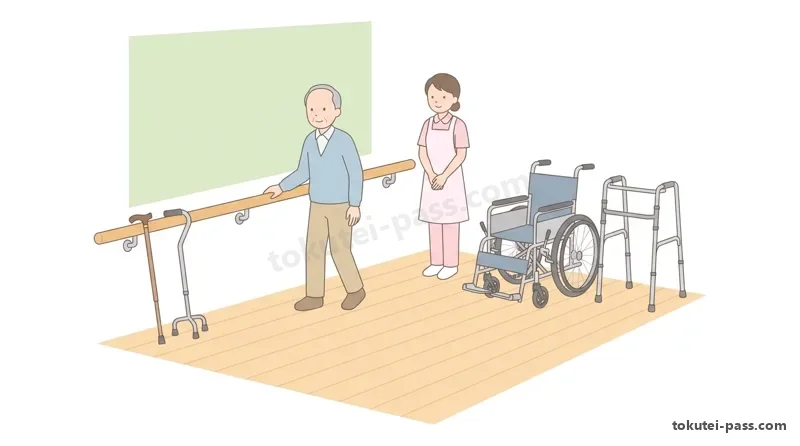
移動を助ける「車いす」では、タイヤの外側についていて自分でこぐための輪を「ハンドリム」、足をのせる台を「フットサポート」といい、乗り降りや停止時には必ず「ブレーキをかける」ことが安全の基本です。
On a wheelchair (Kurumaisu), the outer ring attached to the main wheel for self-propelling is the Handrim, the footrest plates are the Foot support, and the fundamental safety rule is to always apply the brakes (Brake wo kakeru) when stopping or getting on and off.
歩くときに使う道具には、1本足の「杖」、先端が3〜4本に分かれて安定しやすい「多点杖」、目が不自由な人(視覚障害者)が周囲の安全を確かめながら歩く「白杖」があります。
Walking aids include a single-point cane (Tsue), a multi-point cane (Tatendzue) with three or four legs for greater stability, and a white cane (Hakujou) used by persons with visual impairments to check surroundings and walk safely.
「歩行器」は左右のフレームに両手でつかまり、体重を支えて歩く福祉用具です。一方、「シルバーカー(高齢者用手押し車)」は自立歩行ができる高齢者が買い物の荷物を入れたり休憩時に座ったりして押して歩く車です。
A walker (Hokouki) has side frames gripped with both hands to support body weight while walking. In contrast, a Silver car (senior pushcart/rollator) is pushed by older adults who can walk independently to carry shopping items or sit and rest during walks.
介護職の腰痛を防ぎ安全に移乗するための用具として、からだをつり上げて移動する「移動用リフト」、摩擦を減らして滑らせる「スライディングシート」「スライディングボード」、寝たまま移動する「ストレッチャー」があります。また廊下の壁には「手すり」があり、運動やリハビリを行う部屋を「機能訓練室」といいます。
Equipment that prevents caregiver back pain and ensures safe transfers includes a transfer lift (Idouyou lift) that raises the body in a sling, low-friction Sliding sheets and Sliding boards, and a Stretcher for lying transport. Hallways are equipped with handrails (Tesuri), and the room for exercise and rehabilitation is the Kinou kunrenshitsu (functional training room).
Key points
- 車いすは乗り降りや停止時に「ブレーキをかける」必要があり、足をのせる部分を「フットサポート」という。
Always apply the wheelchair brakes (Brake wo kakeru) when stopping or transferring, and remember that the footrests are called Foot support. - 「歩行器」は体重を支えて歩行を助ける道具、「シルバーカー」は荷物を運びながら押して歩く高齢者用手押し車、「白杖」は視覚障害者用の杖である。
Distinguish between Hokouki (a weight-supporting walker), Silver car (a senior pushcart for carrying items), and Hakujou (a white cane for visually impaired users). - 「移動用リフト」や「スライディングシート」は移乗の負担を減らす用具であり、「機能訓練室」は運動をするところである。
Idouyou lift and Sliding sheet reduce transfer strain, and Kinou kunrenshitsu is the facility room where users do exercise and rehabilitation.
| Word | Meaning |
|---|---|
| 車いす・ブレーキをかける・ハンドリム・フットサポート | Wheelchair (Kurumaisu), Apply brakes (Brake wo kakeru), Handrim, Foot support |
| 杖・多点杖・白杖 | Cane (Tsue), Multi-point cane (Tatendzue), White cane for visual impairment (Hakujou) |
| 歩行器(歩行を支える道具) | Walker (Hokouki - frame device supporting body weight while walking) |
| シルバーカー(高齢者用手押し車) | Senior pushcart / Rollator (Silver car / Koureishayou teoshiguruma) |
| 移動用リフト・ストレッチャー | Transfer lift (Idouyou lift), Stretcher |
| スライディングボード・スライディングシート | Sliding board, Sliding sheet |
| 手すり・床・段差・膝折れ・背抜き | Handrail (Tesuri), Floor (Yuka), Step/Level difference (Dansa), Knee buckling (Hizaore), Back pressure release (Senuki) |
| 機能訓練室(運動をするところ) | Functional training room / Exercise room (Kinou kunrenshitsu) |
排泄の介護用品・設備と排泄動作のことば
Vocabulary for Excretion Care Supplies, Equipment, and Assistance Actions
排泄に関する基本語では、おしっこを出すことを「排尿」、うんちを出すことを「排便」といいます。トイレに行きたいという感覚を「尿意」「便意」といい、我慢できずにもれてしまうことを「失禁」といいます。
In basic excretion (Haisetsu) vocabulary, urination is Hainyou and defecation is Haiben. The urge to urinate or defecate is Nyoui and Beni, while involuntary leakage of urine or stool is called Shikkin (incontinence).
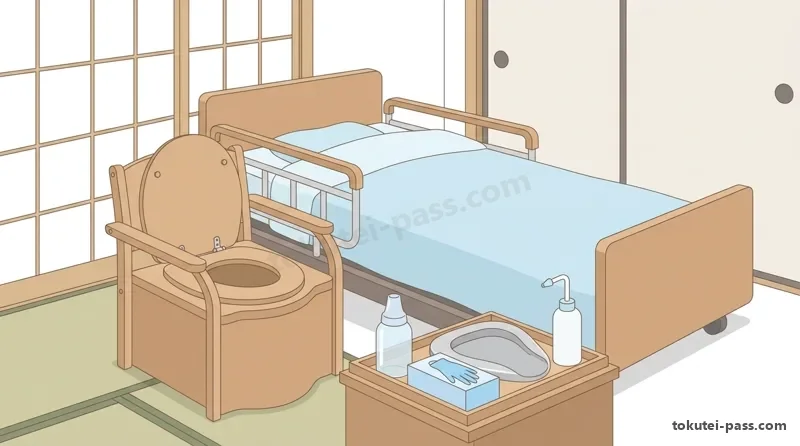
トイレまで歩いて行くのが難しい利用者が、ベッドのすぐ横に置いて座って使う持ち運び可能な便器を「ポータブルトイレ」といいます。一方、ベッドの上で寝たまま使う用具には、尿をとる容器の「尿器」と、お尻の下に入れる「差し込み便器」があります。
A movable toilet placed right beside the bed for users who have difficulty walking to the restroom is a Portable toilet. Meanwhile, devices used while lying in bed include a Nyouki (urinal bottle for collecting urine) and a Sashikomi benki (bedpan slid under the buttocks).
おむつを使う排泄介助では、外側の「紙おむつ」の内側に「尿取りパッド」を重ねてあてます。介護職は感染予防のため「使い捨て手袋」を着け、「シャワーボトル」のぬるま湯で「陰部」や「肛門」を洗って「拭き取る」ケアを行い、使用後のおむつは「汚物入れ」に入れます。
In diaper care, an absorbent urine pad (Nyoutori pad) is layered inside an outer disposable paper diaper (Kami omutsu). Care workers wear disposable gloves (Tsukaisute tebukuro) to prevent infection, wash the genital area (Inbu) and anus (Koumon) with lukewarm water from a Shower bottle, wipe dry (Fukitoru), and place used diapers into a waste container (Obutsuire).
排泄は「羞恥心(恥ずかしい気持ち)」が強く生じる場面です。「便座」に座ったあとはプライバシーを守り、終わったら「呼び出しボタン(ナースコール)」で知らせてもらいます。また排泄前後には「ズボンを下げる」「ズボンを上げる」「流す」や手指の「消毒(消毒液)」、便秘時の医療処置である「浣腸」などのことばも使われます。
Excretion is a situation that evokes strong feelings of modesty and embarrassment (Shuuchishin). After the user sits stably on the toilet seat (Benza), protect privacy and ask them to press the call button (Yobidashi button / Nurse call) when finished. Terms such as pulling pants down (Zubon wo sageru), pulling pants up (Zubon wo ageru), flushing (Nagasu), hand disinfection (Shoudoku / Shoudokueki), and enema (Kanchou) are also used.
Key points
- 「尿意・便意」は排泄したい感覚、「失禁」は尿や便がもれてしまうこと、「羞恥心」は恥ずかしい気持ちである。
Nyoui and Beni mean the urge to urinate or defecate, Shikkin means incontinence, and Shuuchishin means a sense of embarrassment or modesty. - ベッドのそばに置いて座る「ポータブルトイレ」、寝たまま尿をとる「尿器」、お尻の下に差し込む「差し込み便器」を区別する。
Distinguish between a Portable toilet (bedside commode chair), Nyouki (urinal bottle), and Sashikomi benki (bedpan placed under the buttocks in bed). - 感染予防のため「使い捨て手袋」を着け、終了時に押すボタンを「呼び出しボタン(ナースコール)」という。
Wear disposable gloves (Tsukaisute tebukuro) for infection control, and instruct users to press the call button (Yobidashi button / Nurse call) when finished.
| Word | Meaning |
|---|---|
| 排泄・排尿・排便・尿・便 | Excretion (Haisetsu), Urination (Hainyou), Defecation (Haiben), Urine (Nyou), Stool (Ben) |
| 尿意・便意・失禁・羞恥心 | Urge to urinate (Nyoui), Urge to defecate (Beni), Incontinence (Shikkin), Sense of embarrassment (Shuuchishin) |
| ポータブルトイレ・便座 | Bedside portable toilet (Portable toilet), Toilet seat (Benza) |
| 尿器・差し込み便器 | Urinal bottle (Nyouki), Bedpan slid under the buttocks (Sashikomi benki) |
| 紙おむつ・尿取りパッド・汚物入れ | Paper diaper (Kami omutsu), Urine pad (Nyoutori pad), Soiled waste container (Obutsuire) |
| 陰部・肛門・シャワーボトル・浣腸 | Genital area (Inbu), Anus (Koumon), Perineal shower bottle (Shower bottle), Enema (Kanchou) |
| 使い捨て手袋・消毒・消毒液 | Disposable gloves (Tsukaisute tebukuro), Disinfection (Shoudoku), Disinfectant solution (Shoudokueki) |
| 呼び出しボタン(ナースコール)・ズボンを上げる/下げる | Call button (Yobidashi button / Nurse call), Pull pants up / Pull pants down |
食事の介護・食事形態・調理と食器のことば
Vocabulary for Meal Assistance, Food Textures, Cooking, and Tableware
食事の「献立表(メニュー表)」では、ご飯やパン・うどんなどの「主食」、肉や魚・野菜のおかずである「副食(主菜・副菜)」、みそ汁やスープなどの「汁物」、果物やプリンなどの「デザート」に分けて記載されます。
On a meal menu chart (Kondatehyou), meals are categorized into Shushoku (staple food such as rice, bread, or udon), Fukushoku (side dishes consisting of main dish Shusai and side dish Fukusai made of meat, fish, or vegetables), Shirumono (soups such as miso soup), and Dessert (fruit, pudding, etc.).
噛む力(咀嚼)や飲み込む力(嚥下)に合わせた食事形態には、お米をやわらかく炊いた「粥(お粥)」、一回で口に入る大きさに切った「一口大」、細かくきざんだ「刻み食」、なめらかにした「ペースト食」「ソフト食」があります。
Food textures adapted to chewing ability (Soshaku) and swallowing ability (Enge) include Kayu / Okayu (softly cooked rice porridge), Hitokuchidai (food cut into bite-sized pieces), Kizamishoku (finely chopped food), Pasteshoku (pureed/paste food), and Softshoku (softly cooked food).
お茶やみそ汁などの水分でむせやすい利用者には、誤嚥を防ぐために「とろみをつける(とろみ食)」工夫をします。また脱水や熱中症を防ぐため、食事以外の時間にも「麦茶」や「白湯(一度沸騰させて冷ましたお湯)」でこまめに「水分補給」を行います。
For users prone to choking on thin liquids like tea or miso soup, thickener is added (Toromi wo tsukeru / Toromishoku) to prevent aspiration (Goen). To prevent dehydration and heatstroke, frequent fluid intake (Suibun hokyuu) is provided between meals using barley tea (Mugicha) or cooled boiled water (Sayu).
調理や食事介助の動作では、「温める」「冷ます」「きざむ」「煮物・煮付け」「焼き魚」「いためる」「あげもの」「漬物」があり、食事を運ぶ「配膳」、食後に「食器を下げる(後片付け)」、また「エプロン」「吸い飲み」「茶碗」「汁椀」「滑り止めマット」などの道具を使います。
Cooking and meal care terms include Atatameru (warming up), Samasu (cooling down), Kizamu (chopping), Nimono / Nitsuke (simmered/braised dishes), Yakizakana (grilled fish), Itameru (stir-frying), Agemono (deep-fried dishes), and Tsukemono (pickles). Serving meals is Haizen, clearing dishes after eating is Shokki wo sageru (Atokatadzuke), and tableware includes Apron (meal bib), Suinomi (spouted feeding cup), Chawan (rice bowl), Shiruwan (soup bowl), and Suberidome mat (non-slip mat).
Key points
- 食事は「主食(ご飯・パン・麺)」「副食(おかず)」「汁物」に分かれ、噛むことを「咀嚼」という。
Meals are divided into Shushoku (staple food), Fukushoku (side dishes), and Shirumono (soup); the act of chewing is called Soshaku. - 食べやすい工夫として「粥」「一口大」「刻み食」「ペースト食」や、むせを防ぐ「とろみをつける」方法がある。
Texture modifications include Kayu (rice porridge), Hitokuchidai (bite-sized pieces), Kizamishoku (chopped food), Pasteshoku (pureed food), and adding thickener (Toromi wo tsukeru). - 食前に食事を並べることを「配膳」、食後に片付けることを「食器を下げる」といい、こまめな「水分補給」が大切である。
Serving meals is Haizen, clearing dishes after a meal is Shokki wo sageru, and frequent hydration is Suibun hokyuu.
| Word | Meaning |
|---|---|
| 献立表・主食・副食(主菜・副菜)・汁物 | Menu chart (Kondatehyou), Staple food (Shushoku), Side dishes (Fukushoku: Shusai / Fukusai), Soup (Shirumono) |
| 咀嚼・粥(お粥)・一口大 | Mastication / Chewing (Soshaku), Rice porridge (Kayu / Okayu), Bite-sized pieces (Hitokuchidai) |
| 刻み食・ペースト食・ソフト食・とろみをつける | Chopped food (Kizamishoku), Pureed food (Pasteshoku), Soft food (Softshoku), Add thickener (Toromi wo tsukeru) |
| 水分補給・麦茶・白湯 | Fluid intake / Hydration (Suibun hokyuu), Barley tea (Mugicha), Cooled boiled water (Sayu) |
| 温める・冷ます・きざむ・こぼす | Warm up (Atatameru), Cool down (Samasu), Chop finely (Kizamu), Spill (Kobosu) |
| 煮物・煮付け・焼き魚・いためる・あげもの・漬物 | Simmered dish (Nimono), Braised fish/dish (Nitsuke), Grilled fish (Yakizakana), Stir-fry (Itameru), Fried food (Agemono), Pickles (Tsukemono) |
| 配膳・食器を下げる・後片付け | Serving meals (Haizen), Clearing dishes (Shokki wo sageru), Cleaning up after meals (Atokatadzuke) |
| エプロン・吸い飲み・茶碗・汁椀・箸・滑り止めマット | Meal apron (Apron), Spouted cup (Suinomi), Rice bowl (Chawan), Soup bowl (Shiruwan), Chopsticks (Hashi), Non-slip mat (Suberidome mat) |
入浴・清潔保持・口腔ケア・更衣(みじたく)のことば
Vocabulary for Bathing, Personal Hygiene, Oral Care, and Dressing (Grooming)
からだを清潔に保つ「清潔保持」では、お風呂に入る「入浴」のほか、体調が悪くて入浴できないときに温かいタオルでからだを拭く「清拭(全身清拭)」、手や足だけをお湯につけて洗う「部分浴(手浴・足浴)」、髪を洗う「洗髪」があります。
In maintaining bodily cleanliness (Seiketsu hoji), besides taking a bath (Nyuuyoku), wiping the body with a warm towel when a user cannot bathe is called Seishiki (whole-body bed bath Zenshin seishiki); soaking and washing only the hands or feet in warm water is Bubunyoku (hand bath Shuyoku, foot bath Sokuyoku); and washing hair is Senpatsu.
入浴の場所と道具では、服を脱ぎ着する部屋を「脱衣室」、洗う部屋を「浴室」、お湯をためて入る湯船を「浴槽」といい、浴室で座る椅子を「シャワーチェア」、お湯をくむ器を「洗面器」といいます。湯船に入る前に足先などにお湯をかける「かけ湯」や、温度が低いことを表す「ぬるい」、入浴後の皮膚の「保湿」も重要です。
Regarding bathing spaces and tools: the room for undressing and dressing is Datsuishitsu (changing room), the washing room is Yokushitsu (bathroom), the tub filled with warm water is Yokusou (bathtub), the bath chair is Shower chair, and the water basin is Senmenki. Pouring warm water over the limbs before entering the tub (Kakeyu / Oyu wo kakeru), checking if water is lukewarm (Nurui), and moisturizing the skin after bathing (Hoshitsu) are also essential.
口の中を清潔にする「口腔ケア」では、「歯ブラシ」や粘膜を洗う「スポンジブラシ」で「歯磨き」をし、水で「口をゆすぐ(うがい)」を行います。また取り外しができる人工の歯を「義歯(入れ歯)」といい、洗顔・「整髪(くしで髪をとかす・ドライヤーで乾かす)」・「爪きり」・「ひげ剃り(シェーバー)」をまとめて「みじたく」といいます。
In oral care (Koukuu care), teeth and oral mucosa are cleaned using a toothbrush (Haburashi) or Sponge brush, followed by rinsing the mouth with water (Kuchi wo yusugu / Ugai). Removable artificial teeth are called Gishi (or Ireba). Face washing, hair grooming (Seihatsu: combing with a Kushi and drying with a Dryer), nail clipping (Tsumekiri), and shaving (Higesori) are collectively called Mijitaku (personal grooming).
「衣類」を着替えることを「更衣(着替え)」といい、「上着」「下着(肌着)」「パジャマ(ねまき)」「ズボン」「靴下」「上履き」があります。服の腕を通す部分は「袖」、首まわりは「襟」、下の端は「裾」といい、片麻痺があるときは健側から脱ぎ患側から着る「脱健着患」を行い、最後に「着心地(着たときの快適さ)」を確認します。
Changing clothes (Irui) is called Koui or Kigae, including Uwagi (outerwear/top), Shitagi / Hadagi (underwear/undershirt), Pajama / Nemaki (sleepwear), Zubon (trousers), Kutsushita (socks), and Uwabaki (indoor shoes). Sleeve is Sode, collar is Eri, and hem is Suso. For users with hemiplegia, follow Dakken chakkan (undress the unaffected side first, dress the affected side first) and check wearing comfort (Kigokochi).
Key points
- 入浴できないときに温かいタオルでからだを拭くことを「清拭」、手や足だけをお湯につけて洗うことを「手浴・足浴(部分浴)」という。
Wiping the body with a warm towel when bathing is not possible is Seishiki; soaking only the hands or feet in warm water is Shuyoku and Sokuyoku (partial bath Bubunyoku). - 服を脱ぎ着する部屋は「脱衣室」、お湯をためる湯船は「浴槽」、入れ歯は「義歯」、水で口の中を洗うことは「口をゆすぐ(うがい)」である。
The changing room is Datsuishitsu, the bathtub is Yokusou, dentures are Gishi (Ireba), and rinsing the mouth with water is Kuchi wo yusugu (Ugai). - 着替えを「更衣」といい、片麻痺のある利用者には健側から脱いで患側から着る「脱健着患」を行い、「着心地」を確かめる。
Changing clothes is Koui; for hemiplegic users, practice Dakken chakkan (undress unaffected side first, dress affected side first) and confirm wearing comfort (Kigokochi).
| Word | Meaning |
|---|---|
| 入浴・清潔保持・清拭(全身清拭) | Bathing (Nyuuyoku), Maintaining cleanliness (Seiketsu hoji), Wiping the body / Bed bath (Seishiki / Zenshin seishiki) |
| 部分浴(手浴・足浴)・洗髪・洗面 | Partial bath (Bubunyoku: Hand bath Shuyoku / Foot bath Sokuyoku), Hair washing (Senpatsu), Face washing (Senmen) |
| 脱衣室・浴室・浴槽・シャワーチェア・洗面器 | Changing room (Datsuishitsu), Bathroom (Yokushitsu), Bathtub (Yokusou), Shower chair, Washbasin (Senmenki) |
| お湯をかける(かけ湯)・ぬるい・温度・保湿 | Pouring warm water over the body (Oyu wo kakeru / Kakeyu), Lukewarm (Nurui), Temperature (Ondo), Moisturizing (Hoshitsu) |
| 口腔ケア・義歯(入れ歯)・スポンジブラシ・口をゆすぐ(うがい) | Oral care (Koukuu care), Dentures (Gishi / Ireba), Sponge brush, Rinsing the mouth (Kuchi wo yusugu / Ugai) |
| みじたく・整髪(髪をとかす・くし・ドライヤー)・爪きり・ひげ剃り | Personal grooming (Mijitaku), Hair grooming (Seihatsu: comb hair, comb Kushi, hair dryer), Nail clipper (Tsumekiri), Shaving (Higesori) |
| 更衣(着替え)・衣類・上着・下着(肌着)・ねまき・上履き | Dressing / Changing clothes (Koui / Kigae), Clothing (Irui), Top/Jacket (Uwagi), Underwear (Shitagi / Hadagi), Sleepwear (Nemaki), Indoor shoes (Uwabaki) |
| 袖・襟・裾・着心地・脱健着患 | Sleeve (Sode), Collar (Eri), Hem (Suso), Wearing comfort (Kigokochi), Undress healthy side / Dress affected side (Dakken chakkan) |
家事・生活環境整備とシフト・専門職のことば
Vocabulary for Housework, Living Environment, Work Shifts, and Professionals
家事と生活環境のことばでは、「掃除機」や「ほうき」でゴミを「掃く」、「モップ」や「雑巾」で拭く、窓を開けて空気を入れ替える「換気」があります。洗濯では「洗剤」で洗った「洗濯物」を「干す」、「乾燥機」などで「乾かす(乾く)」、きれいに「たたむ」、タンスや引き出しに「片付ける」動作があります。
In housework (Kaji) and environment maintenance: sweeping dust with a vacuum cleaner (Soujiki) or broom (Houki) is Haku, wiping with a Mop or cleaning cloth (Zoukin) is Fuku, and opening windows to exchange air is Kanki (ventilation). In laundry (Sentaku), washed items (Sentakumono) are hung up (Hosu), dried in a dryer (Kansouki / Kawakasu), neatly folded (Tatamu), and put away (Katadzukeru).
居室の寝具と備品には、「布団」「枕」「毛布」「シーツ」「カーテン」「網戸」、ベッドの横に置く棚である「床頭台」、食事前などに手を拭く小さな濡れタオル「おしぼり」があります。また緊急時の設備として「非常口」「非常ベル」、火事や救急の電話番号「119番」を覚えます。
Bedding and room furnishings include Futon (bedding), Makura (pillow), Moufu (blanket), Sheets, Curtain, Amido (window screen), bedside cabinet (Shoutoudai), and wet hand towel (Oshibori). For emergency equipment, remember Hijouguchi (emergency exit), Hijou bell (emergency alarm bell), and emergency phone number 119-ban.
勤務(シフト)に関することばでは、昼間働く「日勤」、夜間働く「夜勤」、朝早い「早番」、夕方から夜までの「遅番」があります。仕事に行く「出勤」、仕事を終えて帰る「退勤」、「休憩」、休みの「公休」「有給休暇」、予定より遅れる「遅刻」、早く帰る「早退」、休む「欠勤」を区別します。
Regarding work shifts (Shift): daytime shift is Nikkin, overnight shift is Yakin, early morning shift is Hayaban, and late shift is Osoban. Reporting for work is Shukkin, leaving after work is Taikin, break time is Kyuukei, scheduled day off is Koukyuu, paid leave is Yuukyuu kyuuka; arriving late is Chikoku, leaving early is Soutai, and absence from work is Kekkin.
業務と職種には、情報を引き継ぐ「申し送り」、「記録」、部屋を見回る「巡視」、「見守り」、「ショートステイ」、「送迎車」があり、「介護福祉士」「看護師」「医師」「理学療法士」「作業療法士」「言語聴覚士」「介護支援専門員」「管理栄養士」「調理員」が連携します。
Regarding duties and job titles: shift handover is Moushiokuri, care recording is Kiroku, Reporting-Contacting-Consulting is Houkoku-Renraku-Soudan, night rounds are Junshi, watching over users is Mimamori, short-term stay service is Short stay, and shuttle vehicle is Sougeisha. Collaborating professionals include Kaigo fukushishi (Certified Care Worker), Kangoshi (Nurse), Ishi (Doctor), PT (Physical Therapist), OT (Occupational Therapist), ST (Speech-Language-Hearing Therapist), Care Manager, Kanri eiyoushi (Registered Dietitian), and Chouriin (Cooking Staff).
Key points
- 「掃く」はほうきでゴミを集めること、「干す・乾かす・たたむ・片付ける」は洗濯物の一連の動作、「換気」は空気を入れ替えることである。
Haku means sweeping with a broom; Hosu (hang), Kawakasu (dry), Tatamu (fold), and Katadzukeru (put away) describe laundry tasks; Kanki means ventilating a room. - 勤務の「日勤・夜勤・早番・遅番」、「出勤・退勤」、「遅刻・早退・欠勤」の意味を正確に区別する。
Accurately distinguish shift terms: Nikkin (day shift), Yakin (night shift), Hayaban (early shift), Osoban (late shift), Shukkin (clock in), Taikin (clock out), Chikoku (lateness), Soutai (leaving early), and Kekkin (absence). - 情報を引き継ぐ「申し送り」、見回りをする「巡視」、短期宿泊の「ショートステイ」と各専門職の名称を押さえる。
Master Moushiokuri (shift handover), Junshi (patrol rounds), Short stay, and the titles of multidisciplinary professionals.
| Word | Meaning |
|---|---|
| 掃除機・ほうき・掃く・雑巾・換気 | Vacuum cleaner (Soujiki), Broom (Houki), Sweep (Haku), Cleaning cloth (Zoukin), Ventilation (Kanki) |
| 洗濯物・洗剤・干す・乾かす・たたむ・片付ける | Laundry (Sentakumono), Detergent (Senzai), Hang to dry (Hosu), Dry (Kawakasu), Fold (Tatamu), Put away (Katadzukeru) |
| 布団・枕・毛布・シーツ・床頭台・おしぼり | Futon bedding, Pillow (Makura), Blanket (Moufu), Bed sheets (Sheets), Bedside cabinet (Shoutoudai), Wet hand towel (Oshibori) |
| 日勤・夜勤・早番・遅番・シフト | Day shift (Nikkin), Night shift (Yakin), Early shift (Hayaban), Late shift (Osoban), Work shift (Shift) |
| 出勤・退勤・休憩・有給休暇・公休 | Report to work (Shukkin), Finish work (Taikin), Break (Kyuukei), Paid leave (Yuukyuu kyuuka), Scheduled day off (Koukyuu) |
| 遅刻・早退・欠勤 | Arriving late (Chikoku), Leaving early (Soutai), Absence from work (Kekkin) |
| 申し送り・記録・巡視・見守り・ショートステイ・送迎車 | Shift handover (Moushiokuri), Record (Kiroku), Patrol rounds (Junshi), Watching over (Mimamori), Short stay, Shuttle vehicle (Sougeisha) |
| 介護福祉士・看護師・理学療法士・作業療法士・言語聴覚士・介護支援専門員・管理栄養士・調理員 | Certified Care Worker (Kaigo fukushishi), Nurse (Kangoshi), PT, OT, ST, Care Manager (Kaigo shien senmonin), Registered Dietitian (Kanri eiyoushi), Cook (Chouriin) |
試験によく出るポイントと覚え方
Frequently Tested Points & Memory Tips
介護の日本語(ことば)では、身体の部位・症状・介護用具・日用品の「読み方」と「意味の対比」が毎回出題されます。
In Caregiving Japanese (Vocabulary), every exam tests the readings and contrasting meanings of body parts, symptoms, assistive devices, and daily necessities.
特に間違えやすい漢字の読みとして、「悪寒(寒気がすること)」「褥瘡(床ずれ)」「嚥下(飲み込むこと)」「羞恥心(恥ずかしい気持ち)」「麻痺」「拘縮」は必ず声に出して覚えましょう。
Be sure to memorize tricky Kanji readings aloud: 'Okan (chills)', 'Jokusou (pressure ulcer/bedsores)', 'Enge (swallowing)', 'Shuuchishin (sense of shame/modesty)', 'Mahi (paralysis)', and 'Koushuku (joint contracture)'.
また、反対の意味を持つペア(「健側=麻痺がない側」と「患側=麻痺がある側」、「便秘」と「下痢」、「起床」と「就寝」)をセットで整理すると得点が安定します。
Grouping opposite pairs together ('Kensoku = unaffected/healthy side' vs. 'Kansoku = affected/paralyzed side'; 'Benpi = constipation' vs. 'Geri = diarrhea'; 'Kishou = waking up' vs. 'Shuushin = going to bed') ensures steady scores.
Key points
- 頻出の難読症状ワード:「悪寒=寒気、発疹=皮膚のブツブツ、浮腫=むくみ、貧血、めまい、吐き気」。
High-frequency symptom words: 'Okan = chills, Hosshin = skin rash, Fushu = edema/swelling, Hinketsu = anemia, Memai = dizziness, Hakike = nausea'. - 身体と姿勢の対比ワード:「健側(健康な側)と患側(麻痺のある側)」「仰臥位(あおむけ)・側臥位(横向き)・端座位(ベッドの端に腰かける)」。
Body side & posture pairs: 'Kensoku (healthy side) <-> Kansoku (affected side)'; 'Gyogai (supine/on back) <-> Sokugai (lateral/on side) <-> Tanzai (edge-of-bed sitting)'. - 食事・排泄の重要ワード:「咀嚼=噛むこと、嚥下=飲み込むこと、誤嚥=気管に入ること」「尿失禁・便失禁・おむつ・ポータブルトイレ」。
Meal & excretion terms: 'Soshaku = chewing, Enge = swallowing, Goen = aspiration into trachea'; 'Nyoushikkin (urinary incontinence), Benshikkin (fecal incontinence), Omutsu (diaper), Portable toilet'. - 入浴・清潔の重要ワード:「清拭=体を拭くこと、洗髪=髪を洗うこと、手浴・足浴、陰部洗浄、整容=身だしなみを整えること」。
Bathing & hygiene terms: 'Seishiki = bed bath/wiping body, Senpatsu = hair washing, Shuyoku/Sokuyoku = hand/foot bath, Inbu senjou = perineal wash, Seiyou = grooming'. - 居室・福祉用具ワード:「手すり、スロープ(傾斜路)、ナースコール、歩行器、車いす、福祉用具」。
Room & assistive device terms: 'Tesuri (handrail), Suroopu (ramp/slope), Naasu kooru (nurse call), Hokouki (walker), Kurumaisu (wheelchair)'.
| Word | Meaning |
|---|---|
| 悪寒・浮腫・発疹 | Okan (chills), Fushu (edema), Hosshin (rash) |
| 健側と患側 | Kensoku (healthy side) and Kansoku (affected side) |
| 咀嚼・嚥下・誤嚥 | Soshaku (chewing), Enge (swallowing), Goen (aspiration) |
| 清拭・整容・陰部洗浄 | Seishiki (bed bath), Seiyou (grooming), Inbu senjou (perineal wash) |
Caregiving Vocabulary
Practice this chapter in the appOfficial references
- 厚生労働省「介護分野における特定技能外国人の受入れについて」 — https://www.mhlw.go.jp/stf/newpage_000117702.html
- 日本介護福祉士会『介護の特定技能評価試験 学習テキスト 改訂2版 ~介護技能・介護の日本語~』 — https://www.mhlw.go.jp/content/12000000/001253126.pdf
- 日本介護福祉士会『介護の日本語』テキスト — https://www.mhlw.go.jp/content/12000000/001184460.pdf
- 厚生労働省「介護特定技能評価試験(日本語)サンプル問題」 — https://www.mhlw.go.jp/content/12000000/001745561.pdf