
Front Desk Operations & Department Management (Overbooking, Guest Registry Law, Privacy Protection, Bathing Tax & Lost and Found)
フロント業務・部門マネジメント(オーバーブッキング対応・宿泊者名簿・プライバシー保護・入湯税・遺失物管理)
Accommodation (SSW 2) · 宿泊分野(2号) · Written by Tokutei Pass based on the official study texts; not copied verbatim.
予約業務の管理(オーバーブッキングとダブルブッキングの違い・発生時の対応)
Reservation Management (Difference Between Overbooking & Double Booking and How to Respond)
特定技能2号のフロント担当者(および予約管理専門の「リザベーション係」)には、日常の予約受付だけでなく、客室在庫の適正管理とトラブル発生時の責任ある解決力が求められます。
Front desk staff at the Specified Skilled Worker (ii) level (as well as dedicated reservation staff, 'Reservation-gakari') are required not only to take daily bookings, but also to properly manage room inventory and resolve troubles responsibly.
予約管理上の重大なミスである「オーバーブッキング(過剰予約)」とは、施設全体で販売可能な客室数を超えて予約を受け付けてしまい、お客様に提供する部屋が足りなくなる状態を指します。
'Overbooking', a serious reservation management error, refers to accepting reservations exceeding the total number of sellable guest rooms in the entire facility, resulting in a shortage of rooms to provide to arriving guests.
一方、「ダブルブッキング(二重予約)」とは、手配ミスなどにより「1つの同じ客室(または同時間帯の会場)に対して、同時に2組以上の予約が重複して入ってしまう状態」を指します。
On the other hand, 'Double booking' refers to a situation where, due to an arrangement error, 'two or more reservations overlap at the same time for the exact same guest room (or banquet venue)'.
万一オーバーブッキング等でお部屋を用意できない場合は、まず深くお詫びし、責任をもって「近隣の同等以上の宿泊施設のお部屋を手配・用意」し、その施設までの送迎(タクシー代負担等)や差額負担を行います。また、宿泊を伴わない日帰り客室利用を「デイユース(Day use)」といいます。
In the event a room cannot be provided due to overbooking, first apologize deeply and responsibly 'arrange and prepare a room at a nearby accommodation facility of equal or higher grade', while providing transportation (covering taxi fares, etc.) and bearing any price difference. Also, daytime room use without an overnight stay is called 'Day use'.
Key points
- 「オーバーブッキング」は販売可能室数以上に予約を取ること、「ダブルブッキング」は1つの部屋に2組以上の予約が重なることである。
'Overbooking' is taking reservations beyond total sellable rooms; 'Double booking' is overlapping 2 or more bookings for 1 room. - オーバーブッキングでお部屋が用意できない際は、心からお詫びし「近隣の宿泊施設のお部屋を用意」して送迎等を行う。
If a room cannot be provided due to overbooking, apologize sincerely and 'prepare a room at a nearby accommodation facility' with transportation. - 宿泊予約専門の担当を「リザベーション係」、宿泊を伴わない日帰り客室利用を「デイユース」という。
Dedicated booking staff are called 'Reservation-gakari', and daytime room use without an overnight stay is called 'Day use'.
| Word | Meaning |
|---|---|
| オーバーブッキング(過剰予約) | accepting reservations beyond available rooms (Overbooking) |
| ダブルブッキング(二重予約) | overlapping bookings for the same room (Double booking) |
| 近隣の宿泊施設の手配 | arranging a nearby accommodation facility |
| リザベーション係・デイユース | reservation staff (Reservation-gakari) and daytime room use (Day use) |
電話応対の応用(保留時のマナーと担当者不在時の的確な対応)
Advanced Telephone Etiquette (Using the Hold Button and Handling Absent Staff Calls)
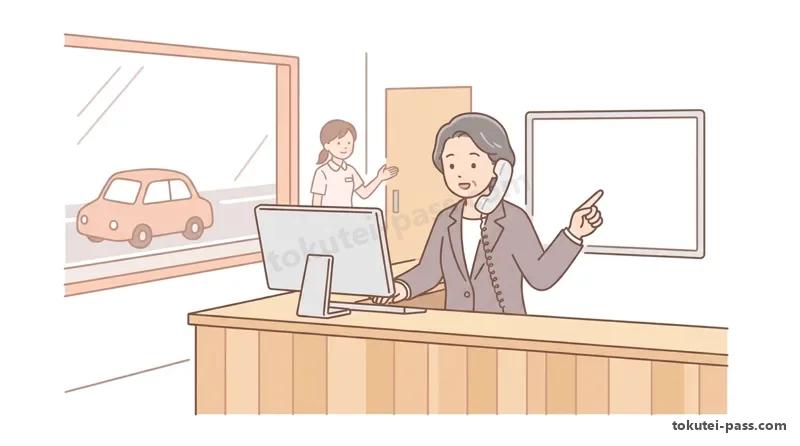
電話での予約変更や問い合わせ対応において、確認作業や担当者への取り次ぎのためにお客様をお待たせする際は、「少々お待ちくださいませ」と一言お断りしてから、必ず電話機の「保留(ホールド)ボタン」を押します。
When handling booking changes or inquiries by phone, if you need the caller to wait while you check information or transfer the call, always say 'Shosho omachi kudasaimase (Please wait a moment)' and press the telephone's 'Hold (Horyu) button'.
受話器を手で押さえただけでは周囲の雑音やスタッフ同士の会話がお客様に聞こえてしまうため厳禁です。また保留時間が長引く(目安30秒以上)場合は、一度電話口に戻ってお詫びし、こちらから「折り返しお電話する」ことを提案します。
Simply covering the receiver with your hand is strictly prohibited because background noise and staff conversations can be heard by the customer. If the hold time becomes long (around 30 seconds or more), return to the line to apologize and offer to 'call them back (Orikaeshi o-denwa suru)'.
お客様や取引先から指名された担当者が「不在(席を外している・外出中・公休など)」の場合は、まず「申し訳ございません。ただいま○○は席を外しております」と詫び、戻り予定時刻がわかればあわせて伝えます。
If the person in charge requested by a customer or business partner is 'absent (away from their desk, out of the office, or off duty)', first apologize by saying 'Moshiwake gozaimasen. Tadaima (Name) wa seki o hazushite orimasu', and inform them of the expected return time if known.
その上で、「戻り次第こちらから折り返しお電話いたしましょうか、それともご伝言を承りましょうか」と相手の意向を伺い、相手の「お名前・連絡先電話番号・ご用件」をメモして復唱確認し、受付日時と自分の名前を添えて確実に引き継ぎます。
Then ask the caller's preference—'Shall I have them call you back as soon as they return, or may I take a message?'—write down the caller's 'name, contact phone number, and message', repeat it back to confirm, and pass on the memo with the date/time received and your own name.
Key points
- 電話でお客様を待たせる際は「少々お待ちくださいませ」と伝えてから必ず「保留ボタン」を押す。
When asking a caller to wait, say 'Shosho omachi kudasaimase' and always press the 'Hold (Horyu) button'. - 確認に時間がかかる場合はそのまま待たせず、こちらから「折り返し電話する」ことを提案する。
If checking takes time, do not leave the caller waiting on hold; offer to 'call them back' from your side. - 担当者不在時は不在理由と戻り予定を伝え、折り返しか伝言かを伺い、相手の氏名・連絡先・用件を復唱して引き継ぐ。
When the person in charge is absent, state the reason and expected return time, ask whether to call back or take a message, and repeat back the caller's name, number, and message.
| Word | Meaning |
|---|---|
| 保留(ホールド)ボタン | Hold button (Horyu button) |
| 折り返しのお電話 | returning a phone call (Orikaeshi no o-denwa) |
| 担当者不在時の対応 | handling calls when the person in charge is absent |
| 伝言メモと引き継ぎ | message memo and handover (Dengon memo / Hikitsugi) |
宿泊者名簿の法的義務(感染症経路調査と犯罪・テロ防止)
Legal Obligations of the Guest Registry (Infection Route Tracing and Crime/Terrorism Prevention)
チェックイン時にお客様に記入していただく「宿泊者名簿(レジストレーションカード)」は、旅館業法第6条によってすべての宿泊施設に備え付けと保存(原則3年間)が義務づけられている重要書類です。
The 'Guest Registry (Shukuhakusha meibo / Registration card)' filled out by guests at check-in is an important legal document that all accommodation facilities are required to maintain and preserve (in principle for 3 years) under Article 6 of the Inns and Hotels Act (Ryokan Gyoho).
宿泊者名簿を正確に記載・管理する法的な2大目的は、「①感染症や食中毒発生時における感染経路の把握(公衆衛生上の対策)」と、「②犯罪やテロ行為の未然防止および捜査協力(治安維持)」です。
The two major legal purposes for accurately recording and managing the guest registry are: '(1) Tracing infection routes in the event of an infectious disease or food poisoning outbreak (public health measures)' and '(2) Preventing crimes and terrorist acts as well as cooperating with police investigations (public security)'.
宿泊者名簿の基本記載事項は「氏名・住所・連絡先(および職業)」ですが、「日本国内に住所を持たない外国人宿泊客(インバウンド客)」の場合は、さらに「国籍」と「旅券番号(パスポート番号)」の記載が義務づけられています。
Basic required items on the guest registry are 'Name, Address, Contact information (and Occupation)'; however, for 'foreign guests who do not have a residential address in Japan (inbound tourists)', recording their 'Nationality' and 'Passport Number' is legally mandatory.
そのため、日本国内に住所がない外国人客のチェックインでは、本人確認と防犯のため必ず「パスポートの呈示」を求め、その「写し(コピー)を宿泊者名簿とともに保存」しなければなりません。
Therefore, when checking in foreign guests without an address in Japan, you must request 'presentation of their passport' for identity verification and security, and 'retain a copy of the passport together with the guest registry'.
Key points
- 宿泊者名簿は旅館業法に基づく義務であり、「感染症の経路調査」と「犯罪・テロ防止」のために作成・保存する。
Maintaining a guest registry is required by the Inns and Hotels Act for 'tracing infectious disease routes' and 'preventing crime and terrorism'. - 日本国内に住所を持たない外国人客には、氏名・住所等に加え「国籍・旅券番号」の記入が必須である。
For foreign guests without an address in Japan, recording 'Nationality and Passport Number' is mandatory in addition to name and address. - 国内に住所がない外国人客からは必ず「パスポートの呈示」を受け、その「コピーを保存」する。
Always require 'passport presentation' from foreign guests without a Japanese address and 'save a copy of the passport'.
| Word | Meaning |
|---|---|
| 宿泊者名簿の保存義務 | legal obligation to retain the guest registry |
| 感染経路の調査 | tracing infection routes (Kansen keiro no chosa) |
| 犯罪・テロの未然防止 | preventing crime and terrorism (Hanzai / Tero no mizen boshi) |
| 国籍・旅券番号とパスポートの写し | nationality, passport number, and passport copy |
多様なゲストへのチェックイン対応(VIP・ウォークイン・アップセル・バリアフリー)
Check-in Operations for Diverse Guests (VIP Individual Check-in, Walk-ins, Up-selling & Barrier-Free)
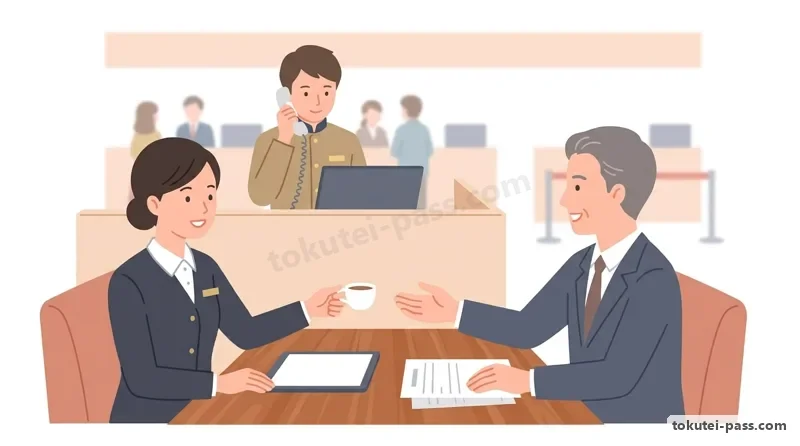
要人や上得意客である「VIP(Very Important Person)」が到着された際は、一般のフロントカウンターに並んでいただくのではなく、特別室(客室)や専用ラウンジへ直接ご案内して手続きを行う「個別チェックインサービス」を提供します。
When dignitaries or highly valued 'VIP (Very Important Person)' guests arrive, rather than having them line up at the general front counter, provide an 'individual check-in service (Kobetsu check-in service)' by guiding them directly to their special guest room or a dedicated lounge to complete registration.
事前予約をせずに当日直接来館されたお客様を「ウォークインゲスト(Walk-in guest)」と呼びます。空室状況を確認してご案内しますが、無断不払い(スキッパー)を防ぐため、チェックイン時に宿泊代の「前受金(デポジット)」またはクレジットカードの有効性確認を必ず行います。
Guests who arrive directly on the day without a prior reservation are called 'Walk-in guests'. After confirming room availability, to prevent non-payment walkouts (skippers), always collect an 'advance payment / deposit (Maeukekin)' or verify credit card validity at check-in.
またチェックイン時の会話を通じて、お客様の記念日やニーズに合わせて「よりグレードの高い客室(スイートや眺望の良い部屋)や上位の食事コース」をおすすめし、客単価と満足度を高める手法を「アップセル(Up-selling)」といいます。
Furthermore, through conversation at check-in, proposing 'a higher-grade guest room (such as a suite or a room with a better view) or an upgraded dining course' tailored to the guest's anniversary or needs to increase both average spend and satisfaction is called 'Up-selling (Up-sell)'.
ご高齢の方や車椅子利用者にはエレベーターに近いバリアフリー客室を優先的にアサイン(部屋割り)し、非常口の位置や緊急時の連絡方法を丁寧に説明します。
For elderly guests or wheelchair users, prioritize assigning barrier-free rooms close to elevators, and carefully explain the location of emergency exits and how to contact staff in an emergency.
Key points
- 「VIP客」には客室や専用ラウンジで手続きを行う「個別チェックインサービス」などで特別な配慮を行う。
Provide special consideration to 'VIP guests' through 'individual check-in service' in their guest room or a dedicated lounge. - 予約なしで当日来館した「ウォークインゲスト」には、空室確認の上、前金(デポジット)やクレジットカードを確認する。
For 'Walk-in guests' arriving without a reservation, check room availability and collect a deposit or verify their credit card. - より上位のグレードの部屋や料理を提案して顧客満足と売上を高める手法を「アップセル」という。
Proposing higher-grade rooms or meal plans to enhance guest satisfaction and revenue is called 'Up-selling (Up-sell)'.
| Word | Meaning |
|---|---|
| VIPへの個別チェックインサービス | individual check-in service for VIPs |
| ウォークインゲスト(当日飛び込み客) | Walk-in guest (same-day guest without reservation) |
| デポジット(前受金・預かり金) | Deposit (advance payment / security deposit) |
| アップセル(上位商品の提案) | Up-selling (proposing higher-tier products) |
滞在中のプライバシー保護(第三者からの客室番号照会)とコンシェルジュ業務
Protecting Guest Privacy During Their Stay (Third-Party Room Number Inquiries) and Concierge Work
滞在中のお客様の安全とプライバシーを守ることはフロントの重大な責務です。外部からの電話や来訪者(宿泊客以外の第三者)から「○○様は何号室に泊まっていますか」と尋ねられるケースがあります。
Protecting the safety and privacy of staying guests is a critical duty of the front desk. Outside callers or visitors (third parties who are not staying in the room) may ask at the front desk, 'What room number is Mr./Ms. X staying in?' or 'Is Mr./Ms. X staying here?'
このとき、相手が家族や知人・取引先を名乗っても、ストーカーや犯罪等の危険があるため「無断でお客様の宿泊有無や客室番号を第三者に伝えては絶対にいけません」。
Even if the person claims to be a family member, friend, or business partner, due to the risk of stalking or crime, 'you must never disclose whether a guest is staying or tell their room number to a third party without permission'.
第三者から客室番号や取り次ぎを尋ねられた際は、まず相手のお名前とご用件を伺い、「必ず滞在中のお客様ご本人に連絡して確認し、お客様の了解(同意)を得てから」伝えるまたはお取り次ぎします。
When a third party asks for a guest's room number or to be connected, first ask the inquirer's name and business, and 'always contact and confirm with the staying guest first, informing the third party only after obtaining the guest's explicit consent (Ryokai)'.
またロビー等で滞在客のあらゆる要望(観光案内・交通機関や観劇チケットの手配・レストラン予約等)に専門的に応えるスタッフを「コンシェルジュ(Concierge)」といい、高い地域知識と提案力が求められます。
Additionally, the specialist staff member stationed in the lobby who handles all kinds of guest requests—such as sightseeing guidance, arranging transportation or theater tickets, and booking restaurants—is called a 'Concierge', requiring broad local knowledge and proposal skills.
Key points
- 第三者から宿泊客の客室番号や宿泊有無を尋ねられても、その場で無断で教えてはならない。
Even if a third party asks for a guest's room number or stay status, never disclose it on the spot without permission. - 必ず「滞在中のお客様ご本人に確認し、了解(同意)を得てから」客室番号を伝える。
Always 'confirm with the staying guest first and obtain their consent (Ryokai)' before conveying their room number. - 観光やチケット・レストラン手配などお客様の多様な要望に応える専門職を「コンシェルジュ」という。
A specialist who handles diverse guest requests such as sightseeing, tickets, and restaurant bookings is called a 'Concierge'.
| Word | Meaning |
|---|---|
| 客室番号の照会対応 | handling room number inquiries |
| 本人確認と了解(同意) | confirming with the guest and obtaining consent (Ryokai) |
| プライバシーと防犯 | privacy protection and crime prevention |
| コンシェルジュ(総合案内係) | Concierge (comprehensive guest assistance specialist) |
チェックアウト精算(領収書発行の原則と「宿泊税」「入湯税」の違い)
Check-out Settlement (Receipt Issuance Rule and Difference Between 'Accommodation Tax' & 'Bathing Tax')
チェックアウト時の会計(キャッシャー)業務では、宿泊料金や館内利用分(レストラン・売店等)の明細をお客様と一緒に確認し、正確かつ迅速に精算手続きを行います。
In check-out cashier operations, review the itemized bill for room charges and in-house charges (restaurant, gift shop, etc.) together with the guest, and process payment accurately and promptly.
精算完了時には、お客様から「領収書は不要です(いりません)」と明確なお断りがない限り、原則として必ず「領収書(レシート)」を発行してお客様にお渡しします。
Upon completing payment, unless the guest explicitly declines by saying 'I do not need a receipt (Ryoshusho wa fuyo desu)', as a rule you must always issue and hand over a 'receipt (Ryoshusho)' to the guest.
宿泊料金以外に精算時に徴収する地方税として「宿泊税」と「入湯税」があります。「宿泊税」は東京都や大阪府・京都市・福岡市など、条例を定めた一部自治体のホテル・旅館に宿泊する際に課税されます。
Local taxes collected at settlement in addition to room charges include 'Accommodation Tax (Shukuhakuzei)' and 'Bathing Tax (Nyutozei)'. 'Accommodation Tax' is levied when staying at hotels or ryokans in specific municipalities that have enacted local tax ordinances (such as Tokyo, Osaka, Kyoto, and Fukuoka).
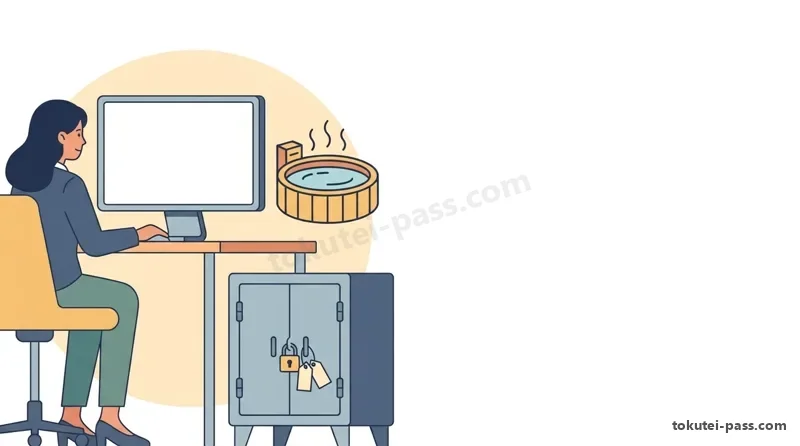
一方、「入湯税」は「鉱泉浴場(温泉)がある宿泊施設」で入湯(入浴)するお客様に対して課される税金(通常1人1泊150円程度)です。したがって、温泉がない一般のビジネスホテル等では入湯税は課税されません。
On the other hand, 'Bathing Tax (Nyutozei)' is a special-purpose tax (typically around 150 yen per person per night) levied only on guests bathing at 'accommodation facilities equipped with hot spring baths (Onsen / mineral spring baths)'. It is never levied at facilities without hot springs.
Key points
- 会計時は、お客様から「不要です」とお断りがない限り、必ず「領収書」を発行して渡す。
At settlement, always issue and hand over a 'receipt (Ryoshusho)' unless the guest explicitly says 'It is not needed'. - 「宿泊税」は条例で定められた一部の都道府県・市区町村の宿泊施設で課税される。
'Accommodation Tax (Shukuhakuzei)' is levied at lodging facilities in certain prefectures and municipalities designated by ordinance. - 「入湯税」は「温泉(鉱泉浴場)がある施設」でのみ課税され、温泉がない施設では発生しない。
'Bathing Tax (Nyutozei)' is levied ONLY at 'facilities with hot springs (Onsen)', and does not apply at facilities without hot springs.
| Word | Meaning |
|---|---|
| 領収書の発行原則 | principle of issuing a receipt (Ryoshusho) |
| 宿泊税(自治体条例税) | Accommodation Tax (Shukuhakuzei) |
| 入湯税(温泉利用税) | Bathing Tax / Hot Spring Tax (Nyutozei) |
| キャッシャー(会計精算業務) | Cashier (settlement and billing operations) |
フロント部門のマネジメント(主要指標OCC・ADR・RevPARと3大コスト管理)
Front Desk Department Management (Key Metrics OCC, ADR, RevPAR and Controlling Three Major Costs)
フロント部門の責任者(マネージャー)には、接客品質の向上とともに、部門の売上目標達成と経費(コスト)の適正管理によって宿泊部門の利益を最大化するマネジメント能力が求められます。
A front desk manager is required not only to improve service quality, but also to maximize accommodation department profits by achieving sales targets and properly controlling departmental expenses (costs).
宿泊売上を分析・管理する3大指標は、①客室稼働率「OCC(Occupancy Ratio)」、②平均客室単価「ADR(Average Daily Rate)」、③販売可能客室1室あたり売上「RevPAR(レヴパー)」です。
The three major metrics used to analyze and manage room revenue are: (1) Room Occupancy Ratio ('OCC'), (2) Average Daily Rate ('ADR'), and (3) Revenue Per Available Room ('RevPAR').
また利益を確保するため、フロント部門で特に管理すべき「3大コスト(費用)」は、①スタッフのシフト調整や業務効率化による「人件費」、②客室アメニティや帳票類などの「消耗品費」、③OTAや旅行会社へ支払う「販売手数料(送客手数料)」です。
To secure profit, the 'three major costs (expenses)' that must be carefully controlled in the front desk department are: (1) 'Labor costs (Jinkenhi)' through optimal shift scheduling and work efficiency, (2) 'Consumables expenses (Shomohinhi)' such as room amenities and printed forms, and (3) 'Sales commissions (Hanbai tesuryo)' paid to OTAs and travel agencies.
繁忙期と閑散期の予約状況を正確に予測して適正な人員配置(シフト作成)を行い、消耗品の在庫管理と無駄の削減、自社直販の強化による手数料抑制を進めます。
By accurately forecasting booking demand across peak and off-peak periods, managers arrange appropriate staffing shifts, manage consumable inventory to eliminate waste, and strengthen direct bookings to reduce commission costs.
Key points
- フロント部門管理の主要売上指標は「OCC(客室稼働率)」「ADR(平均客室単価)」「RevPAR」の3つである。
The three main revenue metrics in front desk management are 'OCC (Occupancy)', 'ADR (Average Daily Rate)', and 'RevPAR'. - フロント部門で管理すべき主なコストは「人件費」「消耗品費」「販売手数料(送客手数料)」である。
The primary costs to control in the front desk department are 'Labor costs', 'Consumables expenses', and 'Sales commissions'. - 予約状況に合わせた適正なシフト配置と在庫管理により、サービス品質を維持しつつ利益率を高める。
Maintain service quality while improving profit margins through appropriate shift scheduling and inventory control based on booking demand.
| Word | Meaning |
|---|---|
| OCC(客室稼働率)・ADR(平均客室単価) | OCC (Occupancy Ratio) and ADR (Average Daily Rate) |
| RevPAR(販売可能1室あたり売上) | RevPAR (Revenue Per Available Room) |
| 人件費・消耗品費 | labor costs (Jinkenhi) and consumables expenses (Shomohinhi) |
| 販売手数料(送客手数料) | sales commissions / referral fees (Hanbai tesuryo) |
遺失物(忘れ物)の適切な保管・返却手続きと警察への届出
Proper Storage, Return Procedures, and Police Reporting for Lost and Found Items (Ishitsubutsu)
チェックアウト後の客室やロビー・レストランなどで発見されたお客様の「遺失物(忘れ物・落とし物)」は、トラブルや紛失を防ぐため、施設のルールと法律(遺失物法)に従って厳重に管理します。
'Lost and found items (Ishitsubutsu / Wasuremono)' left behind by guests in guest rooms after check-out or in lobbies and restaurants must be strictly managed according to facility rules and the Lost Property Act to prevent trouble or loss.
遺失物を発見した際は、「発見日時・発見場所(客室番号等)・発見者氏名・品名と特徴」を遺失物台帳に正確に記録し、タグ(札)をつけて所定の保管場所に保管します。
When a lost item is found, accurately record the 'date/time found, location found (room number, etc.), finder's name, and item name/description' in the Lost and Found Ledger, attach a tag, and store it in the designated storage area.
現金・財布・クレジットカード・貴金属・パスポートなどの「貴重品」は金庫で厳重に保管し、持ち主が判明している場合は速やかにお客様へ連絡して引き渡しや郵送手配を行います(生ものや飲食物は衛生上のルールに従い処分します)。
'Valuables (Kichohin)' such as cash, wallets, credit cards, jewelry, and passports must be stored securely in a safe; if the owner is known, contact the guest promptly to arrange handover or shipping (perishable food and drinks are disposed of according to hygiene rules).
持ち主がわからない遺失物や、お客様と連絡がつかないまま一定期間が経過した物、特に貴重品類については、施設内にいつまでも放置せず速やかに「警察(警察署・交番)に遺失物として届け出る」必要があります。
Lost items whose owner cannot be identified, or items for which the guest cannot be reached after a set period—especially valuables—must not be kept indefinitely at the facility, but promptly 'reported and turned in to the police as lost property'.
Key points
- 遺失物(忘れ物)は「発見日時・場所・発見者・品名」を台帳に記録して所定場所に保管する。
Record 'date/time found, location, finder, and item details' in the ledger for all lost items (Ishitsubutsu) and store them in the designated place. - 貴重品は金庫に保管して速やかに持ち主へ連絡し、飲食物は衛生管理規定に従って扱う。
Store valuables in a safe and contact the owner promptly; handle food and drink items according to hygiene regulations. - 持ち主不明の落とし物や一定期間経過した遺失物は、「警察に遺失物として届ける」。
Unclaimed items or items whose owner is unknown must be 'reported and turned in to the police as lost property'.
| Word | Meaning |
|---|---|
| 遺失物(忘れ物・落とし物) | lost and found items / forgotten items (Ishitsubutsu / Wasuremono) |
| 遺失物台帳への記録 | recording in the lost property ledger |
| 貴重品の金庫保管 | storing valuables in a safe |
| 警察への遺失物届出 | reporting lost property to the police |
試験でよく出るポイントと覚え方
Frequently Tested Points and Memory Tips
2号試験のフロント分野では、「オーバーブッキング発生時=お詫びして近隣の宿泊施設のお部屋を用意する」「第三者から客室番号を聞かれた時=滞在中のお客様に確認して了解を得てから伝える」が頻出です。
In the 2go front desk section, the two most frequently tested scenarios are: 'When overbooking occurs = Apologize and prepare a room at a nearby accommodation facility' and 'When a third party asks for a guest's room number = Confirm with the staying guest first and tell them only after obtaining consent'.
また会計・税金では、「領収書はお客様から『不要です』と言われない限り必ず渡す」こと、および「入湯税は温泉(鉱泉浴場)がある施設のみ課税される(すべての施設ではない)」というひっかけ問題に注意しましょう。
In billing and taxes, watch out for two classic traps: 'Always hand over a receipt (Ryoshusho) unless the guest says It is not needed', and 'Bathing Tax (Nyutozei) is levied ONLY at facilities with hot springs (Onsen)—not at all accommodation facilities'.
宿泊者名簿の2大目的「①感染症の経路調査・②犯罪やテロの未然防止」と、国内に住所がない外国人客の「パスポートコピー保存義務」も必出です。
The two purposes of the Guest Registry—'(1) Tracing infectious disease routes and (2) Preventing crime and terrorism'—and the obligation to 'keep a passport copy for foreign guests without an address in Japan' are also guaranteed exam topics.
さらに、「VIP=個別チェックイン」「ウォークイン=予約なし当日客」「アップセル=上位グレード提案」「デイユース=日帰り客室利用」「遺失物=警察に届ける」を確実に整理しておきましょう。
Finally, clearly distinguish key terms: 'VIP = Individual check-in', 'Walk-in = Same-day guest without booking', 'Up-sell = Proposing a higher grade', 'Day use = Daytime room use without overnight stay', and 'Lost property = Report to police'.
Key points
- オーバーブッキング時はお詫びして「近隣の宿泊施設のお部屋を用意」する。
During overbooking: Apologize and 'prepare a room at a nearby accommodation facility'. - 第三者に客室番号を聞かれたら、必ず「滞在中のお客様ご本人の了解を得てから」伝える。
When a third party asks for a room number: Always 'obtain the staying guest's consent first' before disclosing it. - 宿泊者名簿の目的は「感染症経路調査」と「犯罪・テロ防止」。外国人客(国内住所なし)はパスポートをコピー保存。
Guest Registry purposes: 'Infection route tracing' & 'Crime/terrorism prevention'. Save passport copies for non-resident foreign guests. - 領収書は「不要」と言われない限り必ず渡す。入湯税は「温泉がある施設のみ」課税される。
Always issue a receipt unless told 'Not needed'. Bathing Tax (Nyutozei) applies ONLY at 'facilities with hot springs (Onsen)'. - フロント管理では「ADR・RevPAR・OCC」と「人件費・消耗品費・販売手数料」を管理し、遺失物は警察へ届ける。
Front management: track 'ADR, RevPAR, OCC' and control 'Labor, Consumables, and Sales commissions'; report unclaimed lost items to police.
| Word | Meaning |
|---|---|
| オーバーブッキングとダブルブッキング | Overbooking and Double booking |
| 宿泊者名簿とパスポートの写し | Guest Registry and passport copy retention |
| 宿泊税と入湯税 | Accommodation Tax (Shukuhakuzei) and Bathing Tax (Nyutozei) |
| アップセル・ウォークイン・デイユース | Up-sell, Walk-in guest, and Day use |
Front Desk & Department Management
Practice this chapter in the appOfficial references
- 全国旅館ホテル生活衛生同業組合連合会 特定技能2号評価試験(宿泊分野)学習用テキスト — https://www.zenryoren.jp/execution/
- 全国旅館ホテル生活衛生同業組合連合会 用語集(宿泊分野)学習用テキスト 日本語・英語併記版 — https://www.zenryoren.jp/execution/