Customer Service, Complaint Management & Coaching Subordinates (Lockouts, Barrier-Free, 6 Trouble Cases & Work Reporting)
接客業務・クレーム対応・部下指導(インロック・バリアフリー・6大トラブル事例対応・業務報告)
Accommodation (SSW 2) · 宿泊分野(2号) · Written by Tokutei Pass based on the official study texts; not copied verbatim.
接客の基本姿勢(足元のかかと・つま先)とお辞儀・敬語の指導
Basic Service Posture (Heels Together, Toes Slightly Open) and Coaching Bowing & Keigo
特定技能2号の接客担当者には、自身が手本となる美しい立ち居振る舞いを実践するとともに、部下や後輩スタッフの姿勢・お辞儀・言葉遣いを指導する役割があります。
Customer service staff at the Specified Skilled Worker (ii) level are expected not only to model graceful deportment themselves, but also to coach subordinates and junior staff on posture, bowing, and polite speech.
接客の基本姿勢では、背筋をまっすぐにのばし、お腹を引き、あごを軽く引き、肩の力を抜いてお腹の少し下で右手を下にして両手を軽く重ねます(男性は体の横におろしても構いません)。
In basic standing posture, keep your back straight, tighten your stomach, gently tuck your chin, relax your shoulders, and lightly overlap your hands slightly below your stomach with your right hand underneath (men may lower both hands naturally at their sides).
特に2号試験で問われる足元のポイントとして、立つときは「足のかかとをつけて、つま先は少し開ける」ようにし、両足に均等に重心をかけて自然な笑顔で待機します。
As a foot position rule specifically tested on the 2go exam, stand with 'your heels together and your toes slightly open (Ashi no kakato o tsukete, tsumasaki wa sukoshi akeru)', distributing your weight evenly on both feet while waiting with a natural smile.
お辞儀は場面に応じて「会釈(約15度:すれ違い・食事中のテーブル訪問)」「敬礼(約30度:お出迎え等)」「最敬礼(約45度:お見送り・謝罪)」を使い分け、敬語(尊敬語・謙譲語・丁寧語)を正確に使いこなします。
Use the three bows according to the situation—'Eshaku (approx. 15°: passing by, visiting a dining table)', 'Keirei (approx. 30°: welcoming guests, etc.)', and 'Saikeirei (approx. 45°: seeing guests off, apologizing)'—and accurately use all three forms of Keigo (Honorific, Humble, and Polite language).
Key points
- 基本の立ち姿勢では、背筋をのばし、あごを軽く引き、「足のかかとをつけて、つま先は少し開ける」。
In basic standing posture, straighten your back, gently tuck your chin, and stand with 'heels together and toes slightly open'. - 手はお腹の少し下で「右手を下にして軽く重ねる」(男性は両手を体の横におろしてもよい)。
Lightly overlap your hands slightly below the stomach with the 'right hand underneath' (men may lower hands at their sides). - 会釈(15度)・敬礼(30度)・最敬礼(45度)と、尊敬語・謙譲語・丁寧語を正しく指導する。
Properly coach Eshaku (15°), Keirei (30°), and Saikeirei (45°), as well as Sonkeigo, Kenjogo, and Teineigo.
| Word | Meaning |
|---|---|
| かかとをつけてつま先を少し開ける | heels together and toes slightly open |
| 会釈・敬礼・最敬礼 | Eshaku (15°), Keirei (30°), and Saikeirei (45°) |
| 尊敬語・謙譲語・丁寧語 | Sonkeigo (Honorific), Kenjogo (Humble), and Teineigo (Polite) |
| 手本となる立ち居振る舞い | exemplary deportment and bearing |
館内誘導・和室案内と「インロック(鍵の閉じ込め)」発生時の対応
In-House Guiding, Japanese-Style Room Etiquette, and Handling Guest Room Lockouts ('In-lock')
お客様を館内でご案内する際は、お客様の「2〜3歩、左前方」をお客様の歩調に合わせて歩きます。方向を示すときは手のひらを上に向け4本の指をそろえ、廊下ですれ違うときは一度立ち止まって会釈します。
When guiding guests inside the facility, walk '2 to 3 steps ahead on the left front', matching the guest's pace. Point directions with your palm up and 4 fingers together, and come to a complete stop to bow (Eshaku) when passing a guest in a hallway.
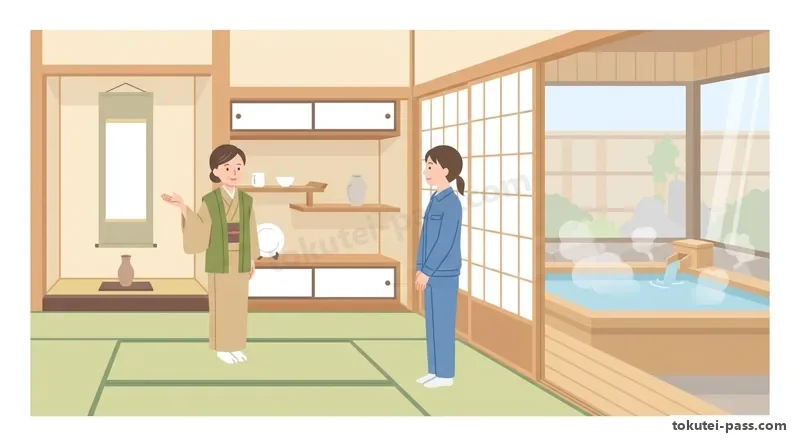
和室へのご案内では、踏み込みで脱がれたお客様の靴のつま先を出口側(外側)に向けてそろえ、床の間に最も近い奥の席である「上座」をおすすめし、おしぼりやお茶も上座のお客様から順に供します。
When guiding guests into a Japanese-style room (Washitsu), line up their removed shoes at the entrance step with the toes pointing toward the exit, offer the seat of honor ('Kamiza') closest to the Tokonoma alcove, and serve wet towels and tea starting from the guest at the Kamiza.
ホテルでよく起こるトラブルに「インロック(閉じ込め)」があります。これはオートロック(自動施錠)の客室において、お客様がルームキーを部屋の中に置いたまま廊下に出てしまい、ドアが閉まって部屋に入れなくなる状態です。
A common trouble at hotels is an 'In-lock (room lockout)'. This occurs in guest rooms with auto-lock doors when a guest steps out into the corridor leaving their room key inside the room, and the door locks behind them.
お客様から「インロックしてしまった」と申し出があった際は、防犯上、その場で無断でスペアキー(予備鍵)を渡してはいけません。必ず「客室番号とお名前(宿泊者名簿との照合)を確認した上で、スタッフが客室まで同行して鍵を開ける」のが鉄則です。
When a guest reports an 'In-lock', for security reasons you must never simply hand over a spare key at the front desk. The strict rule is to 'verify the guest's room number and name (against the guest registry), and have a staff member accompany the guest to the room to unlock the door'.
Key points
- 館内誘導は「2〜3歩左前方」を歩き、和室では靴を出口側に向けて床の間に近い「上座」へ案内する。
Guide guests '2–3 steps ahead on the left front'; in a Washitsu, point shoes toward the exit and guide to the 'Kamiza' near the Tokonoma. - オートロックの部屋に鍵を置いたまま外に出て閉じ込められることを「インロック」という。
Being locked out of an auto-lock guest room after leaving the key inside is called an 'In-lock'. - インロック発生時は、必ず「客室番号と名前の確認をして、スタッフが部屋まで同行して鍵を開ける」。
When an In-lock occurs, always 'confirm the room number and guest's name, then accompany the guest to the room to unlock it'.
| Word | Meaning |
|---|---|
| インロック(鍵の閉じ込め) | In-lock (being locked out with the key inside the room) |
| オートロック(自動施錠) | Auto-lock (automatic door locking system) |
| 客室まで同行して開錠する | accompanying the guest to the room to unlock the door |
| 上座と下座・床の間 | Kamiza (seat of honor), Shimoza (lower seat), and Tokonoma |
多様なお客様への配慮(車椅子・視覚障がい・聴覚障がい・多国籍ゲスト)
Caring for Diverse Guests (Wheelchairs, Visual Impairment, Hearing Impairment & Multicultural Guests)
「車椅子をご利用のお客様」がお車で来館される場合は、事前に「施設出入口に近く、車椅子の乗り降りがしやすい広い駐車スペース」を確保しておきます。お話をする際は、腰を落として「お客様の目の高さに合わせて」応対します。
When a 'guest using a wheelchair' arrives by car, secure in advance a 'wide parking space close to the facility entrance/exit for easy boarding and alighting'. When conversing, lower your posture to 'match the guest's eye level'.
「目の不自由なお客様(視覚障がいのある方)」をお迎えする際は、後ろや横から急に触れると驚かせてしまうため、必ず「お客様の正面からお声かけ」をしてお手伝いできることを伺います(盲導犬は決して断りません)。
When welcoming a 'visually impaired guest', touching them suddenly from behind or the side can startle them; therefore, always 'call out to the guest from directly in front (O-kyakusama no shomen kara o-koekake)' to ask how you may assist (and never refuse a guide dog).
「耳の不自由なお客様(聴覚障がいのある方)」には、マスク等で口元が隠れないよう配慮しつつゆっくりはっきりと話すほか、確実に情報が伝わるよう「手話や筆談(紙やタブレットに書いて伝える方法)」も積極的に使用します。
For a 'hearing-impaired guest', in addition to speaking slowly and clearly with your mouth visible, actively use 'sign language (Shuwa) and written communication (Hitsudan — writing on paper or a tablet)' to ensure accurate communication.
また「多国籍なお客様(インバウンド客)」に対しては、国や地域による文化・宗教・食事制限・入浴習慣などの違いを深く理解し、互いの文化を尊重したおもてなしを行います。
Furthermore, for 'multinational guests (inbound travelers)', deeply understand differences in culture, religion, dietary restrictions, and bathing customs across countries and regions, providing hospitality with mutual cultural respect.
Key points
- 車椅子のお客様には「施設に近い広めの駐車スペース」を用意し、会話時は「目の高さを合わせて」話す。
For wheelchair users, prepare a 'wide parking space close to the facility' and 'match their eye level' when speaking. - 目の不自由なお客様には必ず「正面からお声かけ」し、耳の不自由なお客様には「手話や筆談」も使用する。
For visually impaired guests, always 'call out from directly in front'; for hearing-impaired guests, also use 'sign language and written notes'. - 多国籍なお客様には、宗教や生活習慣・文化の違いを理解して丁寧な配慮を行う。
For multinational guests, understand differences in religion, customs, and culture to provide thoughtful care.
| Word | Meaning |
|---|---|
| 車椅子用駐車スペースと目線 | accessible parking space near the entrance and matching eye level |
| お客様の正面からのお声かけ | calling out from directly in front of the guest |
| 手話と筆談の活用 | using sign language (Shuwa) and written communication (Hitsudan) |
| 多国籍なお客様への配慮 | consideration for multinational guests |
部下・後輩への接客指導と業務報告(最初に「結果」を確認する)
Coaching Subordinates in Customer Service and Receiving Work Reports (Check the 'Result' First)
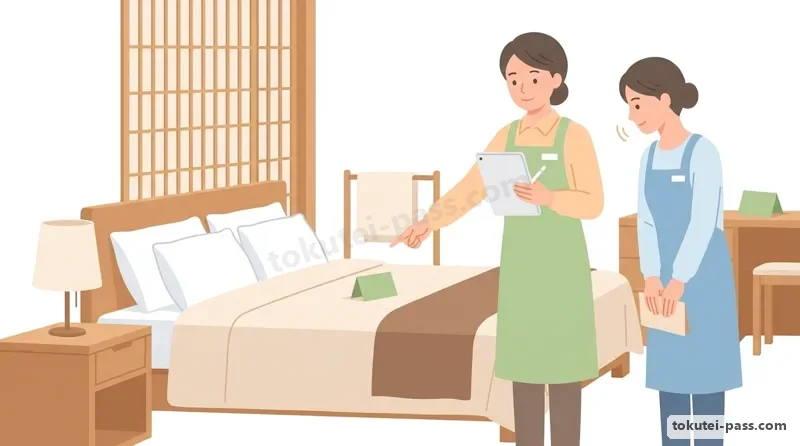
特定技能2号のスタッフは、現場のリーダー・管理者として部下や後輩を指導・育成します。部下への接客指導で最も大切なことは、「常にお客様のニーズ(お客様が何を求めているか)を考えた対応を心がける」よう指導することです。
Specified Skilled Worker (ii) staff act as on-site leaders and managers who coach and develop subordinates and junior staff. The most important principle when coaching subordinates in customer service is instructing them to 'always strive to respond while thinking of the customer's needs'.
マニュアル通りの機械的な作業をするだけでは真のおもてなしにはなりません。お客様一人ひとりの状況や表情をよく観察し、お客様の立場に立って考え行動できるスタッフを育てます。
Merely performing mechanical tasks by the manual does not constitute true hospitality. Train staff to carefully observe each guest's situation and expression, thinking and acting from the customer's perspective.
また、部下に業務を指示したあと、部下から「業務報告」を受ける際にも重要なルールがあります。上司が部下から業務報告を受けるとき、「最初に確認すべき項目は『結果(結論:完了したのか・どうなったのか)』」です。
In addition, there is an important rule when receiving a 'work report (Gyomu hokoku)' from a subordinate after assigning a task: as a supervisor, 'the very first item you should confirm in a work report is the Result (Kekka / Conclusion: whether it is completed and what happened)'.
最初に「結果」を確認することで、次の手配や判断がすぐに必要かどうかを即座に把握でき、そのあとにそこに至った「経過」や「原因」を詳しく聞くことで効率的なチーム運営が可能になります。
By confirming the 'Result' first, you can immediately judge whether urgent follow-up action is needed, and then listen to the detailed 'process' and 'causes' afterward for efficient team management.
Key points
- 部下への接客指導では、「常にお客様のニーズを考えた対応を心がける」よう指導することが最重要である。
When coaching subordinates in customer service, it is most important to teach them to 'always respond with the customer's needs in mind'. - 部下から業務報告を受ける際、上司が「最初に確認すべき項目は『結果(結論)』」である。
When receiving a work report from a subordinate, 'the first item a supervisor should confirm is the Result (Kekka)'. - まず「結果」を把握した上で、必要に応じて経過や原因を確認し的確な指示を出す。
Grasp the 'Result' first, then check the process and causes as needed to issue accurate instructions.
| Word | Meaning |
|---|---|
| お客様のニーズを考えた対応 | responding with the customer's needs in mind |
| 部下への接客指導 | coaching subordinates in customer service |
| 業務報告の確認手順 | procedure for checking work reports (Gyomu hokoku) |
| 最初に「結果」を確認する | confirming the 'Result (Kekka)' first |
クレーム対応における責任者の役割(問題の所在調査)と悪い感想の部内共有
Manager's Role in Complaint Handling (Investigating Root Causes) and Sharing Negative Feedback Internally
お客様からクレーム(苦情)があった際、最初に受けたスタッフは「①まず不快な思いをさせたことをお詫びし、②原因をよく確認し、③たとえ自分のミスであっても一人で抱え込まず責任者(上司)に報告」します。
When a complaint is received from a customer, the initial staff member must: (1) apologize for causing discomfort, (2) carefully confirm the cause, and (3) report to the supervisor without trying to resolve it alone, even if it was their own mistake.
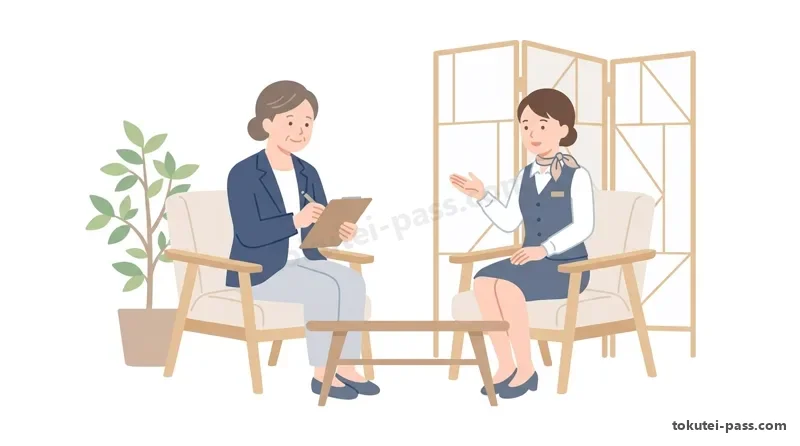
報告を受けて対応を引き継いだ「責任者(マネージャー)」の役割は、お客様へ誠意をもってお詫びするとともに、「問題の所在(原因や問題点がどこにあるか)を正確に調査し、適切な対応策(解決策)をとること」です。
The role of the 'person in charge (manager)' who takes over the complaint is to apologize sincerely to the customer and 'investigate where the problem lies (Mondai no shozai o chosa shi) and take appropriate countermeasures (solutions)'.
その場しのぎの言い訳をしたり、原因を曖昧にしたまま済ませたりすると、お怒りがさらに大きくなり施設の信用を失います。事実関係と問題の所在を速やかに調べ、納得していただける解決策を提示します。
Making superficial excuses or leaving the cause vague will only worsen the customer's anger and damage the facility's credibility. Promptly investigate the facts and root cause to present a convincing solution.
また、アンケートやチェックアウト時にお客様から滞在に関する「悪い感想(ご不満・ご指摘)」をいただいた場合は、決して隠さず「必ず部内で内容を共有して改善策を検討」し、再発防止と品質向上に活かします。
Furthermore, when a guest gives 'negative feedback (dissatisfaction or criticism)' about their stay via a questionnaire or at check-out, never hide it; 'always share the content within the department to discuss improvement measures' and prevent recurrence.
Key points
- クレーム対応における責任者の役割は、「問題の所在を調査し、適切な対応策をとること」である。
The role of a manager in complaint handling is to 'investigate where the problem lies and take appropriate countermeasures'. - 一般スタッフは自分のミスによる苦情でも一人で解決しようとせず、必ず責任者へ報告する。
General staff must never try to solve complaints alone even for their own mistakes, and must always report to a supervisor. - お客様から滞在についての「悪い感想」をいただいた際は、「必ず部内で内容を共有して改善策を検討する」。
When receiving 'negative feedback' from a guest about their stay, 'always share the content within the department and discuss improvements'.
| Word | Meaning |
|---|---|
| 問題の所在の調査 | investigating where the problem lies (Mondai no shozai) |
| 適切な対応策と再発防止 | appropriate countermeasures and recurrence prevention |
| 悪い感想(不満・指摘) | negative feedback / dissatisfaction regarding a stay |
| 部内での情報共有と改善策検討 | sharing information within the department and discussing improvements |
トラブル対応事例①:深夜の客室騒音苦情と宿泊客同士のトラブル
Trouble Case Studies (1): Late-Night Guest Room Noise Complaints and Guest-to-Guest Disputes
2号テキストの現場トラブル対応事例は試験でそのまま問われます。1つ目は「深夜に客室の騒音でお客様から苦情があった場合」の対応です。
The on-site trouble response cases on page 42 of the 2go textbook are tested directly on the exam. Case 1 is how to respond 'when a guest complains about guest room noise late at night'.
このとき、確認もせずに隣の部屋に電話して注意するのは誤りです。配管の音や別の部屋・廊下からの音の可能性もあるため、「まず騒音の原因を調査(現地へ行って音の出所を確認)し、適切に判断して対応」します。
Calling the adjacent room to warn them without checking first is a mistake. Because the sound could be plumbing noise or coming from another room or corridor, 'first investigate the cause of the noise (go to the site to confirm the source) and make an appropriate judgment'.
2つ目は「ロビーやレストラン・大浴場などでお客様同士のトラブル(口論やもめごと)が発生した場合」の対応です。
Case 2 is how to respond 'when a dispute (argument or trouble) breaks out between guests inside the facility, such as in the lobby, restaurant, or public bath'.
このとき、片方のお客様の言い分だけを聞いて判断してはいけません。周囲の他のお客様のご迷惑にならない場所へご移動いただいた上で、「両方のお客様の話を冷静に聞き、適切に判断して対応」します。
You must never judge based on hearing only one guest's side of the story. After guiding them to a location where they will not disturb other guests around them, 'calmly listen to both guests' stories and make an appropriate judgment'.
Key points
- 深夜に客室の騒音で苦情があった場合は、「まず騒音の原因を調査し、適切に判断する」。
When receiving a late-night guest room noise complaint, 'first investigate the cause of the noise and make an appropriate judgment'. - 勝手な思い込みで特定の客室のお客様をすぐ注意すると、さらなるクレームにつながるため現地確認を行う。
Warning a specific room based on assumptions can trigger further complaints, so always verify the source on site first. - お客様同士のトラブルが発生した場合は、片方だけでなく「両方のお客様の話を冷静に聞き、適切に判断する」。
When trouble occurs between guests, 'calmly listen to both guests' stories and make an appropriate judgment'.
| Word | Meaning |
|---|---|
| 深夜の客室騒音トラブル | late-night guest room noise trouble |
| 騒音の原因調査 | investigating the cause of noise |
| お客様同士のトラブル | trouble / dispute between guests |
| 両方のお客様の話を冷静に聞く | calmly listening to both customers' stories |
トラブル対応事例②:財布等の紛失(盗難の疑い)と大けがをしたお客様への対応
Trouble Case Studies (2): Lost Wallet/Valuables (Suspected Theft) and Seriously Injured Guests
3つ目の重要事例は、「お客様が館内で財布や貴重品をなくされた(紛失した)と申し出られた場合」の対応です。
Case 3 is how to respond 'when a guest reports that they lost their wallet or valuables inside the facility'.
まずお客様に落ち着いていただき、「いつ・どこで・どのような状況でなくされたかなどの事情を詳しく聞き、遺失物届を確認するとともに可能な限り館内を探し、もし盗難等の事件性がある場合は速やかに警察(110番)に連絡」します。
First help the guest calm down, 'ask for detailed circumstances (when, where, and how it was lost), check the lost property log and search the facility as thoroughly as possible, and if a crime such as theft is suspected, promptly contact the police (dial 110)'.
4つ目の重要事例は、「館内でお客様が大けがをされている(または意識がないなど重篤な状態である)場合」の対応です。
Case 4 is how to respond 'when a guest is seriously injured (or in a critical condition such as unconsciousness) inside the facility'.
大けがをされているお客様を発見した際は、人命最優先で行動します。様子を見たり素人判断で無理に動かしたりせず、「ただちに救急車(119番)を手配」するとともに上司へ報告し、救急隊到着まで必要な応急手当や誘導準備を行います。
When discovering a seriously injured guest, act with human life as the top priority. Rather than waiting to see how they do or moving them carelessly on amateur judgment, 'immediately arrange for an ambulance (dial 119)', report to your supervisor, and prepare first aid and guidance until paramedics arrive.
Key points
- お客様が財布などをなくされた場合は、「事情を聞き可能な限り探し、盗難等の事件性がある場合は警察に連絡する」。
If a guest loses a wallet or valuables: 'Listen to the circumstances, search as much as possible, and contact the police if theft/crime is suspected'. - お客様が大けがをされている場合は、人命第一で「すぐに救急車(119番)を手配する」。
If a guest is seriously injured: Prioritize human life and 'immediately call an ambulance (dial 119)'. - 緊急時や事件性のあるトラブルでは、現場スタッフだけで抱え込まず速やかに上司および警察・消防と連携する。
In emergencies or suspected crimes, never handle the matter alone on site—promptly coordinate with supervisors, police, and fire/EMS.
| Word | Meaning |
|---|---|
| 財布・貴重品の紛失対応 | responding to lost wallets or valuables |
| 盗難等の事件性と警察連絡 | suspected theft/crime and contacting the police |
| 大けが・急病時の救急車手配 | immediately arranging an ambulance for serious injury |
| 人命最優先の初期行動 | life-first initial emergency action |
ホスピタリティマネジメントと顧客満足度(CS)向上・部門間連携
Hospitality Management, Improving Customer Satisfaction (CS), and Inter-Departmental Coordination
宿泊施設が選ばれ続けるためには、決められた手順を正確に行う「サービス」をベースにしつつ、お客様一人ひとりの気持ちに寄り添い期待を超える感動を提供する「ホスピタリティ(おもてなし)」の実践が不可欠です。
For an accommodation facility to remain chosen by guests, it must build upon accurate basic 'Service' procedures to practice true 'Hospitality (Omotenashi)'—empathizing with each guest and delivering moving experiences that exceed expectations.
顧客満足度(CS:Customer Satisfaction)を高めるには、特定のスタッフだけでなく、フロント・客室清掃・レストラン・調理場など「すべての部門が連携して一貫した高品質の接客」を行う必要があります。
To improve Customer Satisfaction ('CS'), not just individual staff members but 'all departments—including front desk, housekeeping, restaurant, and kitchen—must collaborate to provide consistent, high-quality service'.
たとえばフロントで伺った「お客様の記念日」「食物アレルギー」「足腰の不安」などの情報をPMSやミーティングを通じてレストランや客室係へ確実に共有することで、先回りした気配りが可能になります。
For example, sharing information learned at the front desk—such as a 'guest's anniversary', 'food allergies', or 'mobility concerns'—with the restaurant and room attendants via the PMS or briefings enables proactive, thoughtful care.
また、従業員がやりがいと誇りを持って働ける職場環境(従業員満足度:ES)を整えることが、結果としてお客様への温かい笑顔と高い顧客満足度(CS)、そしてリピーターの増加へとつながります。
Furthermore, creating a workplace environment where employees work with pride and fulfillment (Employee Satisfaction: ES) leads to warm smiles, high Customer Satisfaction (CS), and an increase in repeat guests.
Key points
- 基本のサービスを徹底した上で、お客様の期待を超える心のこもった「ホスピタリティ」を提供する。
Build upon thorough basic service to provide heartfelt 'Hospitality' that exceeds customer expectations. - フロント・客室・レストランなどの「部門間の情報共有・連携」により、顧客満足度(CS)を高める。
Improve Customer Satisfaction (CS) through 'information sharing and collaboration across departments' (front desk, rooms, restaurant). - 良い職場環境(従業員満足:ES)と丁寧な部下指導が、高品質なおもてなしとリピーター獲得を生み出す。
A positive workplace environment (ES) and attentive coaching of subordinates generate high-quality hospitality and repeat guests.
| Word | Meaning |
|---|---|
| ホスピタリティ(心のこもったおもてなし) | Hospitality (heartfelt Omotenashi) |
| CS(顧客満足度)の向上 | improving CS (Customer Satisfaction) |
| 部門間連携と情報共有 | inter-departmental collaboration and information sharing |
| リピーター(再訪顧客)の育成 | cultivating repeat customers (Repeaters) |
試験でよく出るポイントと覚え方
Frequently Tested Points and Memory Tips
2号試験の接客分野では、テキストp.42の6つの判断問題がそのまま出題されます。①深夜の騒音苦情=「まず騒音の原因を調査し適切に判断」、②お客様同士のトラブル=「両方のお客様の話を冷静に聞き適切に判断」です。
In the 2go customer service section, the 6 judgment cases on page 42 of the textbook are tested word-for-word: (1) Late-night noise complaint = 'First investigate the cause of the noise and judge appropriately'; (2) Trouble between guests = 'Calmly listen to both guests' stories and judge appropriately'.
続いて、③財布紛失=「事情を聞き可能な限り探し、盗難等の事件性がある場合は警察に連絡」、④大けが=「すぐに救急車を手配」、⑤悪い感想=「必ず部内で内容を共有して改善策を検討」、⑥部下からの業務報告=「最初に確認すべき項目は『結果』」です。
Continuing: (3) Lost wallet = 'Listen to the circumstances, search as much as possible, and contact the police if theft/crime is suspected'; (4) Serious injury = 'Immediately arrange an ambulance'; (5) Bad feedback on stay = 'Always share within the department and discuss improvements'; (6) Work report from subordinate = 'The first item to confirm is the Result (Kekka)'.
また「インロック発生時=客室番号と名前を確認して部屋まで同行して鍵を開ける」「クレーム対応の責任者=問題の所在を調査し適切な対応策をとる」「部下指導=常にお客様のニーズを考えた対応を心がける」も必出です。
Also guaranteed to appear: 'In-lock (lockout) = Confirm room number and name, then accompany the guest to the room to unlock it', 'Manager's role in complaints = Investigate where the problem lies and take appropriate measures', and 'Coaching subordinates = Always respond with the customer's needs in mind'.
バリアフリーでは、「車椅子=施設に近い駐車スペース確保・目の高さを合わせる」「視覚障がい=お客様の正面からお声かけ」「聴覚障がい=手話や筆談も使用」を正確に覚えましょう。
For barrier-free care, memorize: 'Wheelchair = Secure parking near facility & match eye level', 'Visually impaired = Call out from directly in front of the guest', and 'Hearing impaired = Also use sign language and written notes'.
Key points
- 基本姿勢の足元は「かかとをつけてつま先は少し開ける」。インロック時は「部屋番号と名前確認後、部屋まで同行して開錠」。
Foot posture: 'heels together, toes slightly open'. For In-lock: 'Confirm room number & name, then accompany guest to room to unlock'. - 視覚障がい者には「正面からお声かけ」、聴覚障がい者には「手話や筆談」、車椅子には「目の高さを合わせる」。
Visually impaired: 'call out from the front'; Hearing impaired: 'use sign language & written notes'; Wheelchair: 'match eye level'. - 部下指導は「常にお客様のニーズを考えた対応」、部下からの業務報告で最初に確認するのは「結果」。
Coaching subordinates: 'always think of customer needs'; first item to check in a subordinate's work report: 'Result (Kekka)'. - クレーム責任者は「問題の所在を調査し対応策をとる」。悪い感想は「必ず部内で共有し改善策を検討」。
Complaint manager role: 'investigate where the problem lies and take measures'. Negative feedback: 'always share in department to improve'. - 深夜騒音は「まず原因調査」、客同士の争いは「両方の話を冷静に聞く」、大けがは「すぐ救急車」、盗難疑いは「警察連絡」。
Late-night noise: 'investigate cause first'; guest dispute: 'listen to both sides'; serious injury: 'call ambulance immediately'; suspected theft: 'call police'.
| Word | Meaning |
|---|---|
| インロック対応(本人確認と同行開錠) | In-lock response (identity check and accompanying to unlock) |
| 正面からのお声かけ・手話と筆談 | calling out from the front, sign language, and written notes |
| 業務報告の「結果」確認 | confirming the 'Result (Kekka)' first in work reports |
| 問題の所在調査と部内共有 | investigating root causes and sharing within the department |
Guest Service, Complaints & Staff Guidance
Practice this chapter in the appOfficial references
- 全国旅館ホテル生活衛生同業組合連合会 特定技能2号評価試験(宿泊分野)学習用テキスト — https://www.zenryoren.jp/execution/
- 全国旅館ホテル生活衛生同業組合連合会 用語集(宿泊分野)学習用テキスト 日本語・英語併記版 — https://www.zenryoren.jp/execution/