
Restaurant Service & Store Operations Management (Alcohol Knowledge, Halal & Vegan, 8 Mandatory Allergens, Food Cost & FL Ratio)
レストランサービス・店舗運営管理(酒類知識・ハラールとヴィーガン・特定原材料8品目・原価率とFL率)
Accommodation (SSW 2) · 宿泊分野(2号) · Written by Tokutei Pass based on the official study texts; not copied verbatim.
レストラン責任者(店長)の役割と事前のテーブルアサイン・接客観察
Role of the Restaurant Manager, Advance Table Assignment, and Observing Tables
特定技能2号のレストラン責任者(店長・マネージャー)には、現場での高度な接客だけでなく、「従業員教育(スタッフの指導育成)」「顧客管理」「売上・コスト管理」「衛生安全管理」を行う店舗運営の役割があります。
A restaurant manager at the Specified Skilled Worker (ii) level is responsible not only for advanced on-site service, but also for store operations including 'employee training (coaching staff)', 'customer management', 'sales and cost control', and 'hygiene and safety management'.
営業開始前の準備では、ご予約のお客様の人数・目的(記念日や接待等)・お子様やご高齢の方の有無に合わせて、あらかじめ最適な座席を割り振っておく「事前のテーブルアサイン」を行います。
During pre-opening preparation, perform 'advance table assignment (Jizen no table assign)'—allocating the optimal tables in advance based on each reservation's party size, purpose (anniversary, business entertaining, etc.), and whether children or elderly guests are present.
お客様をお席へご案内する際は、足音や物音を立てないよう「椅子を静かに引いて」着席をサポートします。またお水や飲み物のグラスを持つときは必ず「コップの半分より下」を持ちます。
When guiding guests to their table, support them in seating by 'pulling out the chair quietly' without making noise. Also, when holding water or beverage glasses, always hold 'below the halfway point of the glass'.
食事中は常に客席全体とテーブルの上の変化に目を配り、もしお客様がナイフ・フォークやお箸・ナプキンを床に落とされた際は、お声をかけられる前に気づいて「すぐに新しいものをお持ちして交換」します。
During meals, constantly watch for changes across the dining room and on tables; if a guest drops a knife, fork, chopsticks, or napkin on the floor, notice before being called and 'immediately bring a fresh replacement'.
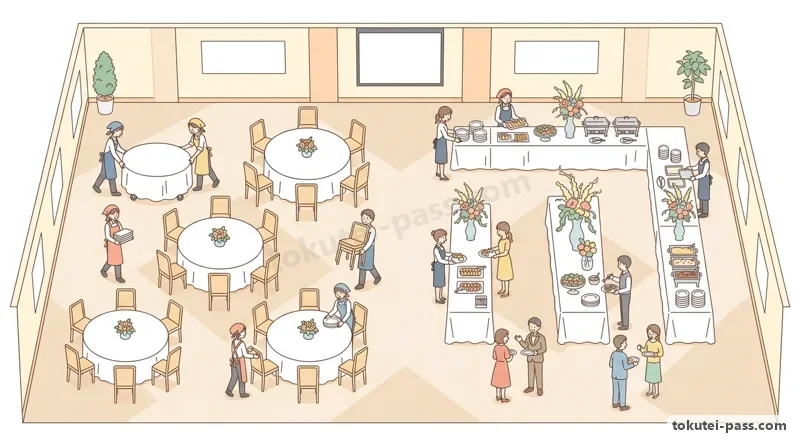
Key points
- 店長・マネージャーは「従業員教育・顧客管理」を行い、営業前に「事前のテーブルアサイン(席割り)」を行う。
The restaurant manager performs 'employee training and customer management' and conducts 'advance table assignment' before opening. - 着席時は「椅子を静かに引き」、グラスは「半分より下」を持って提供する。
When seating guests, 'pull out the chair quietly', and hold glasses 'below the halfway point' when serving. - 食事中はテーブルの変化を観察し、お客様がシルバーや箸を落としたら「すぐに新しいものを持っていく」。
Observe table changes during meals, and if a guest drops cutlery or chopsticks, 'immediately bring a fresh replacement'.
| Word | Meaning |
|---|---|
| 店長の役割(従業員教育・顧客管理) | store manager's role (employee training & customer management) |
| 事前のテーブルアサイン(配席) | advance table assignment (seating allocation) |
| 椅子を静かに引く | pulling out chairs quietly |
| 落とした食器の即時交換 | immediately replacing dropped tableware |
アルコール飲料の専門知識(日本酒の原料・温度と赤白ワインのブドウ品種)
Specialized Knowledge of Alcoholic Beverages (Sake Ingredients & Temperatures; Red & White Wine Grapes)
料理に合わせてお酒をおすすめするため、アルコール飲料の基礎知識が求められます。日本固有の醸造酒である「日本酒(清酒)」は、「米(主に酒米)・麹(米麹)・水」の3つを主原料として造られます。
To recommend drinks that pair well with dishes, foundational knowledge of alcoholic beverages is required. 'Japanese Sake (Nihonshu / Seishu)', a traditional Japanese brewed beverage, is made from three main ingredients: 'rice (mainly sake-brewing rice / Sakamai), koji (rice malt), and water'.
日本酒は提供温度によって香りや味わいが変わるのが特徴で、冷やして飲む「冷酒」、室温のまま楽しむ「常温(冷や)」、温めて飲む「燗酒(ぬる燗・熱燗など)」の3つの温度帯で提供されます。
A distinctive feature of Japanese sake is that its aroma and flavor change with serving temperature, enjoyed across three temperature ranges: chilled ('Reishu'), room temperature ('Joon / Hiya'), and warmed ('Kanzake', such as lukewarm Nurukan or hot Atsukan).
ワインについては、「赤ワイン」と「白ワイン」の代表的なブドウ品種の区別が試験頻出です。「赤ワイン用の黒ブドウ品種」には、「カベルネ・ソーヴィニヨン」「メルロー」「ピノ・ノワール」「シラー」があります。
For wine, distinguishing representative grape varieties for 'red wine' and 'white wine' is frequently tested. 'Black grape varieties for red wine' include 'Cabernet Sauvignon', 'Merlot', 'Pinot Noir', and 'Syrah'.
一方、「白ワイン用の白ブドウ品種」には、「シャルドネ」「ソーヴィニヨン・ブラン」「リースリング」(および日本固有品種の「甲州」)があります。有名産地としてはフランスの「ボルドー地方・ブルゴーニュ地方」やアメリカの「カリフォルニア州」などが代表的です。
On the other hand, 'white grape varieties for white wine' include 'Chardonnay', 'Sauvignon Blanc', and 'Riesling' (as well as Japan's indigenous 'Koshu'). Famous wine-producing regions include France ('Bordeaux and Burgundy / Bourgogne') and the United States ('California').
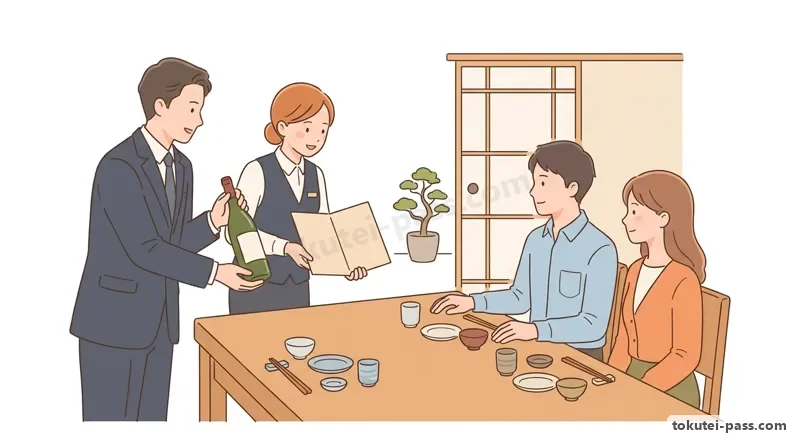
Key points
- 「日本酒」の原料は「米(主に酒米)・麹・水」であり、「冷酒・常温・燗酒」として温度を変えて楽しめる。
'Japanese Sake (Nihonshu)' is made from 'rice (mainly Sakamai), koji, and water', and is enjoyed as 'Reishu (chilled), Joon (room temp), or Kanzake (warmed)'. - 「赤ワイン用ブドウ品種」は、カベルネ・ソーヴィニヨン、メルロー、ピノ・ノワール、シラーである。
'Red wine grape varieties' are Cabernet Sauvignon, Merlot, Pinot Noir, and Syrah. - 「白ワイン用ブドウ品種」は、シャルドネ、ソーヴィニヨン・ブラン、リースリングであり、有名産地にフランス(ボルドー・ブルゴーニュ)やカリフォルニアがある。
'White wine grape varieties' are Chardonnay, Sauvignon Blanc, and Riesling; famous regions include France (Bordeaux, Burgundy) and California.
| Word | Meaning |
|---|---|
| 日本酒の原料(米・麹・水) | Japanese sake ingredients (rice, koji, water) |
| 冷酒・常温・燗酒 | Reishu (chilled), Joon (room temp), and Kanzake (warmed) |
| カベルネ・ソーヴィニヨン/メルロー/ピノ・ノワール | Cabernet Sauvignon, Merlot, Pinot Noir, and Syrah |
| シャルドネ/ソーヴィニヨン・ブラン/リースリング | Chardonnay, Sauvignon Blanc, and Riesling |
日本料理(旬・一汁三菜・地産地消)と会席料理9品の順序
Japanese Cuisine (Shun, Ichiju-Sansai, Chisan-Chisho) and 9-Step Kaiseki Serving Order
日本料理(和食)は、日本の美しい「四季」の移ろいを器や盛り付けで表現し、その時期に最もおいしく出回る「旬(しゅん)の食材」と、地元で収穫された食材を地元で味わう「地産地消」を大切にします。
Japanese cuisine (Washoku) expresses the changing of Japan's four seasons ('Shiki') through tableware and presentation, prizing 'peak seasonal ingredients (Shun)' and 'local production for local consumption (Chisan-chisho)'.
和食の基本献立である「一汁三菜」の配膳位置は、お客様から見て「左手前にご飯」「右手前に汁物」「左奥に副菜」「右奥に主菜」を配置し、一番手前にお箸を置きます。
In the basic 'Ichiju-sansai (One soup, three dishes)' table layout from the guest's perspective, place 'rice at the front left', 'soup at the front right', 'side dish at the rear left', 'main dish at the rear right', and chopsticks horizontally at the very front.
また旅館の夕食等で供される「会席料理」の提供順序(9ステップ)は、まず「①前菜(先付け) → ②椀盛(吸物) → ③お造り(刺身)」の順にお出しします。
The 9-step serving sequence for 'Kaiseki ryori' served at ryokan dinners begins with: '(1) Zensai (Appetizer) -> (2) Wanmori (Suimono: Clear soup) -> (3) O-tsukuri (Sashimi)'.
続いて「④焼き物 → ⑤煮物 → ⑥揚物 → ⑦酢の物」と進み、食事の締めくくりに「⑧ごはん・香の物(漬物)・止め椀(みそ汁)」、最後に「⑨水菓子(果物・デザート)」を提供します。
It continues with: '(4) Yakimono (Grilled dish) -> (5) Nimono (Simmered dish) -> (6) Agemono (Deep-fried dish) -> (7) Su-no-mono (Vinegared dish)', followed by '(8) Rice, Ko-no-mono (pickles), and miso soup', and concluding with '(9) Mizugashi (seasonal fruit / dessert)'.
Key points
- 和食のキーワードは「四季」「旬」「地産地消」「一汁三菜(左手前=ご飯、右手前=汁物)」である。
Key concepts of Washoku are 'four seasons (Shiki)', 'peak season (Shun)', 'Chisan-chisho', and 'Ichiju-sansai (front left = rice, front right = soup)'. - 会席料理の前半・中盤は「①前菜→②椀盛(吸物)→③お造り→④焼き物→⑤煮物→⑥揚物→⑦酢の物」。
First and middle Kaiseki dishes: '(1) Zensai -> (2) Wanmori (Suimono) -> (3) O-tsukuri -> (4) Yakimono -> (5) Nimono -> (6) Agemono -> (7) Su-no-mono'. - 会席料理の終盤は「⑧ごはん・香の物(漬物)→⑨水菓子(果物・デザート)」で終わる。
Final Kaiseki dishes: '(8) Rice & Ko-no-mono (pickles) -> (9) Mizugashi (fruit / dessert)'.
| Word | Meaning |
|---|---|
| 旬・地産地消・四季 | Shun (peak season), Chisan-chisho, and Shiki (four seasons) |
| 一汁三菜の配膳 | Ichiju-sansai serving arrangement |
| 椀盛(吸物)とお造り | Wanmori (clear soup) and O-tsukuri (sashimi) |
| 香の物(漬物)と水菓子 | Ko-no-mono (pickles) and Mizugashi (fruit dessert) |
西洋料理(フルコース)の提供順序とシルバー(バタースプレッダー等)
Western Full Course Serving Order and Silverware (Butter Spreader, etc.)
西洋料理(洋食)フルコースの基本提供順序は、「①オードブル(前菜) → ②スープ → ③魚料理(ポワソン) → ④ソルベ(お口直しの氷菓) → ⑤肉料理(メインディッシュ) → ⑥デザート・コーヒー(または紅茶)」です。
The basic serving order of a Western full course meal is: '(1) Hors d'oeuvre (Appetizer) -> (2) Soup -> (3) Fish dish (Poisson) -> (4) Sorbet (palate-cleansing sherbet) -> (5) Meat dish (Main dish) -> (6) Dessert & Coffee (or black tea)'.
洋食のサーブ(配膳)では、お皿の料理はお客様の「左側」から提供し、グラスに注ぐワインや水などの飲み物・スープ類はお客様の「右側」から提供します。
In Western table service, plated dishes are served from the customer's 'left side', while beverages poured into glasses (wine, water) and soups are served from the customer's 'right side'.
テーブルに並ぶシルバー(ナイフ・フォーク類)は「外側から内側へ向かって順番に使う」ようにセッティングします。また、パン皿(ブレッドプレート)の上に置かれる「パンにバターを塗るための専用のヘラ状ナイフ」を「バタースプレッダー(Butter spreader)」といいます。
Silverware (knives, forks, spoons) set on the table is arranged so guests 'use them in order from the outside inward'. Additionally, the spatula-shaped utensil placed on the bread plate 'used for spreading butter on bread' is called a 'Butter spreader'.
食事中のナイフとフォークの合図は、お皿の上で「ハの字」なら「食事中」、お皿の「右下にそろえて並べられていれば食事終了」であり、合図を確認してから「お下げしてもよろしいでしょうか」と声をかけてお皿を下げます。
For knife and fork signals during a meal, placing them in an inverted V ('Ha no ji') on the plate means 'still eating', while placing them parallel at the 'bottom right of the plate' signals 'finished eating'; confirm this signal and ask permission before clearing.
Key points
- 洋食フルコースは「①オードブル→②スープ→③魚料理→④(ソルベ)→⑤肉料理→⑥デザート・コーヒー」の順に供する。
Western full course order: '(1) Hors d'oeuvre -> (2) Soup -> (3) Fish dish -> (4) (Sorbet) -> (5) Meat dish -> (6) Dessert & Coffee'. - シルバーは外側から順に使い、パンにバターを塗るための器具を「バタースプレッダー」という。
Silverware is used from the outside inward, and the utensil used to spread butter on bread is called a 'Butter spreader'. - 料理は左側・飲み物は右側から提供し、ナイフ・フォークが「ハの字」は食事中、「右下平行」は終了の合図である。
Serve food from the left and drinks from the right; knife and fork in a 'Ha no ji' (inverted V) means still eating, and parallel at bottom right means finished.
| Word | Meaning |
|---|---|
| オードブル・ソルベ・メインディッシュ | Hors d'oeuvre, Sorbet, and Main dish |
| バタースプレッダー(バター塗り用器具) | Butter spreader (utensil for spreading butter) |
| シルバー(金属製食器類) | Silver (metal cutlery / flatware) |
| カスターセット(卓上調味料入れ) | Caster set (tabletop seasoning containers) |
宗教・信条への深い配慮(ハラール認証基準とベジタリアン・ヴィーガン)
Religious & Dietary Considerations (Halal Certification Standards and Vegetarian vs. Vegan)
インバウンド客が増えるなか、宗教や主義・信条に基づく食事制限への正確な知識が不可欠です。イスラム教の戒律に従った「ハラール(Halal)食品」では、豚肉・豚由来成分(ラード・ゼラチン・ポークエキス等)とアルコール(みりんや料理酒を含む)が一切禁止されています。
With increasing inbound guests, accurate knowledge of dietary restrictions based on religion and beliefs is essential. In 'Halal food' following Islamic law, pork, pork-derived ingredients (lard, gelatin, pork extract, etc.), and alcohol (including mirin and cooking sake) are strictly prohibited.
さらに2号試験で問われる重要基準として、「豚以外の動物原料(牛肉や鶏肉など)についても、イスラム法の方式で処理された『ハラール認証』を保有しているものでなければならない(ただし卵・乳は除く)」というルールがあります。
Furthermore, as a crucial standard tested on the 2go exam, 'animal ingredients other than pork (such as beef and chicken) must also hold Halal certification (processed in accordance with Islamic law)—with the exception of eggs and milk'.
また菜食主義者である「ベジタリアン(Vegetarian)」は肉や魚を食べませんが、その中には卵や乳製品(牛乳・チーズ・バター)は食べる方も含まれます。
While 'Vegetarians' do not eat meat or fish, some types of vegetarians do consume eggs and dairy products (milk, cheese, butter).
これに対し、「ヴィーガン(Vegan:完全菜食主義者)」は、肉や魚介類(かつお節などの魚介だしを含む)だけでなく、「卵・乳製品・はちみつなどの動物性食品を一切口にしない」という点でベジタリアンと区別されます。
In contrast, 'Vegans (strict / complete vegetarians)' are distinguished from general vegetarians in that, in addition to avoiding meat and seafood (including fish dashi stock such as bonito flakes), they 'consume no animal-derived products whatsoever, including eggs, dairy products, and honey'.
Key points
- ハラール食品は豚肉・アルコール禁止に加え、「豚以外の動物原料(牛肉・鶏肉等)もハラール認証保有が必要(卵・乳は除く)」。
In Halal food, besides banning pork and alcohol, 'non-pork animal ingredients (beef, chicken, etc.) must also have Halal certification (excluding eggs and milk)'. - 「ベジタリアン(菜食主義者)」は肉や魚を食べないが、一部は卵や乳製品を摂取する場合がある。
'Vegetarians' do not eat meat or fish, though some may consume eggs or dairy products. - 「ヴィーガン(完全菜食主義者)」は肉・魚だけでなく「卵・乳製品・はちみつ等の動物性食品を一切摂らない」。
'Vegans (complete vegetarians)' avoid not only meat and fish, but 'all animal-derived foods including eggs, dairy products, and honey'.
| Word | Meaning |
|---|---|
| ハラール認証(イスラム法適合) | Halal certification (compliance with Islamic law) |
| 豚以外の動物原料(卵・乳は除く) | non-pork animal ingredients (excluding eggs and milk) |
| ベジタリアン(菜食主義者) | Vegetarian (plant-based dieter) |
| ヴィーガン(完全菜食主義者) | Vegan (complete / strict vegetarian) |
食物アレルギー「特定原材料8品目」と小麦を含む代表的食品
Food Allergies: 'Eight Specific Mandatory Allergens' and Common Foods Containing Wheat
食物アレルギーは重篤な「アナフィラキシーショック」を引き起こす危険があるため、日本の食品表示法では発症数が多く症状が重い8つのアレルゲンを「特定原材料(8品目)」として表示を義務づけています。
Because food allergies can trigger life-threatening 'anaphylaxis shock', Japan's Food Labeling Act mandates labeling for 8 allergens with the highest incidence and severity, known as the 'Eight Specific Raw Materials (Tokutei genzairyo 8-hinmoku)'.
義務表示である「特定原材料8品目」は、「①卵、②乳(牛乳)、③小麦、④そば、⑤落花生(ピーナッツ)、⑥えび、⑦かに、⑧くるみ」の8つです。この8品目はすべて確実に暗記しなければなりません。
The '8 mandatory allergens' are: '(1) Egg (Tamago), (2) Milk / Dairy (Chichi / Gyunyu), (3) Wheat (Komugi), (4) Buckwheat (Soba), (5) Peanut (Rakkasei), (6) Shrimp/Prawn (Ebi), (7) Crab (Kani), and (8) Walnut (Kurumi)'. You must memorize all 8 items.
特に2号テキストで詳しく問われるのが「小麦が含まれている食品」です。パン・パン粉・うどん・スパゲティ・マカロニ・中華麺・ケーキ・クッキーのほか、「餃子や春巻きの皮・お好み焼き・たこ焼き・天ぷらの衣・麩」にも小麦が使われています。
The 2go textbook specifically emphasizes 'foods containing wheat (Komugi)'. In addition to bread, breadcrumbs (panko), udon, spaghetti, macaroni, Chinese noodles (ramen), cakes, and cookies, wheat is also contained in 'gyoza and spring roll wrappers, okonomiyaki, takoyaki, tempura batter, and wheat gluten (fu)'.
さらに見落としやすい点として、「しょう油・ソース・味噌(麦味噌等)・ドレッシング・カレールウ・シチュールウ」などの調味料や加工品にも小麦が含まれていることが多いため、必ず原材料表示と調理場への確認を行います。
Moreover, an easily overlooked point is that seasonings and processed items such as 'soy sauce (Shoyu), Worcestershire/tonkatsu sauce, miso (barley miso, etc.), salad dressings, and curry/stew roux' also frequently contain wheat, requiring careful verification with ingredient labels and the kitchen.
Key points
- 表示義務のある「特定原材料8品目」は「卵・乳(牛乳)・小麦・そば・落花生・えび・かに・くるみ」である。
The '8 mandatory specific allergens' are 'Egg, Milk (Dairy), Wheat, Buckwheat (Soba), Peanut, Shrimp, Crab, and Walnut'. - 小麦はパン・うどん・パスタ・中華麺のほか、天ぷら・お好み焼き・たこ焼き・餃子や春巻きの皮にも含まれる。
Wheat is found in bread, udon, pasta, and Chinese noodles, as well as tempura, okonomiyaki, takoyaki, and gyoza/spring roll wrappers. - さらに「しょう油・ソース・味噌・ドレッシング」などの調味料にも小麦が含まれるため注意が必要である。
Seasonings such as 'soy sauce, sauce, miso, and dressings' also often contain wheat and require close attention.
| Word | Meaning |
|---|---|
| 特定原材料8品目(表示義務) | Eight Specific Raw Materials (mandatory allergen labeling) |
| 卵・牛乳・小麦・そば・落花生 | Egg, Milk, Wheat, Buckwheat (Soba), and Peanut |
| えび・かに・くるみ | Shrimp, Crab, and Walnut |
| 小麦を含む調味料(しょう油・ソース・ドレッシング) | seasonings containing wheat (soy sauce, sauce, dressing) |
食中毒の原因(ノロウイルス・カンピロバクター・サルモネラ)とドリップ防止
Causes of Food Poisoning (Norovirus, Campylobacter, Salmonella) and Preventing 'Drip'
食中毒予防の3原則(つけない・増やさない・やっつける)とともに、主要な原因菌・ウイルスの特徴を理解します。「ノロウイルス」は「11月〜2月の冬場」に多発し、カキなどの「二枚貝」の生食・加熱不足や感染者の吐瀉物・手指から感染します。
Alongside the 3 principles of food poisoning prevention (Do not attach, Do not multiply, Destroy), understand the major causative pathogens. 'Norovirus' occurs frequently in 'winter (November to February)' and is transmitted via raw or undercooked 'bivalve shellfish (such as oysters)' or an infected person's vomit and fingers.
「カンピロバクター」は主に「鶏肉(および牛肉・豚肉)」に付着している細菌で、加熱不足の肉や生肉を扱った包丁・まな板からの二次汚染で発症します。「サルモネラ属菌」は主に「鶏卵(生卵)や食肉」が原因となります。
'Campylobacter' is a bacterium mainly found on 'chicken (as well as beef and pork)', caused by eating undercooked meat or cross-contamination from knives and cutting boards. 'Salmonella bacteria' are mainly caused by 'chicken eggs (raw eggs) and meat'.
食中毒防止のため、生の肉や魚は他の食材と分けて冷蔵・冷凍保存し、中心部まで十分に加熱します。また冷凍した肉や魚を解凍する際、食材からしみ出る赤い液体を「ドリップ(Drip)」といいます。
To prevent food poisoning, store raw meat and fish separately in the refrigerator/freezer and cook thoroughly to the center. Furthermore, when thawing frozen meat or fish, the red liquid that seeps out from the ingredients is called 'Drip'.
ドリップが出ると食材の旨味や栄養が失われるだけでなく、水分を栄養源として食中毒菌が急速に増殖します。ドリップを防ぐため、冷凍食材を「室温(常温)で放置解凍することは避け、冷蔵庫内で低温解凍」します。
When drip comes out, not only are umami flavor and nutrients lost, but the moisture also serves as a nutrient source for rapid bacterial growth. To prevent drip, 'avoid leaving frozen ingredients at room temperature to thaw; instead, thaw them at a low temperature inside the refrigerator'.
Key points
- 「ノロウイルス」は11〜2月の冬場に多くカキなどの二枚貝が主原因、「カンピロバクター」は鶏肉、「サルモネラ属菌」は卵や食肉が主原因である。
'Norovirus' peaks in winter (Nov–Feb) from bivalves (oysters); 'Campylobacter' is mainly from chicken; 'Salmonella' is mainly from eggs and meat. - 冷凍した肉や魚の解凍時に出る赤い液体を「ドリップ」といい、品質低下と細菌増殖の原因となる。
The red liquid that comes out when thawing frozen meat or fish is called 'Drip', which degrades quality and promotes bacterial growth. - ドリップと菌の増殖を防ぐため、室温解凍は避けて「冷蔵庫内での低温解凍」を行う。
To prevent drip and bacterial growth, avoid room-temperature thawing and 'thaw at low temperature inside the refrigerator'.
| Word | Meaning |
|---|---|
| ノロウイルス(冬場・二枚貝) | Norovirus (winter Nov–Feb, bivalve shellfish) |
| カンピロバクター・サルモネラ属菌 | Campylobacter and Salmonella bacteria |
| ドリップ(解凍時に出る赤い液体) | Drip (red liquid exuded during thawing) |
| 冷蔵庫内での低温解凍 | low-temperature thawing inside the refrigerator |
レストランの店舗運営管理(4大経費・食材原価率30%・FL率60%以下・ABC分析)
Restaurant Store Operations Management (4 Major Expenses, 30% Food Cost Ratio, ≤60% FL Ratio & ABC Analysis)
レストランの店舗運営管理において、利益を出すために把握すべき「4大経費(コスト)」は、「①食材原価(食材費)」「②人件費」「③販売管理費(消耗品・広告宣伝費等)」「④水道光熱費」です。
In restaurant store operations management, the 'four major expenses (costs)' to control in order to generate profit are: '(1) Food cost (Shokuzai genka / cost of ingredients)', '(2) Labor cost (Jinkenhi)', '(3) Selling and administrative expenses (consumables, advertising, etc.)', and '(4) Utilities (water, gas, and electricity)'.
重要指標の1つ目は「食材原価率」であり、計算式は「①食材原価率(%)= 食材費 ÷ 売上高 × 100」です。一般的なレストランにおける食材原価率の目標目安は「約30%」とされています。
The first key metric is the 'Food Cost Ratio (Shokuzai genkaritsu)', calculated as: '(1) Food Cost Ratio (%) = Food Cost / Sales Revenue x 100'. The standard target benchmark for a general restaurant is 'approximately 30%'.
2つ目の「②F&B(Food & Beverage)コントロール」は、計画的な仕入れ・在庫管理・レシピ標準化によって「食品ロス(食材廃棄)を削減」し原価を抑える管理です。3つ目の「③ABC分析」は、メニューごとの売上高や出数をA・B・Cランクに分けて売れ筋商品と不振商品を分析する「売上分析手法」です。
Second, '(2) F&B (Food & Beverage) Control' is managing purchasing, inventory, and standardized recipes to 'reduce food loss (food waste)' and control costs. Third, '(3) ABC Analysis' is a 'sales analysis method' that ranks menu items into A, B, and C groups by sales revenue or quantity sold to identify best-sellers and underperforming dishes.
4つ目の「④FL率(FLコスト比率)」は、売上高に占める食材費(Food)と人件費(Labor)の合計割合を示し、「FL率(%)=(食材費 + 人件費)÷ 売上高 × 100」で求めます。健全な店舗運営のためのFL率の目安は「60%以下」です。
Fourth, the '(4) FL Ratio (FL Cost Ratio)' indicates the combined share of Food cost and Labor cost relative to total sales: 'FL Ratio (%) = (Food Cost + Labor Cost) / Sales Revenue x 100'. The benchmark for healthy restaurant operations is '60% or less'.

Key points
- レストランの4大経費は「食材原価・人件費・販売管理費・水道光熱費」である。
The 4 major restaurant expenses are 'Food cost, Labor cost, Selling/administrative expenses, and Utilities (water/gas/electricity)'. - 「食材原価率 = 食材費 ÷ 売上高 × 100(目標30%)」、「FL率 =(食材費+人件費)÷ 売上高 × 100(目安60%以下)」。
'Food Cost Ratio = Food Cost / Sales x 100 (target 30%)', and 'FL Ratio = (Food Cost + Labor Cost) / Sales x 100 (benchmark 60% or less)'. - 食品ロス削減等の原価管理を「F&Bコントロール」、メニュー別の売上ランク分析手法を「ABC分析」という。
Cost management to reduce food loss is called 'F&B Control', and the method of ranking menu sales is called 'ABC Analysis'. - 【例】月間売上高500万円・食材費140万円のとき → 食材原価率=140÷500×100=28%
Example: When monthly sales are 5,000,000 yen and food cost is 1,400,000 yen → Food Cost Percentage = 140 ÷ 500 × 100 = 28% - 【例】売上高500万円に対し食材費140万円・人件費150万円のとき → FLコスト=140+150=290万円、FL率=290÷500×100=58%
Example: Against sales of 5,000,000 yen, with food cost of 1,400,000 yen and labor cost of 1,500,000 yen → FL cost = 140 + 150 = 290 (in 10,000 yen), FL Ratio = 290 ÷ 500 × 100 = 58%
| Word | Meaning |
|---|---|
| 食材原価率(目標30%) | Food Cost Ratio (Shokuzai genkaritsu — target 30%) |
| FL率(食材費+人件費の比率・目安60%以下) | FL Ratio (Food + Labor cost ratio — benchmark 60% or less) |
| F&Bコントロール(食品ロス削減) | F&B Control (reducing food loss) |
| ABC分析(メニュー別売上分析手法) | ABC Analysis (menu sales analysis method) |
試験でよく出るポイントと覚え方
Frequently Tested Points and Memory Tips
店舗運営管理(テキストp.55)の公式と数値は必出です:「食材原価率=食材費÷売上高×100(目標30%)」「FL率=(食材費+人件費)÷売上高×100(目安60%以下)」「F&Bコントロール=食品ロス削減」「ABC分析=売上分析手法」を丸暗記しましょう。
The formulas and benchmarks in Store Operations Management (textbook p. 55) are guaranteed exam items: 'Food Cost Ratio = Food Cost / Sales x 100 (target 30%)', 'FL Ratio = (Food Cost + Labor Cost) / Sales x 100 (benchmark 60% or less)', 'F&B Control = Reducing food loss', and 'ABC Analysis = Sales analysis method'.
アレルギーでは、「特定原材料8品目=卵・牛乳(乳)・小麦・そば・落花生・えび・かに・くるみ」と、「小麦を含む食品(パン・うどん・パスタ・中華麺・天ぷら・お好み焼き・たこ焼き・餃子や春巻きの皮・しょう油・ソース・味噌・ドレッシング)」が狙われます。
For allergies, memorize the '8 mandatory specific allergens = Egg, Milk, Wheat, Buckwheat (Soba), Peanut, Shrimp, Crab, Walnut' and 'Foods containing wheat (bread, udon, pasta, Chinese noodles, tempura, okonomiyaki, takoyaki, gyoza/spring roll wrappers, soy sauce, sauce, miso, dressing)'.
宗教・信条では、「ハラール=豚以外の動物原料もハラール認証保有が必要(卵・乳は除く)」「ヴィーガン=卵・乳製品も含め動物性食品を一切摂らない完全菜食主義者」を区別しましょう。
For religious and vegetarian diets, distinguish: 'Halal = Non-pork animal ingredients must also hold Halal certification (excluding eggs and milk)' and 'Vegan = Complete vegetarian who consumes no animal products, including eggs and dairy'.
酒類と衛生では、「日本酒=米・麹・水(冷酒・常温・燗酒)」「赤ワイン品種=カベルネ・ソーヴィニヨン、メルロー、ピノ・ノワール、シラー/白ワイン品種=シャルドネ、ソーヴィニヨン・ブラン、リースリング」「ノロウイルス=11〜2月・二枚貝」「解凍時の赤い液体=ドリップ」を押さえましょう。
For alcohol and hygiene, remember: 'Japanese Sake = Rice, Koji, Water (Reishu, Joon, Kanzake)', 'Red wine grapes = Cabernet Sauvignon, Merlot, Pinot Noir, Syrah / White wine grapes = Chardonnay, Sauvignon Blanc, Riesling', 'Norovirus = Nov–Feb, bivalves', and 'Red liquid during thawing = Drip'.
Key points
- 食材原価率=食材費÷売上高×100(目標30%)、FL率=(食材費+人件費)÷売上高×100(目安60%以下)。
Food Cost Ratio = Food Cost / Sales x 100 (target 30%); FL Ratio = (Food + Labor) / Sales x 100 (benchmark ≤ 60%). - 特定原材料8品目:卵・牛乳・小麦・そば・落花生・えび・かに・くるみ(しょう油やソース等にも小麦が含まれる)。
8 mandatory allergens: Egg, Milk, Wheat, Buckwheat, Peanut, Shrimp, Crab, Walnut (soy sauce, sauce, and dressings also contain wheat). - ハラールは豚以外の動物原料もハラール認証が必要(卵・乳は除く)。ヴィーガンは卵・乳製品も摂らない完全菜食主義者。
Halal requires Halal certification for non-pork animal ingredients too (except eggs & milk). Vegans eat no animal products (no eggs/dairy). - 日本酒の原料は「米・麹・水」。赤ワイン=メルロー・ピノ・ノワール・シラー等、白ワイン=シャルドネ・リースリング等。
Sake ingredients: 'Rice, Koji, Water'. Red wine = Merlot, Pinot Noir, Syrah, etc.; White wine = Chardonnay, Riesling, etc. - ノロウイルスは冬場(11〜2月)・二枚貝が主原因。解凍時に出る赤い液体「ドリップ」を防ぐため低温解凍する。
Norovirus peaks in winter (Nov–Feb) from bivalves. Thaw frozen meat/fish in the refrigerator to prevent red liquid 'Drip'.
| Word | Meaning |
|---|---|
| 食材原価率(30%)とFL率(60%以下) | Food Cost Ratio (30%) and FL Ratio (60% or less) |
| 特定原材料8品目と小麦食品 | Eight Specific Mandatory Allergens and wheat-containing foods |
| ハラール認証とヴィーガン | Halal certification and Vegan diet |
| 赤白ワイン品種・日本酒・ドリップ | red/white wine grape varieties, Sake, and Drip |
Restaurant Service & Outlet Operations
Practice this chapter in the appOfficial references
- 全国旅館ホテル生活衛生同業組合連合会 特定技能2号評価試験(宿泊分野)学習用テキスト — https://www.zenryoren.jp/execution/
- 全国旅館ホテル生活衛生同業組合連合会 用語集(宿泊分野)学習用テキスト 日本語・英語併記版 — https://www.zenryoren.jp/execution/