 Tokutei Pass
Fundamentals of General Hygiene Management
一般衛生管理の基礎
Food and Beverage Manufacturing · 飲食料品製造業 · Written by Tokutei Pass based on the official study texts; not copied verbatim.
5S活動とドライシステム
5S Activities and the Dry System
食品工場の衛生管理の基本は「5S活動」です。整理は要る物と要らない物を分けて不要な物を捨てること、整頓は必要な物を誰でもすぐ取り出せるよう決まった場所に置くことです。
The foundation of hygiene management in a food factory is the 5S activity. Seiri (Sort) means separating necessary items from unnecessary ones and discarding what is not needed; Seiton (Set in Order) means placing necessary items in designated locations so anyone can retrieve them immediately.
清掃はゴミや汚れを取り除いて機械の異常も点検すること、清潔は整理・整頓・清掃の3Sを保つこと、躾(習慣化)は決められたルールをいつも正しく守る習慣をつけることです。
Seiso (Shine) means removing trash and dirt while inspecting machinery for abnormalities; Seiketsu (Standardize) means maintaining the 3S state (Sort, Set in Order, Shine); and Shitsuke (Sustain) means building the habit of always following established rules.
また、作業場の床を乾いた状態に保つ「ドライシステム」が多くの工場で採用されています。床に水がないことで細菌やカビの増殖を抑え、水はねによる二次汚染や作業者の転倒事故を防ぎます。
Many factories also adopt a Dry System that keeps production floors dry. Eliminating standing water on the floor suppresses bacterial and mold growth and prevents secondary contamination from water splashes as well as worker slip-and-fall accidents.
Key points
- 5Sとは「整理・整頓・清掃・清潔・躾(習慣化)」の5つである。
The 5S principles are Sort (Seiri), Set in Order (Seiton), Shine (Seiso), Standardize (Seiketsu), and Sustain (Shitsuke). - 整理は不要な物を捨てること、整頓は必要な物を取り出しやすく配置することである。
Sort means discarding unneeded items, while Set in Order means arranging needed items neatly for easy retrieval. - 床を乾いた状態に保つドライシステムは、細菌の増殖や水はね汚染、転倒を防ぐ。
The Dry System keeps floors dry to prevent bacterial growth, splash contamination, and slip accidents.
| Word | Meaning |
|---|---|
| 一般衛生管理 | general hygiene management |
| 整理・整頓 | Sort and Set in Order (Seiri & Seiton) |
| 清掃・清潔 | Shine and Standardize (Seiso & Seiketsu) |
| 躾 | Sustain / discipline (Shitsuke) |
| ドライシステム | Dry System |
作業場の設備管理とゾーニング
Facility Hygiene Management and Zoning
工場内は衛生レベルに応じて「汚染区域」「準清潔区域」「清潔区域」に分けるゾーニングを行います。汚染区域と同じ靴や作業着のまま清潔区域へ移動してはいけません。
Factories use zoning to divide areas into contaminated zones, semi-clean zones, and clean zones according to hygiene levels. Workers must never move from a contaminated zone into a clean zone wearing the same footwear or work uniform.
清潔区域は気圧を高める陽圧管理を行い、扉を開けたときに外の汚れた空気や虫が入るのを防ぎます。換気や空調で天井の結露とカビを防ぎ、十分な照明(照度)で異物や汚れを見逃さないようにします。
Clean zones use positive air pressure control so that outside air and insects do not enter when doors open. Ventilation and air conditioning prevent ceiling condensation and mold growth, while adequate lighting ensures foreign matter and dirt are never overlooked.
排水溝は作業後に洗浄・消毒し、製造中に高圧水で洗うと水しぶきで食品を汚染させるため避けます。工場の周りの雑草や水たまりをなくし、捕虫灯や粘着トラップで虫やネズミを調査・駆除します。
Clean and sanitize drains after production ends; never wash floors or drains with high-pressure water during production because water splashes can contaminate food. Remove weeds and puddles around the building, and monitor and control insects and rodents using light traps and sticky traps.
原材料の段ボール箱には虫や土・菌が付いているため、清潔区域には持ち込まず、開梱室で中身を清潔な専用容器に移し替えます。
Because cardboard boxes used for raw materials carry insects, soil, and bacteria, never bring them into clean zones; unpack them in an unpacking room and transfer contents into clean dedicated containers.
Key points
- ゾーニングされた汚染区域から清潔区域へ、同じ靴や作業着のまま移動してはならない。
Never move from a contaminated zone to a clean zone wearing the same shoes or work clothes. - 清潔区域は陽圧管理で外部の空気や虫の侵入を防ぎ、段ボール箱の持ち込みを禁止する。
Maintain positive air pressure in clean zones to keep out dirty air and insects, and prohibit bringing cardboard boxes inside. - 製造中に床や排水溝を高圧水で洗うと、水はねで製品が二次汚染されるため厳禁である。
Washing floors or drains with high-pressure water during production is strictly prohibited because splashes cause secondary contamination.
| Word | Meaning |
|---|---|
| ゾーニング | zoning |
| 汚染区域 | contaminated zone |
| 清潔区域 | clean zone |
| 陽圧管理 | positive air pressure control |
| 結露 | condensation |
| 開梱室 | unpacking room |
作業者の健康管理と身だしなみ・入室手順
Worker Health, Grooming, and Entry Procedures
作業前に健康状態を確認し、下痢・嘔吐・発熱や手・指の傷(黄色ブドウ球菌の恐れ)があるときは責任者へ報告して食品に直接触れる作業から外れます。症状がない健康保菌者を見つけるため定期的な検便も重要です。
Check your health before work; if you have diarrhea, vomiting, fever, or cuts/sores on your hands or fingers (which may harbor Staphylococcus aureus), report to your supervisor and step away from direct food handling. Regular stool tests are also essential to detect asymptomatic carriers.
爪は短く切り、マニキュア・腕時計・指輪・香水は禁止です。ボタンや外ポケットのない清潔な作業着を着て、私物は持ち込まず、筆記用具は金属探知機で検出できる一体型の専用ペンを使います。
Keep fingernails trimmed short, and never wear nail polish, wristwatches, rings, or perfume. Wear a clean uniform without buttons or outside pockets, bring no personal items into the plant, and use only one-piece metal-detectable pens.
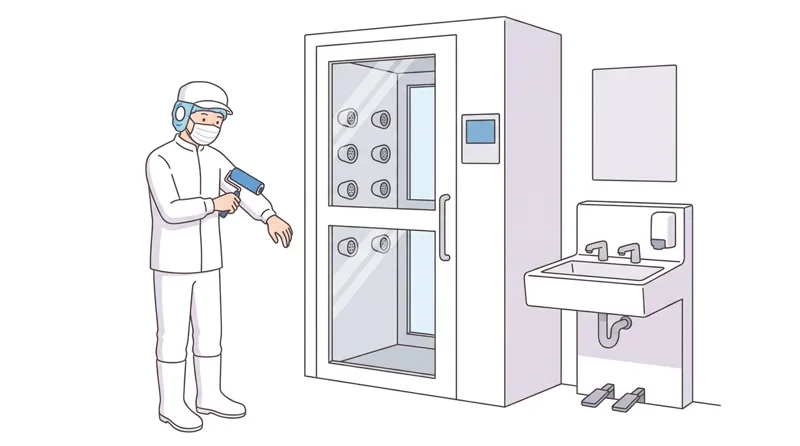
髪をブラッシングしてヘアーネットで耳まで覆い、その上から作業帽をかぶって鏡で確認します(ヘアピンは禁止)。マスクで鼻からあごまで覆い、粘着ローラーとエアシャワーで毛髪やほこりを取り除いてから手を洗い入室します。
Brush your hair, cover it completely down to the ears with a hairnet, put on your work cap, and check in a mirror (hairpins are prohibited). Cover from nose to chin with a mask, and remove loose hair and dust using a sticky roller and air shower before washing your hands and entering.
トイレに行くときは作業着の上着・エプロン・手袋を脱ぎ、トイレ専用の履物に履き替えます。手を腰タオルや作業着で拭いてはいけません。長靴も毎日洗って消毒・乾燥させ、ひび割れを点検します。
Before using the toilet, remove your work jacket, apron, and gloves, and change into dedicated toilet footwear. Never wipe your hands on a waist towel or uniform. Wash, sanitize, and dry work boots daily and inspect them for cracks.
Key points
- 下痢・発熱・手の傷があるときは必ず作業前に責任者へ報告し、定期的に検便を受ける。
Report diarrhea, fever, or hand wounds to a supervisor before work, and undergo periodic stool examinations. - ボタンや外ポケットのない作業着を着て、ヘアーネットと作業帽で髪を完全に覆い、粘着ローラーをかける。
Wear a buttonless, pocketless uniform, cover all hair with a hairnet and work cap, and apply a sticky roller before entry. - トイレに入る前に作業着・エプロン・手袋を外し、必ずトイレ専用の履物に履き替える。
Remove your work uniform, apron, and gloves and change into dedicated toilet shoes before entering the restroom.
| Word | Meaning |
|---|---|
| 健康保菌者 | asymptomatic carrier (healthy carrier) |
| 検便 | stool examination |
| ヘアーネット | hairnet |
| 粘着ローラー | sticky roller (lint roller) |
| エアシャワー | air shower |
衛生的な手洗いと使い捨て手袋の扱い
Hygienic Handwashing and Handling Disposable Gloves
手洗いは、作業場に入る前、トイレの後、生肉やゴミ・汚れた物に触れた後、そして作業内容が変わるときに必ず行います。水洗いだけでは菌やウイルスが落ちないため、手洗い用洗剤を使います。
Always wash your hands before entering the work area, after using the toilet, after touching raw meat, trash, or dirty surfaces, and whenever switching tasks. Because water alone cannot remove bacteria and viruses, always use hand soap.
指先・爪の間・親指の周り・指の間・手首は汚れが残りやすい場所です。「洗剤でよく泡立ててこすり洗いし、流水ですすぐ」という工程を2回繰り返す「二度洗い」が効果的です。
Dirt easily remains on fingertips, under nails, around thumbs, between fingers, and on wrists. The two-step handwash (lathering thoroughly with soap, scrubbing, and rinsing under running water twice in a row) is highly effective.
洗った手が再汚染されないよう、蛇口はセンサー式や肘・足踏み式を使い、共用タオルではなく使い捨てペーパータオルで水気を完全に拭き取ります。その後、乾いた手にアルコールを吹きかけてすり込みます。
To prevent recontamination of clean hands, use sensor, elbow, or foot-operated faucets and dry hands completely with disposable paper towels rather than shared cloth towels. Then spray alcohol sanitizer onto dry hands and rub until completely dry.
使い捨て手袋を着ける前にも必ず手洗いと消毒を行います。作業中に手袋が破れたり汚れたりしたときや、別の作業に移るときは、すぐに新しい手袋へ交換します。
Always wash and sanitize your hands before putting on disposable gloves. If gloves tear or get dirty during work, or when you switch to a different task, replace them with a fresh pair immediately.
Key points
- 洗剤でのもみ洗いと流水でのすすぎを2回繰り返す「二度洗い」で菌やウイルスを効果的に減らす。
Two-step handwashing (repeating soap scrubbing and running-water rinsing twice) effectively reduces bacteria and viruses. - 手洗い後は使い捨てペーパータオルで水分を完全に拭き取ってからアルコール消毒を行う。
Dry hands completely with disposable paper towels before applying alcohol sanitizer. - 手袋を着ける前にも手を洗い、破れや汚れがあるときや作業が変わるときは直ちに交換する。
Wash hands before putting on gloves, and replace gloves immediately if torn, soiled, or when changing tasks.
| Word | Meaning |
|---|---|
| 衛生的手洗い | hygienic handwashing |
| 二度洗い | two-step handwashing |
| 再汚染 | recontamination |
| ペーパータオル | paper towel |
| 使い捨て手袋 | disposable gloves |
器具の洗浄殺菌と原材料・製品の管理
Equipment Cleaning & Sanitization and Material/Product Control
機械や器具は「洗浄(40〜60℃の温水と洗剤で油汚れを落とす)→流水ですすぎ→殺菌・消毒→乾燥・保管」の順に扱います。スライサーや充填機は分解洗浄し、ゴムパッキンの劣化やカビも確認します。
Clean equipment in the order: Wash with detergent (using 40–60°C warm water to remove grease) -> Rinse with running water -> Sanitize -> Dry and store cleanly. Disassemble slicers and fillers for cleaning, and inspect rubber gaskets for wear or mold.
次亜塩素酸ナトリウムは決められた濃度に薄め、使用後は飲用適の水で洗い流します(熱湯で薄めたり金属を長時間浸けたりしません)。まな板・包丁や清掃用具・ふきんは用途別に色分けして交差汚染を防ぎます。
Dilute sodium hypochlorite to the specified concentration and rinse it off with potable water after sanitizing (never dilute with boiling water or soak metal for long periods). Color-code cutting boards, knives, cleaning tools, and wiping cloths by use to prevent cross-contamination.
工場の水は飲用に適した水を使い、毎日残留塩素濃度を確認・記録します。原材料の受入時は原材料規格書と照らし合わせて品温・包装の破れ・異臭を点検し、異常があれば保留して報告します。
Use potable water throughout the plant and check and record residual chlorine levels daily. Upon receiving raw materials, verify temperature, package integrity, and odor against raw material specifications; hold and report any abnormalities.
保管は冷蔵10℃以下・冷凍−15℃以下で庫内の7割以下に収め、先入れ先出しを守ります。床に落ちた食品は専用の廃棄容器に入れて手を洗い、印字ミスや温度異常を見つけたときはすぐ機械を止めて報告します。
Store refrigerated items at 10°C or below and frozen items at −15°C or below, filling storage spaces to 70% or less and following First-In, First-Out (FIFO). Place dropped food into a dedicated disposal container and wash your hands; if you spot misprinted dates or abnormal temperatures, stop the machine and report immediately.
Key points
- 器具は「洗剤で洗浄→すすぎ→殺菌・消毒→乾燥」の順に処理し、用途別に色分けして使い分ける。
Process utensils in the order: detergent wash -> rinse -> sanitize -> dry, and color-code tools by intended use. - 冷蔵は10℃以下、冷凍は−15℃以下で保管し、先入れ先出しと温度記録を徹底する。
Keep refrigerators at 10°C or below and freezers at −15°C or below, enforcing First-In, First-Out and temperature logs. - 床に落ちた製品は再使用せず専用容器に分け、印字不良や温度異常は直ちに責任者へ報告する。
Never reuse food dropped on the floor; place it in a dedicated waste bin, and immediately report date-print errors or temperature abnormalities.
| Word | Meaning |
|---|---|
| 分解洗浄 | disassembly cleaning |
| 色分け | color-coding |
| 残留塩素濃度 | residual chlorine concentration |
| 原材料規格書 | raw material specification sheet |
| 先入れ先出し | First-In, First-Out (FIFO) |
General Hygiene Management
Practice this chapter in the appOfficial references
- 厚生労働省・OTAFF 飲食料品製造業特定技能1号技能測定試験 学習用テキスト — https://otaff.or.jp/tokutei/insyoku-1/materials/