
Understanding Society
社会の理解
National Exam for Certified Care Workers 介護福祉士 · 介護福祉士国家試験(筆記) · Written by Tokutei Pass based on the official study texts; not copied verbatim.
社会保障制度の4つの柱と5つの社会保険
Four Pillars of Social Security and Five Social Insurance Systems
日本の社会保障制度は、日本国憲法第25条の生存権を理念とし、国民の生活の安定と福祉の向上を図るために設けられています。
Japan's social security system is founded on the right to life guaranteed by Article 25 of the Constitution of Japan, aiming to stabilize national living standards and improve social welfare.
社会保障制度は、「社会保険」「社会福祉」「公的扶助」「保健医療・公衆衛生」の4つの柱で構成されています。
The social security system consists of four pillars: Social Insurance, Social Welfare, Public Assistance, and Public Health and Medical Care.
社会保険は保険料を主な財源とする防貧的な仕組みで、「医療保険」「年金保険」「雇用保険」「労災保険」「介護保険」の5種類があります。
Social insurance is a poverty-prevention mechanism funded primarily by insurance premiums and comprises five types: Medical Insurance, Pension Insurance, Employment Insurance, Workers' Accident Compensation Insurance, and Long-Term Care Insurance.
このうち医療・年金・介護は職域や地域を問わず加入する国民皆保険・皆年金の性格を持ち、雇用保険と労災保険は労働者を対象とする労働保険です。
Among these, medical, pension, and long-term care insurance operate under universal coverage regardless of occupation or region, whereas employment and workers' compensation insurance are labor insurance schemes covering workers.
少子高齢化が進む中、社会保障給付費は年金・医療・福祉その他の3部門で集計され、世代間の支え合いと持続可能な制度運営が重要課題となっています。
Amid a declining birthrate and aging population, social security benefit expenditures are tallied across three categories (Pensions, Medical Care, and Welfare & Others), making intergenerational support and sustainable system management vital issues.
介護福祉職には、こうした社会保障の仕組みをただの知識として暗記するのではなく、目の前の利用者が抱える生活課題と結びつけて適切な制度利用へとつなげる実践力が求められます。
Care workers are expected not merely to memorize social security mechanisms as abstract knowledge, but to connect the daily life challenges of users in front of them to appropriate institutional utilization.
Key points
- 社会保障の4つの柱は社会保険・社会福祉・公的扶助・公衆衛生
The 4 pillars of social security are Social Insurance, Social Welfare, Public Assistance, and Public Health - 5つの社会保険は医療・年金・雇用・労災・介護
The 5 social insurances are Medical, Pension, Employment, Workers' Compensation, and Long-Term Care - 社会保障給付費は年金・医療・福祉その他の3部門で構成
Social security benefit expenditures are grouped into 3 sectors: Pensions, Medical Care, and Welfare & Others
| Word | Meaning |
|---|---|
| 社会保障制度 | Social security system |
| 社会保険 | Social insurance |
| 公的扶助 | Public assistance |
| 国民皆保険 | Universal health insurance coverage |
介護保険制度の保険者・被保険者と要介護認定
Insurers, Insured Persons, and Certification of Long-Term Care Need
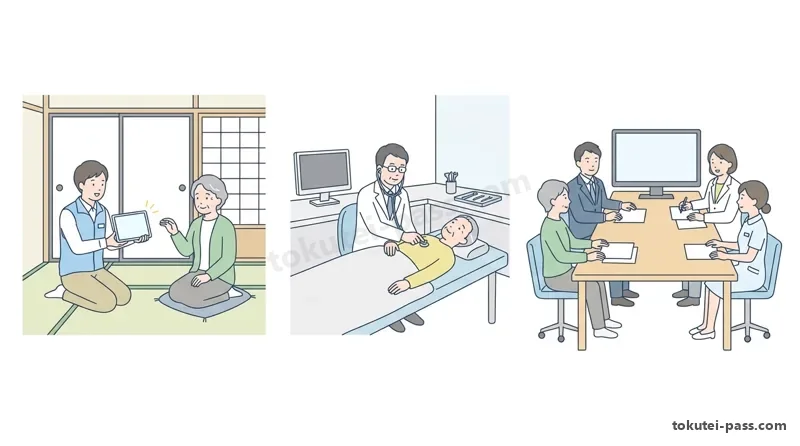
2000年4月に施行された介護保険法において、保険者は市町村および特別区であり、被保険者は第1号被保険者(65歳以上)と第2号被保険者(40歳以上65歳未満の医療保険加入者)に分かれます。
Under the Long-Term Care Insurance Act enforced in April 2000, the insurers are municipalities and special wards, and insured persons are divided into Category 1 (aged 65 and over) and Category 2 (medical insurance enrollees aged 40 to under 65).
第1号被保険者は原因を問わず要介護・要支援状態になった場合に受給できますが、第2号被保険者は末期がんや初老期における認知症など16の特定疾病が原因である場合に限られます。
Category 1 insured persons can receive benefits regardless of the cause when requiring care or support, whereas Category 2 insured persons are eligible only when their condition is caused by one of 16 specified age-related diseases such as terminal cancer or early-onset dementia.
サービスを利用するには市町村へ要介護認定を申請し、認定調査(基本調査74項目と特記事項)および主治医意見書に基づいてコンピュータによる一次判定が行われます。
To use services, an applicant applies to the municipality for certification; a computer-based primary determination is then conducted based on the certification survey (74 basic items and special notes) and the attending physician's written opinion.
続いて保健・医療・福祉の学識経験者で構成される介護認定審査会が二次判定を行い、市町村が申請から原則30日以内に非該当・要支援1〜2・要介護1〜5の判定結果を通知します。
Next, the Long-Term Care Certification Review Board—composed of experts in health, medical care, and welfare—conducts a secondary determination, and the municipality notifies the applicant of the result (Non-eligible, Support Levels 1–2, Care Levels 1–5) in principle within 30 days of application.
認定の有効期間は新規申請で原則6か月(3〜12か月)、更新申請で原則12か月ですが、状態が安定している場合の更新では最大48か月(4年間)まで延長可能です。
The validity period of certification is in principle 6 months (3–12 months) for new applications and 12 months for renewals, but renewal periods for stable individuals can be extended up to a maximum of 48 months (4 years).
なお、要介護認定の効力は「申請した日」にさかのぼって発生するため、緊急の必要がある場合には認定結果が出る前から暫定ケアプランを作成してサービスを利用開始することができます。
Furthermore, because certification takes effect retroactively from the date of application, in urgent cases a provisional care plan can be created so that services can begin even before the certification result is issued.
Key points
- 保険者は市町村・特別区、第2号被保険者は16の特定疾病が要件
Insurers are municipalities/special wards; Category 2 requires one of the 16 specified diseases - 認定結果は申請から原則30日以内に市町村が通知
Certification results are notified by the municipality in principle within 30 days of application - 有効期間は新規原則6か月・更新原則12か月(最大48か月まで延長可)
Validity period: 6 months in principle for new applications, 12 months for renewals (extendable up to 48 months)
| Word | Meaning |
|---|---|
| 第1号被保険者 | Category 1 insured person (aged 65+) |
| 特定疾病 | Specified age-related diseases (16 diseases) |
| 主治医意見書 | Attending physician's written opinion |
| 介護認定審査会 | Long-Term Care Certification Review Board |
介護保険の財源構成・利用者負担・支給限度基準額
Financial Structure, Co-payments, and Benefit Limits in Long-Term Care Insurance
介護保険の給付費(利用者負担を除く)は、公費50%と保険料50%で賄われ、公費の内訳は国25%(うち調整交付金5%相当)・都道府県12.5%・市町村12.5%です。
Long-term care insurance benefit costs (excluding user co-payments) are funded 50% by public funds and 50% by insurance premiums; the public funds consist of 25% national government (including a 5% adjustment grant), 12.5% prefectures, and 12.5% municipalities.
保険料50%の現行負担割合は、第1号被保険者が23%、第2号被保険者が27%となっており、第1号は年金天引き(特別徴収)または納付書(普通徴収)で市町村が徴収します。
The current share of the 50% premium portion is 23% for Category 1 insured persons and 27% for Category 2 insured persons; Category 1 premiums are collected by municipalities via pension deduction (special collection) or payment slips (ordinary collection).
利用者の自己負担割合は原則1割ですが、65歳以上で一定以上の所得がある人は2割(合計所得金額160万円以上等)または3割(合計所得金額220万円以上等)となります。
The user co-payment rate is 10% in principle, but users aged 65 and over with income above certain thresholds pay 20% (total income of 1.6 million yen or more, etc.) or 30% (total income of 2.2 million yen or more, etc.).
1か月の自己負担合計額が所得区分ごとの上限(現役並み所得の最高区分で月額140,100円)を超えた場合は、申請により高額介護サービス費として超過分が償還払いで支給されます。
When total monthly co-payments exceed the income-based cap (up to a maximum of 140,100 yen/month for the highest active-worker income bracket), the excess amount is reimbursed upon application as High-Cost Long-Term Care Service Benefits.
また、特定福祉用具販売の支給限度基準額は同一年度で10万円、居宅介護住宅改修費の支給限度基準額は原則1住宅あたり20万円(要介護状態区分が3段階以上上がった場合や転居時は再支給可)です。
Additionally, the benefit limit for the purchase of specified welfare equipment is 100,000 yen per fiscal year, and the limit for home renovation expenses is in principle 200,000 yen per residence (re-eligible if the care level increases by 3 or more levels or upon moving).
さらに低所得世帯の施設入所者やショートステイ利用者に対しては、申請により食費と居住費(滞在費)の自己負担を軽減する「特定入所者介護サービス費(補足給付)」の仕組みも用意されています。
For low-income facility residents and short-stay users, the Supplementary Benefit (Specific Facility Resident Care Service Benefit) is also available upon application to reduce out-of-pocket meal and accommodation costs.
Key points
- 財源は公費50%(国25%・都道府県12.5%・市町村12.5%)と保険料50%(第1号23%・第2号27%)
Funding: 50% public funds (National 25%, Prefecture 12.5%, Municipality 12.5%) and 50% premiums (Cat 1: 23%, Cat 2: 27%) - 利用者負担は原則1割(所得に応じ2割・3割)、高額介護サービス費上限は最大140,100円
User co-payment is 10% in principle (20% or 30% depending on income); high-cost cap up to 140,100 yen/month - 特定福祉用具販売は年度10万円、住宅改修費は原則20万円が限度基準額
Specified welfare equipment purchase limit is 100,000 yen/year; home renovation limit is 200,000 yen in principle
| Word | Meaning |
|---|---|
| 特別徴収 | Special collection (pension deduction) |
| 高額介護サービス費 | High-Cost Long-Term Care Service Benefit |
| 特定福祉用具販売 | Sales of specified welfare equipment |
| 住宅改修費 | Home renovation expenses |
介護保険サービス体系と2024〜2026年改正のポイント
Long-Term Care Service System and Key Points of the 2024–2026 Revisions
介護保険のサービスは、居宅サービス・地域密着型サービス・施設サービス・居宅介護支援・介護予防支援に大別され、ケアマネジャー(介護支援専門員)がケアプランを作成します。
Long-term care insurance services are broadly divided into in-home services, community-based services, facility services, in-home care support, and preventive care support, with Care Managers formulating care plans.
介護保険施設には、介護老人福祉施設(特別養護老人ホーム:新規入所は原則要介護3以上)、介護老人保健施設(在宅復帰・リハビリ中心)、介護医療院(長期医療+生活施設)の3施設があります。
There are three types of long-term care insurance facilities: Intensive Care Homes for the Elderly (Tokuyo: new admission in principle requires Care Level 3 or higher), Long-Term Care Health Facilities (Roken: focused on rehabilitation and returning home), and Long-Term Care Medical Facilities (Kaigo Iryoin: long-term medical care plus living quarters).
地域密着型サービスは原則としてその市町村の住民のみが利用でき、認知症対応型共同生活介護(グループホーム:要支援2・要介護1〜5が対象)や小規模多機能型居宅介護、看護小規模多機能型居宅介護などが含まれます。
Community-based services are in principle available only to residents of that municipality and include Dementia Group Homes (for Support Level 2 and Care Levels 1–5), Small-Scale Multifunctional In-Home Care, and Nursing Small-Scale Multifunctional In-Home Care.
2024年(令和6年)4月からは経過措置が終了し、全ての介護サービス事業者に感染症および災害発生時の業務継続計画(BCP)の策定と、高齢者虐待防止のための委員会開催・指針整備・研修実施が完全義務化されました。
From April 2024, transitional periods ended, making it fully mandatory for all care service providers to formulate Business Continuity Plans (BCPs) for infectious diseases and disasters, and to hold committees, establish guidelines, and conduct training for elder abuse prevention.
さらに2024年度介護報酬改定では、従来の3つの処遇改善加算が「介護職員等処遇改善加算」に一本化され、科学的介護情報システム(LIFE)の推進や「生産性向上推進体制加算」も新設されています。
Furthermore, the FY2024 care fee revision unified the three previous treatment improvement additions into the Care Staff Treatment Improvement Addition, promoted the Scientific Long-Term Care Information System (LIFE), and introduced the Productivity Improvement Promotion System Addition.
あわせて地域包括支援センターには、保健師・社会福祉士・主任介護支援専門員の3職種が配置され、総合相談支援や権利擁護、包括的・継続的ケアマネジメント支援の中核を担っています。
In addition, Community General Support Centers are staffed with Public Health Nurses, Certified Social Workers, and Chief Care Managers, serving as the core hub for comprehensive consultation, rights advocacy, and continuous care management support.
Key points
- 特養の新規入所は原則要介護3以上、グループホームは要支援2以上が対象
New admission to Tokuyo requires Care Level 3+ in principle; Group Homes cover Support Level 2 and above - 2024年4月から全事業者でBCP策定・虐待防止措置が完全義務化
From April 2024, BCP formulation and elder abuse prevention measures became mandatory for all providers - 介護職員等処遇改善加算への一本化と生産性向上推進体制加算・LIFEの推進
Unification into the Care Staff Treatment Improvement Addition, promotion of LIFE, and the Productivity Improvement Addition
| Word | Meaning |
|---|---|
| 介護医療院 | Long-Term Care Medical Facility |
| 地域密着型サービス | Community-based services |
| 業務継続計画 | Business Continuity Plan (BCP) |
| 介護職員等処遇改善加算 | Care Staff Treatment Improvement Addition |
障害者総合支援法と2025年「就労選択支援」の新設
Comprehensive Support for Persons with Disabilities Act and New Employment Choice Support (Oct 2025)
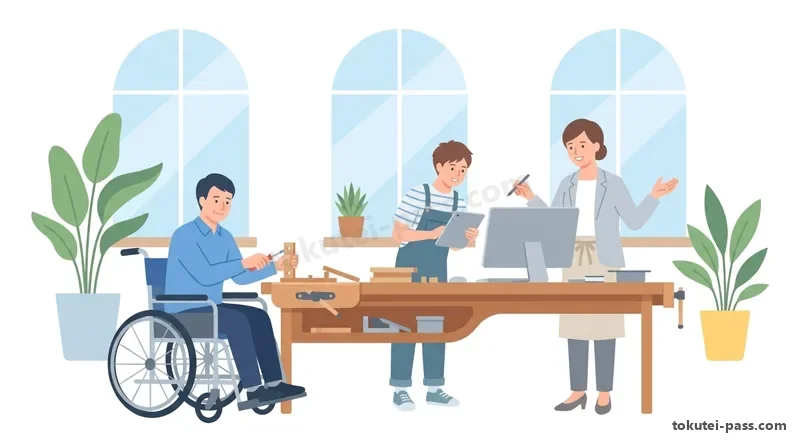
障害者総合支援法は、身体障害・知的障害・精神障害(発達障害を含む)に難病患者を加えた障害児者を対象とし、基本理念として地域社会における共生を掲げています。
The Act on Comprehensive Support for Persons with Disabilities covers children and adults with physical, intellectual, or mental disabilities (including developmental disabilities) as well as patients with intractable diseases, upholding coexistence in the local community as its basic principle.
給付は市町村が実施する「自立支援給付」と、市町村・都道府県が柔軟に行う「地域生活支援事業」(移動支援や意思疎通支援など)の2つに大別されます。
Benefits are broadly divided into Independence Support Benefits implemented by municipalities and Community Life Support Projects flexibly conducted by municipalities and prefectures (such as mobility support and communication support).
自立支援給付のうち、居宅介護・重度訪問介護・同行援護・行動援護などの「介護給付」を利用するには、市町村による障害支援区分(区分1〜6、区分6が最重度)の認定が必要です。
Within Independence Support Benefits, using Care Benefits (home help, visiting care for persons with severe disabilities, accompaniment support, behavior support, etc.) requires municipal certification of a Disability Support Category (Categories 1–6, with Category 6 being the most severe).
一方、自立訓練や就労移行支援・就労継続支援(A型=雇用契約あり、B型=雇用契約なし)などの「訓練等給付」は障害支援区分の認定が不要であり、2025年10月からは本人の強みや適性をアセスメントする「就労選択支援」が新たに訓練等給付に追加されました。
Conversely, Training Benefits (independence training, employment transition support, continuous employment support Type A with an employment contract and Type B without a contract) do not require a Disability Support Category; and in October 2025, Employment Choice Support—which assesses an individual's strengths and aptitude—was newly added to Training Benefits.
なお、障害者が65歳に達した際は「介護保険優先の原則」が適用されますが、同じ事業所で継続利用できる「共生型サービス」や、長年障害福祉サービスを利用してきた低所得者等の介護保険自己負担を軽減する「新高額障害福祉サービス等給付費」が設けられています。
When a person with a disability reaches age 65, the Principle of Priority of Long-Term Care Insurance applies, but Symbiotic Services allow continued use at the same facility, and the New High-Cost Disability Welfare Service Benefit reduces long-term care co-payments for low-income individuals who have used disability welfare services long-term.
また相談支援専門員が作成する「サービス等利用計画」を通じて、本人の希望する地域生活や就労に向けたきめ細かなケアマネジメントが行われます。
Through the Service Utilization Plan prepared by a Consultation Support Specialist, finely tailored care management is carried out toward the community life and employment desired by the individual.
Key points
- 介護給付は障害支援区分(1〜6、6が最重度)が必要、訓練等給付は区分不要
Care Benefits require a Disability Support Category (1–6, 6 most severe); Training Benefits do not require a category - 2025年10月から訓練等給付に新たに「就労選択支援」が創設
In October 2025, Employment Choice Support was newly established under Training Benefits - 65歳到達時は介護保険優先の原則があり、共生型サービスや負担軽減制度で連続性を確保
At age 65, Long-Term Care Insurance takes priority, while Symbiotic Services and fee reduction schemes ensure continuity
| Word | Meaning |
|---|---|
| 障害者総合支援法 | Act on Comprehensive Support for Persons with Disabilities |
| 障害支援区分 | Disability Support Category (Levels 1–6) |
| 就労選択支援 | Employment Choice Support (effective Oct 2025) |
| 共生型サービス | Symbiotic Services |
生活保護制度の4原理・4原則と8つの扶助
Four Fundamental Principles, Four Operational Rules, and Eight Types of Public Assistance
生活保護法は、憲法第25条の理念に基づき、生活困窮者に対して困窮の程度に応じた保護を行い、最低限度の生活を保障するとともに自立を助長することを目的としています。
Based on Article 25 of the Constitution, the Public Assistance Act provides assistance to people in financial distress according to their degree of need, guaranteeing a minimum standard of living while promoting self-reliance.
生活保護には4つの基本原理があり、「国家責任の原理」「無差別平等の原理」「最低生活保障の原理」「保護の補足性の原理(資産や能力・他法他施策を優先活用すること)」で構成されます。
Public assistance has four fundamental principles: the Principle of State Responsibility, the Principle of Non-Discriminatory Equality, the Principle of Guaranteeing a Minimum Standard of Living, and the Principle of Complementarity (prioritizing the use of assets, work ability, and other laws/measures).
また実施上の4原則として、「申請保護の原則(急迫時は職権保護可)」「基準及び程度の原則」「必要即応の原則」「世帯単位の原則(によりがたい場合は個人単位可)」が定められています。
It also establishes four operational rules: the Rule of Application-Based Protection (ex-officio protection is allowed in emergencies), the Rule of Standards and Degree, the Rule of Meeting Needs Promptly, and the Rule of the Household Unit (individual units allowed when necessary).
保護の種類には、生活扶助・教育扶助・住宅扶助・医療扶助・介護扶助・出産扶助・生業扶助・葬祭扶助の8種類があり、必要に応じて単給または併給で行われます。
There are eight types of assistance: Livelihood, Education, Housing, Medical, Long-Term Care, Maternity, Occupational, and Funeral Assistance, provided singly or in combination as needed.
8つの扶助のうち、医療扶助と介護扶助は原則として「現物給付」で支給され、生活扶助や住宅扶助などその他の6つの扶助は原則として「金銭給付」で支給される点が試験頻出です。
Among the eight types, Medical Assistance and Long-Term Care Assistance are provided in principle as benefits in kind, whereas the other six types such as Livelihood and Housing Assistance are provided in principle as cash benefits—a frequently tested distinction.
生活保護の実施機関である福祉事務所(市および特別区は設置義務あり、町村は任意設置)では、社会福祉主事の資格を持つ現業員(ケースワーカー)が相談や訪問調査・自立支援を行います。
At Welfare Offices—the implementing agencies for public assistance (mandatory in cities and special wards, optional in towns and villages)—caseworkers qualified as Social Welfare Officers conduct consultations, home visits, and independence support.
Key points
- 4原理:国家責任・無差別平等・最低生活保障・補足性
4 Principles: State Responsibility, Non-Discriminatory Equality, Minimum Living Standard, Complementarity - 4原則:申請保護・基準及び程度・必要即応・世帯単位
4 Rules: Application-Based, Standards and Degree, Meeting Needs, Household Unit - 8つの扶助のうち「医療扶助」と「介護扶助」の2つが原則現物給付
Out of the 8 types of assistance, Medical Assistance and Long-Term Care Assistance are benefits in kind in principle
| Word | Meaning |
|---|---|
| 補足性の原理 | Principle of Complementarity |
| 必要即応の原則 | Rule of Meeting Needs |
| 介護扶助 | Long-Term Care Assistance |
| 現物給付 | Benefits in kind |
成年後見制度と日常生活自立支援事業
Adult Guardianship System and Daily Life Independence Support Project
認知症・知的障害・精神障害などにより判断能力が不十分な人の権利や財産を守る制度として、民法に基づく「成年後見制度」と社会福祉法に基づく「日常生活自立支援事業」があります。
To protect the rights and property of persons with insufficient decision-making capacity due to dementia, intellectual disability, or mental disability, Japan provides the Adult Guardianship System under the Civil Code and the Daily Life Independence Support Project under the Social Welfare Act.
成年後見制度は「法定後見制度」と「任意後見制度」に分かれ、法定後見は家庭裁判所が判断能力の程度に応じて「後見(常に欠く)」「保佐(著しく不十分)」「補助(不十分)」の3類型で審判します。
The Adult Guardianship System consists of Statutory Guardianship and Voluntary Guardianship; Statutory Guardianship is adjudicated by the Family Court in three types according to decision-making capacity: Guardianship (constantly lacking), Curatorship (markedly insufficient), and Assistance (insufficient).
任意後見制度は、本人に十分な判断能力があるうちに将来の後見人候補者と公正証書で契約を結び、判断能力低下後に家庭裁判所が任意後見監督人を選任した時点で効力が生じます。
Under Voluntary Guardianship, a person with sufficient capacity concludes a notarized contract with a prospective guardian, which takes effect when the Family Court appoints a Voluntary Guardianship Supervisor after the person's capacity declines.
成年後見人等は財産管理や介護サービス契約等の身上保護(法律行為)を行いますが、日用品の購入その他日常生活に関する行為については本人が行っても取消権の対象外とされています。
Adult guardians perform property management and personal protection (legal acts such as concluding care service contracts), but everyday acts such as purchasing daily necessities cannot be rescinded even if performed by the ward themselves.
一方、日常生活自立支援事業は都道府県・指定都市社会福祉協議会が実施主体となり、契約締結能力のある軽度の認知症高齢者等に対して福祉サービスの利用援助や日常的な金銭管理を契約により支援します。
Meanwhile, the Daily Life Independence Support Project is implemented by prefectural and designated-city Social Welfare Councils, providing contract-based support for welfare service utilization and routine money management to persons with mild dementia who still have capacity to conclude contracts.
なお、本人の身寄りがない場合などで権利擁護を図るため必要があるときは、市町村長が家庭裁判所に対して後見開始等の審判を請求できる「市町村長申立て」の仕組みも活用されています。
Additionally, when an individual has no relatives and rights advocacy is necessary, the Municipal Mayor Petition system allows the municipal mayor to petition the Family Court for the commencement of guardianship.
Key points
- 法定後見は後見・保佐・補助の3類型で家庭裁判所が審判
Statutory Guardianship has 3 types adjudicated by the Family Court: Guardianship, Curatorship, and Assistance - 日用品の購入等の日常生活行為は取消権の対象外(自己決定の尊重)
Everyday acts such as purchasing daily necessities are exempt from rescission (respecting self-determination) - 日常生活自立支援事業は社会福祉協議会との契約で日常金銭管理等を支援
The Daily Life Independence Support Project supports routine money management via a contract with the Social Welfare Council
| Word | Meaning |
|---|---|
| 成年後見制度 | Adult Guardianship System |
| 法定後見制度 | Statutory Guardianship System |
| 任意後見監督人 | Voluntary Guardianship Supervisor |
| 日常生活自立支援事業 | Daily Life Independence Support Project |
高齢者・障害者虐待防止法と権利擁護の通報義務
Elder and Disability Abuse Prevention Acts and Mandatory Reporting
高齢者虐待防止法では65歳以上の高齢者に対する虐待を「養護者による虐待」と「養介護施設従事者等による虐待」に分け、障害者虐待防止法ではさらに「使用者(雇用主)による虐待」を加えた3つを定義しています。
The Elder Abuse Prevention Act classifies abuse against adults aged 65+ into Abuse by Family Caregivers and Abuse by Long-Term Care Facility Staff, while the Disability Abuse Prevention Act defines three categories by adding Abuse by Employers.
虐待の類型はいずれも共通の5類型であり、「身体的虐待」「介護・世話の放棄・放任(ネグレクト)」「心理的虐待」「性的虐待」「経済的虐待」に分類されます。
All share the same five types of abuse: Physical Abuse, Neglect (abandonment of care), Psychological Abuse, Sexual Abuse, and Financial Abuse.
養護者による高齢者虐待では、生命または身体に重大な危険が生じている場合に市町村への速やかな通報義務があり、それ以外の場合は通報の努力義務となっています。
For elder abuse by family caregivers, immediate reporting to the municipality is mandatory when there is a serious threat to life or body, and an obligation to make efforts to report applies in other cases.
一方、養介護施設従事者等による高齢者虐待や、障害者虐待(養護者・施設従事者等・使用者)を発見した場合は、危険の程度にかかわらず全て市町村(または都道府県)への速やかな通報義務があります。
Conversely, when elder abuse by care facility staff or any form of disability abuse (by family caregivers, facility staff, or employers) is discovered, immediate reporting to the municipality (or prefecture) is mandatory regardless of the degree of danger.
これらの法律による通報は正当な行為であり、刑法や社会福祉士及び介護福祉士法の守秘義務(秘密保持義務)には違反せず、通報したことを理由に解雇などの不利益な取り扱いを受けることはありません。
Reporting under these laws is a lawful act that does not violate the confidentiality obligations of the Penal Code or the Certified Social Worker and Certified Care Worker Act, and whistleblowers are protected by law from dismissal or other disadvantageous treatment.
また市町村は通報や届出を受けた際、速やかに事実確認や立入調査を行い、一時保護(やむを得ない事由による措置入所)や養護者への相談・支援を一体として進めます。
Upon receiving a report or notification, the municipality promptly confirms the facts, conducts on-site investigations, and provides temporary protection (emergency institutional placement) alongside consultation and support for family caregivers.
Key points
- 虐待の5類型は身体的・ネグレクト・心理的・性的・経済的虐待
5 types of abuse: Physical, Neglect, Psychological, Sexual, and Financial Abuse - 施設従事者等による虐待と障害者虐待は危険度を問わず市町村等への通報義務
Abuse by facility staff and all disability abuse require mandatory reporting regardless of the level of danger - 虐待通報は守秘義務よりも優先され、通報者の不利益取扱いは禁止
Abuse reporting overrides confidentiality obligations, and disadvantageous treatment of reporters is prohibited
| Word | Meaning |
|---|---|
| 高齢者虐待防止法 | Elder Abuse Prevention Act |
| 障害者虐待防止法 | Disability Abuse Prevention Act |
| 経済的虐待 | Financial abuse |
| 通報義務 | Mandatory reporting obligation |
Understanding Society
Practice this chapter in the appOfficial references
- 公益財団法人社会福祉振興・試験センター「介護福祉士国家試験 試験科目別出題基準」 — https://www.sssc.or.jp/kaigo/kijun/index.html
- 厚生労働省「介護保険制度の概要・障害福祉サービスについて」 — https://www.mhlw.go.jp/stf/seisakunitsuite/bunya/hukushi_kaigo/index.html