
Understanding Development and Aging
発達と老化の理解
National Exam for Certified Care Workers 介護福祉士 · 介護福祉士国家試験(筆記) · Written by Tokutei Pass based on the official study texts; not copied verbatim.
人間の成長・発達の原則と乳幼児期の運動・愛着
Principles of Human Growth and Development, Infant Motor Milestones, and Attachment
人間の発達とは、受精から死に至るまでの生涯にわたる心身の質的・量的な変化のプロセスを指し、乳幼児期から高齢期まで連続して続くという「生涯発達」の視点が重視されます。
Human development refers to the lifelong process of qualitative and quantitative physical and psychological changes from conception to death, emphasizing a Lifespan Development perspective that continues through old age.
乳幼児の身体発達には一定の方向性があり、頭から足の方へ進む「頭尾方向の法則」と、身体の中心から末端(手先・足先)へ進む「近遠方向の法則」があります。
Physical development in infants follows specific directions: the Cephalocaudal Law (progressing from head to toe) and the Proximodistal Law (progressing from the center of the body outward to the extremities).
粗大運動の発達マイルストーンとして、生後3〜4か月頃に「首すわり(頸定)」、5〜6か月頃に「寝返り」、7〜8か月頃に「ひとりすわり」、9〜10か月頃に「つかまり立ち」、1歳頃に「ひとり歩き」が見られます。
Gross motor milestones in infancy include head control around 3–4 months, rolling over around 5–6 months, sitting without support around 7–8 months, pulling to stand around 9–10 months, and independent walking around 1 year of age.
心理学者ボウルビィは、乳幼児が養育者との間に築く情緒的な絆を「アタッチメント(愛着)」と呼び、これが将来の対人関係や探索行動の「安全基地」になると説明しました。
Psychologist John Bowlby termed the emotional bond formed between an infant and caregiver Attachment, explaining that it serves as a Secure Base for future interpersonal relationships and exploratory behavior.
またピアジェは認知発達段階説を提唱し、感覚運動期(0〜2歳頃)において「物の永続性(見えなくなっても存在し続けること)」を獲得し、前操作期(2〜7歳頃)には自己中心性やアニミズムが見られると述べました。
Jean Piaget proposed the theory of cognitive development stages, stating that infants acquire Object Permanence (understanding that objects continue to exist even when out of sight) during the sensorimotor stage (0–2 years), while egocentrism and animism appear during the preoperational stage (2–7 years).
Key points
- 乳幼児の運動発達は「首すわり→寝返り→ひとりすわり→つかまり立ち→ひとり歩き」の順に進む
Infant motor development progresses in order: Head control -> Rolling over -> Sitting -> Pulling to stand -> Independent walking - ボウルビィは養育者との情緒的な絆である「アタッチメント(愛着)」を提唱した
Bowlby proposed Attachment as the emotional bond between an infant and caregiver - ピアジェは感覚運動期に「物の永続性」が成立することを示した
Piaget demonstrated that Object Permanence is established during the sensorimotor stage
| Word | Meaning |
|---|---|
| 生涯発達 | Lifespan development |
| 頸定(首すわり) | Head control (around 3–4 months) |
| アタッチメント(愛着) | Attachment |
| 物の永続性 | Object permanence |
エリクソンとハヴィガーストの発達段階と発達課題
Developmental Stages and Tasks of Erikson and Havighurst
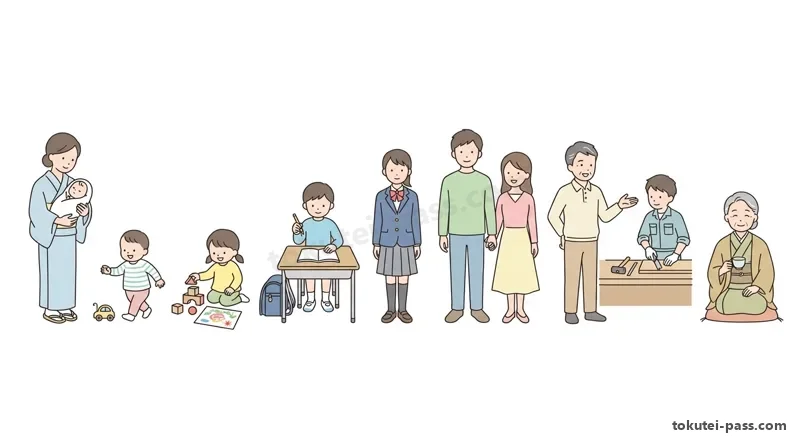
心理学者エリクソンは、人生を8つの段階に分け、各段階で乗り越えるべき心理社会的危機(発達課題)と獲得される力(導かれる徳)を示す「ライフサイクル論」を提唱しました。
Psychologist Erik Erikson proposed the Life Cycle Theory, dividing life into eight stages and identifying the psychosocial crisis (developmental task) to overcome and the virtue gained at each stage.
乳児期は「基本的信頼 対 不信」、幼児前期は「自律性 対 恥・疑惑」、幼児後期は「自主性 対 罪悪感」、学童期は「勤勉性 対 劣等感」がテーマとなります。
The themes are Basic Trust vs. Mistrust in infancy, Autonomy vs. Shame and Doubt in early childhood, Initiative vs. Guilt in play age, and Industry vs. Inferiority in school age.
続く青年期の課題は「同一性(アイデンティティ) 対 同一性拡散」、成人期は「親密性 対 孤立」、壮年期(中年期)は次世代を育てる「生殖性(世代性) 対 停滞」です。
Subsequently, the task of adolescence is Identity vs. Identity Diffusion, young adulthood is Intimacy vs. Isolation, and middle adulthood is Generativity (nurturing the next generation) vs. Stagnation.
そして最終段階である老年期の課題は「自我の統合 対 絶望」であり、自分が歩んできた人生をかけがえのないものとして受け入れることで「賢明さ(英知)」を獲得するとされています。
In the final stage of old age, the task is Ego Integrity vs. Despair; accepting one's life as irreplaceable leads to the acquisition of Wisdom.
また教育学者ハヴィガーストも6段階の発達課題を挙げ、老年期の課題として「肉体的な力と健康の衰退への適応」「退職と収入減少への適応」「配偶者の死への適応」などを示しました。
Educator Robert Havighurst also outlined developmental tasks across six stages, identifying tasks of old age such as adjusting to declining physical strength and health, adjusting to retirement and reduced income, and adjusting to the death of a spouse.
Key points
- エリクソンの青年期は「アイデンティティ(同一性)」、壮年期は「世代性(生殖性)」が課題
In Erikson's theory, adolescence centers on Identity and middle adulthood centers on Generativity - エリクソンの老年期は「自我の統合 対 絶望」であり、導かれる力は「賢明さ(英知)」
Erikson's stage for old age is Ego Integrity vs. Despair, with Wisdom as the resulting strength - ハヴィガーストは老年期の課題として健康衰退・退職・配偶者の死への適応を挙げた
Havighurst listed adapting to declining health, retirement, and death of a spouse as developmental tasks of old age
| Word | Meaning |
|---|---|
| アイデンティティ(同一性) | Identity |
| 世代性(生殖性) | Generativity |
| 自我の統合 対 絶望 | Ego Integrity vs. Despair |
| ハヴィガーストの発達課題 | Havighurst's developmental tasks |
老化に伴う知的機能・心理の変化と喪失体験
Age-Related Changes in Intellectual Function and Psychology, and Experiences of Loss
心理学者キャッテルとホーンは、人間の知能を「流動性知能」と「結晶性知能」の2つに分けて老化による変化を説明しました。
Psychologists Cattell and Horn divided human intelligence into Fluid Intelligence and Crystallized Intelligence to explain age-related changes.
新しい場面への適応力や計算・暗記のスピードなどに関わる「流動性知能」は20歳代をピークに加齢とともに低下しやすい傾向があります。
Fluid Intelligence—which involves adaptability to new situations and speed of calculation and memorization—peaks in one's twenties and tends to decline with aging.
一方、長年の学習や人生経験・言語知識・判断力などにもとづく「結晶性知能」は、60歳代以降も維持されるか、むしろ緩やかに向上し続けるという大きな強みがあります。
Conversely, Crystallized Intelligence—based on lifelong learning, life experience, verbal knowledge, and judgment—has the major strength of being maintained or even continuing to improve gradually after one's sixties.
また老年期には、「心身の健康の喪失」「経済的自立の喪失」「家族や社会とのつながりの喪失」「生きる目的の喪失」という「4つの喪失(老いの4苦)」が重なりやすくなります。
In old age, four major losses (the Four Losses of Aging) often overlap: loss of physical and mental health, loss of economic independence, loss of connections with family and society, and loss of purpose in life.
こうした喪失体験から抑うつ状態や閉じこもりに陥りやすいため、介護福祉職は過去の人生を振り返る「ライフレビュー(回想)」を支え、現在の役割や自尊心を保つ支援を行います。
Because these experiences of loss can easily lead to depression or social withdrawal, care workers support Life Review (reminiscence) to reflect on past life experiences and help maintain current roles and self-esteem.
Key points
- 新しい情報処理や暗記速度である「流動性知能」は加齢で低下しやすい
Fluid Intelligence (processing new information and memorization speed) tends to decline with age - 人生経験や知識・判断力である「結晶性知能」は高齢期でも保たれやすい
Crystallized Intelligence (life experience, knowledge, and judgment) is well preserved even in old age - 老年期は健康・経済・つながり・生きる目的の「4つの喪失」への心理的支援が重要
Psychological support for the Four Losses of old age (health, economy, connections, purpose in life) is vital
| Word | Meaning |
|---|---|
| 流動性知能 | Fluid intelligence |
| 結晶性知能 | Crystallized intelligence |
| 喪失体験 | Experience of loss |
| ライフレビュー(回想) | Life review (reminiscence) |
老化に伴う感覚器(視覚・聴覚・味覚等)の変化
Age-Related Changes in Sensory Organs (Vision, Hearing, Taste, etc.)
加齢に伴う視覚の変化として、水晶体の弾力性が低下して近くにピントが合いにくくなる「老視(老眼)」や、水晶体が白く濁りまぶしさ(グレア)やかすみ目が生じる「老人性白内障」が多くみられます。
Age-related visual changes commonly include Presbyopia (difficulty focusing on close objects due to decreased lens elasticity) and Senile Cataracts (clouding of the lens causing glare and blurred vision).
また高齢者は明暗順応(特に明るい場所から暗い場所へ入ったときの暗順応)や動体視力・視野が低下し、水晶体の黄変により「青と黒」「白と黄色」などの寒色系や同系色の識別が難しくなります。
Older adults also experience reduced light-dark adaptation (especially dark adaptation when entering a dark room from a bright place), reduced dynamic visual acuity and visual field, and yellowing of the lens that makes it harder to distinguish cool or similar colors such as blue and black or white and yellow.
聴覚では、内耳の蝸牛にある有毛細胞などの変性により「老人性難聴(加齢性難聴)」が生じ、初期には「高音域(高い音)」から聞こえにくくなるという特徴があります。
In hearing, degeneration of hair cells in the cochlea of the inner ear causes Presbycusis (age-related hearing loss), which characteristically begins with difficulty hearing high-frequency sounds (high-pitched tones).
さらに小さな音は聞こえにくいのに、一定の音の大きさを超えると急にうるさく響いて不快に感じる「リクルートメント現象(補充現象)」や、言葉の音は聞こえても意味が聞き取りにくい語音弁別能の低下がみられます。
In addition, older adults often exhibit the Recruitment Phenomenon (soft sounds are hard to hear, but sounds above a certain volume suddenly reverberate unpleasantly loudly) and decreased speech discrimination (hearing the sound of voices but struggling to understand the words).
味覚や嗅覚、皮膚の温痛覚・口渇中枢の感度も加齢で鈍くなるため、塩分の摂りすぎや低温熱傷(湯たんぽ等によるやけど)、喉の渇きを自覚しにくいことによる脱水に十分注意する必要があります。
Sensitivity of taste, smell, skin temperature/pain sensation, and the thirst center also dulls with age, requiring careful attention to excessive salt intake, low-temperature burns (from hot water bottles, etc.), and dehydration due to lack of perceived thirst.
Key points
- 高齢者の視覚は暗順応低下・まぶしさ(グレア)の増加・青色系の識別低下が起こりやすい
Aging vision is prone to reduced dark adaptation, increased glare, and difficulty distinguishing bluish/yellowish colors - 老人性難聴は高音域から低下し、大声が響くリクルートメント現象を伴う
Presbycusis begins in the high-frequency range and is accompanied by the Recruitment Phenomenon - 口渇感や温痛覚の低下により、自覚症状のない脱水や低温熱傷が起こりやすい
Reduced thirst and temperature/pain sensation increase the risk of asymptomatic dehydration and low-temperature burns
| Word | Meaning |
|---|---|
| 老人性白内障 | Senile cataract |
| 暗順応 | Dark adaptation |
| 老人性難聴(高音域低下) | Presbycusis (high-frequency hearing loss) |
| リクルートメント現象 | Recruitment phenomenon |
老化に伴う身体機能(呼吸・循環・消化・腎機能等)の変化
Age-Related Changes in Physical Functions (Respiratory, Circulatory, Digestive, Renal, etc.)
老化に伴う生理的変化の一般特徴として、「予備力の低下」「環境変化への適応力の低下」「恒常性(ホメオスタシス)維持機能の低下」、および「個人差が大きいこと」が挙げられます。
General characteristics of physiological aging include decreased reserve capacity, decreased adaptability to environmental changes, decreased ability to maintain homeostasis, and large individual differences.
呼吸器系では、肺胞の弾力性低下や呼吸筋の筋力低下により「肺活量」や「1秒率」が減少する一方、息を吐き切った後も肺内に残る「残気量」は増加します。
In the respiratory system, decreased alveolar elasticity and respiratory muscle strength reduce Vital Capacity and Forced Expiratory Volume in 1 second (FEV1%), whereas Residual Volume (air remaining in the lungs after maximal exhalation) increases.
循環器系では、血管壁の弾力性が失われる動脈硬化により末梢血管抵抗が増大し、収縮期血圧が上昇して拡張期血圧との差(脈圧)が大きくなります。
In the circulatory system, arteriosclerosis reduces blood vessel wall elasticity and increases peripheral vascular resistance, elevating systolic blood pressure and widening Pulse Pressure (the difference between systolic and diastolic pressure).
消化器系では、唾液分泌量や胃液分泌量・腸管の蠕動運動が低下し、下部食道括約筋の緩みによる胃食道逆流症や、大腸運動低下による弛緩性便秘が起こりやすくなります。
In the digestive system, saliva secretion, gastric juice secretion, and intestinal peristalsis decrease, making gastroesophageal reflux disease (from relaxation of the lower esophageal sphincter) and atonic constipation more likely.
また腎臓では腎血流量や糸球体濾過量(GFR)・尿濃縮力が低下するため、夜間に多くの尿がつくられる「夜間頻尿」が増えるとともに、薬物の排泄が遅れて副作用が出やすくなります。
In the kidneys, renal blood flow, Glomerular Filtration Rate (GFR), and urine concentrating ability decline, increasing Nocturia (frequent nighttime urination) and delaying drug excretion, which makes adverse drug reactions more likely.
Key points
- 加齢により肺活量は減少し、肺内に残る「残気量」は増加する
With aging, vital capacity decreases while Residual Volume remaining in the lungs increases - 動脈硬化により収縮期血圧が上昇し、脈圧(収縮期と拡張期の差)が大きくなる
Arteriosclerosis elevates systolic blood pressure and widens Pulse Pressure - 腎機能や肝機能の低下により、薬の効きすぎや副作用が出やすくなる
Declining renal and hepatic function makes excessive drug effects and side effects more likely
| Word | Meaning |
|---|---|
| ホメオスタシス(恒常性) | Homeostasis |
| 残気量の増加 | Increase in residual volume |
| 脈圧の増大 | Widening of pulse pressure |
| 糸球体濾過量(GFR) | Glomerular Filtration Rate (GFR) |
フレイル・サルコペニア・ロコモティブシンドロームの理解と予防
Understanding and Preventing Frailty, Sarcopenia, and Locomotive Syndrome
「フレイル(虚弱)」とは、加齢に伴い心身の活力(筋力・認知機能・社会とのつながり等)が低下した、健康な状態と要介護状態の中間段階を指します。
Frailty refers to the intermediate stage between good health and the need for long-term care, in which physical and mental vitality (muscle strength, cognitive function, social connections, etc.) declines with aging.
フレイルの最大の特徴は、適切な栄養摂取・運動・社会参加などの介入によって再び健康な状態に戻ることができる「可逆性」を持っている点にあります。
The most important characteristic of frailty is Reversibility—meaning an individual can return to a healthy state through appropriate interventions such as proper nutrition, exercise, and social participation.
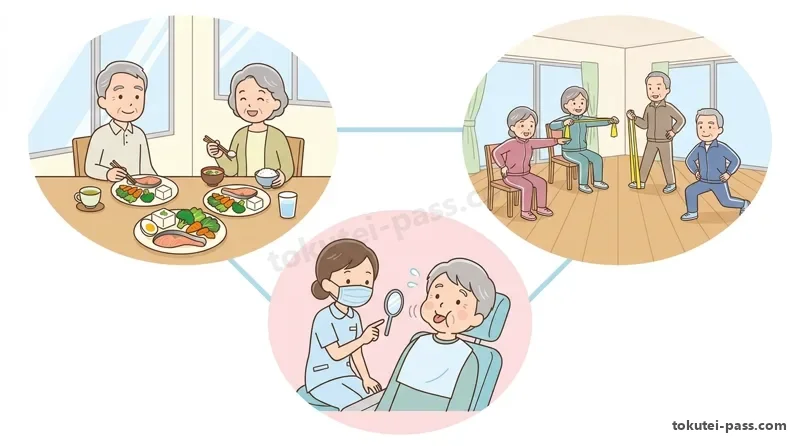
フレイルは、体重減少や歩行速度低下などの「身体的フレイル」、うつや軽度認知障害などの「精神・心理的フレイル」、独居や孤立・外出減少などの「社会的フレイル」の3側面が連鎖します。
Frailty involves an interconnected cycle of three dimensions: Physical Frailty (weight loss, slower walking speed), Mental/Psychological Frailty (depression, mild cognitive decline), and Social Frailty (living alone, isolation, going out less).
身体的フレイルの中核となる「サルコペニア(筋肉減弱症)」は、加齢や低栄養・活動不足により骨格筋量が減り、握力(筋力)や歩行速度(身体機能)が低下した状態です。
At the core of physical frailty is Sarcopenia, a condition characterized by age-, malnutrition-, or inactivity-related loss of skeletal muscle mass accompanied by decreased grip strength (muscle strength) or walking speed (physical function).
また、骨粗鬆症や変形性関節症・サルコペニアなど「運動器の障害」によって移動機能(立つ・歩く)が低下した状態を「ロコモティブシンドローム(運動器症候群)」と呼び、たんぱく質摂取と運動習慣が予防の鍵となります。
Meanwhile, Locomotive Syndrome refers to reduced mobility (standing and walking) caused by musculoskeletal disorders such as osteoporosis, osteoarthritis, or sarcopenia, for which protein intake and regular exercise are key preventive measures.
Key points
- フレイルは健康と要介護の中間段階であり、適切な支援で回復できる「可逆性」がある
Frailty is the intermediate stage between health and care dependency and has Reversibility with proper support - フレイルには身体的・精神心理的・社会的フレイルの3つの側面がある
Frailty encompasses 3 dimensions: Physical, Mental/Psychological, and Social Frailty - サルコペニアは骨格筋量と筋力の低下、ロコモは運動器障害による移動機能低下
Sarcopenia is loss of skeletal muscle mass and strength; Locomotive Syndrome is reduced mobility from musculoskeletal disorders
| Word | Meaning |
|---|---|
| フレイル(虚弱) | Frailty |
| 可逆性 | Reversibility |
| サルコペニア(筋肉減弱症) | Sarcopenia |
| ロコモティブシンドローム | Locomotive syndrome |
高齢期の疾患の特徴と代表的な疾患(脳血管疾患・心疾患・糖尿病等)
Characteristics of Diseases in Old Age and Major Conditions (Stroke, Heart Disease, Diabetes)
高齢者の疾病には、「1人で複数の慢性疾患を併せ持つ(多病)」「症状が非定型的(無痛性心筋梗塞や発熱のない肺炎など)」「水・電解質異常(脱水)を起こしやすい」「多剤併用(ポリファーマシー)による薬物有害事象が起きやすい」といった特徴があります。
Diseases in older adults are characterized by multimorbidity (having multiple chronic diseases simultaneously), atypical symptoms (painless myocardial infarction, pneumonia without fever), susceptibility to fluid/electrolyte imbalances (dehydration), and adverse drug events from Polypharmacy.
脳血管疾患(脳卒中)は、脳血管が詰まる「脳梗塞(アテローム血栓性・心原性脳塞栓症・ラクナ梗塞)」と、血管が破れる「脳出血(高血圧性が多い)」「くも膜下出血(脳動脈瘤破裂による突然の激しい頭痛)」に分かれます。
Cerebrovascular disease (stroke) is divided into Cerebral Infarction caused by blocked brain vessels (atherothrombotic, cardioembolic, and lacunar infarction) and intracranial hemorrhage caused by ruptured vessels, including Cerebral Hemorrhage (often hypertensive) and Subarachnoid Hemorrhage (sudden severe headache from a ruptured cerebral aneurysm).
虚血性心疾患のうち、「狭心症」は冠動脈の狭窄により数分〜15分程度の一時的な胸痛が生じニトログリセリンが有効であるのに対し、「心筋梗塞」は冠動脈閉塞により心筋が壊死し30分以上の激しい胸痛が続きます。
Among ischemic heart diseases, Angina Pectoris involves temporary chest pain lasting a few to 15 minutes due to coronary artery narrowing and responds to nitroglycerin, whereas Myocardial Infarction involves myocardial necrosis from coronary occlusion with severe chest pain lasting 30 minutes or more.
高齢者に多い2型糖尿病では、高血糖状態が続くことで「三大合併症(糖尿病網膜症・糖尿病腎症・糖尿病神経障害)」や動脈硬化が進行します。
In Type 2 Diabetes Mellitus, which is common in older adults, chronic hyperglycemia leads to the progression of the Three Major Complications (diabetic retinopathy, diabetic nephropathy, and diabetic neuropathy) as well as arteriosclerosis.
また糖尿病薬やインスリン使用中の高齢者で食事量が減ったり運動量が増えたりすると、冷や汗・動悸・手指の震え・意識障害などの「低血糖症状」が起こるため、速やかなブドウ糖補給と医療連携が必要です。
When older adults taking antidiabetic drugs or insulin eat less or exercise more than usual, Hypoglycemic Symptoms (cold sweats, palpitations, hand tremors, impaired consciousness) can occur, requiring prompt glucose administration and medical coordination.
Key points
- 高齢者疾患は多病・非定型的症状・ポリファーマシー(多剤併用)による副作用が特徴
Geriatric diseases feature multimorbidity, atypical symptoms, and side effects from Polypharmacy - 狭心症は一時的虚血(数分〜15分・ニトロ有効)、心筋梗塞は心筋壊死(30分以上持続)
Angina pectoris is transient ischemia (a few to 15 min, nitroglycerin effective); myocardial infarction is necrosis (30+ min) - 糖尿病の三大合併症は網膜症・腎症・神経障害であり、低血糖症状にも注意
The 3 major diabetic complications are retinopathy, nephropathy, and neuropathy; watch carefully for hypoglycemia
| Word | Meaning |
|---|---|
| ポリファーマシー(多剤併用) | Polypharmacy |
| 心原性脳塞栓症 | Cardioembolic stroke |
| 虚血性心疾患 | Ischemic heart disease |
| 糖尿病の三大合併症 | Three major complications of diabetes |
高齢期に多い転倒・骨折・脱水・浮腫の予防とケア
Prevention and Care of Falls, Fractures, Dehydration, and Edema in Old Age
高齢者は筋力・バランス能力・視力の低下や骨粗鬆症により転倒・骨折を起こしやすく、要介護状態となる主要な原因(認知症・脳血管疾患・高齢による衰弱と並ぶ上位要因)となっています。
Older adults are prone to falls and fractures due to declining muscle strength, balance, and vision as well as osteoporosis, making falls/fractures a leading cause of needing long-term care alongside dementia, stroke, and frailty.
高齢者が転倒した際に骨折しやすい「4大好発部位」は、「大腿骨頸部(股関節付近)」「脊椎椎体(圧迫骨折)」「橈骨遠位端(手首)」「上腕骨近位端(肩の付け根)」の4か所です。
The Four Most Common Fracture Sites when older adults fall are the Femoral Neck (near the hip joint), Vertebral Body (compression fracture of the spine), Distal Radius (wrist), and Proximal Humerus (shoulder).
また高齢者は、体内の水分を蓄える筋肉量の減少(成人の体水分率約60%に対し高齢者は約50〜55%)、口渇中枢の感度低下、トイレを控えるための水分制限などにより容易に「脱水症」に陥ります。
Older adults also easily develop Dehydration due to reduced muscle mass that stores body water (total body water drops from ~60% in adults to ~50–55% in older adults), blunted thirst sensation, and voluntary fluid restriction to avoid toilet trips.
脱水が進むと口腔粘膜や舌・腋窩(わきの下)の乾燥、皮膚のツルゴール(緊張度)低下、濃縮尿、微熱や意識混濁(せん妄)が現れるため、こまめな水分・電解質補給が不可欠です。
As dehydration progresses, dryness of the oral mucosa, tongue, and axilla (armpit), decreased skin turgor, concentrated urine, low-grade fever, and delirium appear, making frequent fluid and electrolyte replenishment essential.
さらに心不全や腎不全・低アルブミン血症・長時間の座位や麻痺がある側の運動低下などにより、細胞間質に水分が溜まる「浮腫(むくみ)」が生じるため、日常の観察と下肢挙上や原因疾患に応じた速やかな医療連携を丁寧に行います。
Furthermore, heart failure, renal failure, hypoalbuminemia, prolonged sitting, or reduced movement on a paralyzed side can cause fluid accumulation in interstitial spaces known as Edema (swelling), requiring leg elevation and medical coordination according to the underlying cause.
Key points
- 高齢者の4大骨折部位は大腿骨頸部・脊椎椎体・橈骨遠位端・上腕骨近位端
The 4 major fracture sites in older adults are the femoral neck, vertebral body, distal radius, and proximal humerus - 高齢者は筋肉量減少(体水分約50〜55%)と口渇感低下により脱水を起こしやすい
Older adults are prone to dehydration due to decreased muscle mass (~50–55% body water) and blunted thirst - 脱水時は腋窩・口腔の乾燥や皮膚緊張度(ツルゴール)低下・せん妄に注意する
In dehydration, watch for dry axillae/oral cavity, decreased skin turgor, and delirium
| Word | Meaning |
|---|---|
| 大腿骨頸部骨折 | Femoral neck fracture |
| 橈骨遠位端骨折 | Distal radius fracture |
| 皮膚のツルゴール(緊張度) | Skin turgor |
| 浮腫(むくみ) | Edema (swelling) |
Development & Aging
Practice this chapter in the appOfficial references
- 公益財団法人社会福祉振興・試験センター「介護福祉士国家試験 試験科目別出題基準(発達と老化の理解)」 — https://www.sssc.or.jp/kaigo/kijun/index.html
- 厚生労働省「健康日本21(第三次)・高齢者の健康とフレイル対策」 — https://www.mhlw.go.jp/stf/seisakunitsuite/bunya/kenkou_iryou/kenkou/kenkounippon21.html