
Understanding Dementia
認知症の理解
National Exam for Certified Care Workers 介護福祉士 · 介護福祉士国家試験(筆記) · Written by Tokutei Pass based on the official study texts; not copied verbatim.
認知症の基本概念と認知症基本法・新しい認知症観
Basic Concepts of Dementia, the Basic Act on Dementia, and the New View of Dementia
「認知症(dementia)」とは、一度正常に発達した認知機能が、後天的な脳の器質的障害によって持続的に低下し、日常生活や社会生活に支障を来すようになった状態を指します。
Dementia refers to a state in which cognitive functions that once developed normally experience sustained decline due to an acquired organic brain disorder, interfering with daily and social life.
正常な状態と認知症の中間段階として、もの忘れなどの認知機能低下はあるものの、基本的な日常生活動作(ADL)は自立している状態を「軽度認知障害(MCI)」と呼びます。
As an intermediate stage between normal aging and dementia, a state where cognitive decline such as forgetfulness is present but basic Activities of Daily Living (ADL) remain independent is called Mild Cognitive Impairment (MCI).
2024年(令和6年)1月には「共生社会の実現を推進するための認知症基本法」が施行され、認知症の人が尊厳を保持しつつ希望を持って暮らせる社会の実現が明記されました。
In January 2024 (Reiwa 6), the Basic Act on Dementia to Promote the Realization of an Inclusive Society took effect, explicitly stating the goal of realizing a society where persons with dementia can live with hope while maintaining their dignity.
この法律では、認知症になったら何もできなくなるのではなく、周囲の理解や環境調整があれば住み慣れた地域で自分らしく生き続けられるという「新しい認知症観」が重視されています。
This law emphasizes the New View of Dementia: developing dementia does not mean becoming unable to do anything; rather, with surrounding understanding and environmental adjustments, people can continue living true to themselves in their familiar community.
また、認知症の人本人が集まり体験や希望を語り合う「本人ミーティング」や、認知症サポーターがチームを組んで見守りや外出支援を行う「チームオレンジ」などの地域施策が進められています。
Community initiatives are also advancing, such as Person-Centered Meetings (where individuals with dementia gather to share experiences and hopes) and Team Orange (where Dementia Supporters form teams to provide watchful support and outing assistance).
Key points
- 認知症は一度発達した認知機能が後天的な脳障害で持続的に低下し生活に支障が出た状態
Dementia is a sustained decline in previously developed cognitive functions due to acquired brain disorder that disrupts daily life - 軽度認知障害(MCI)は認知機能の一部低下はあるが日常生活は自立している境界状態
Mild Cognitive Impairment (MCI) is a borderline state with partial cognitive decline but preserved independence in daily life - 2024年1月施行の「認知症基本法」は尊厳と希望を持って暮らす「新しい認知症観」を掲げる
The Basic Act on Dementia (effective Jan 2024) sets forth the New View of Dementia: living with dignity and hope
| Word | Meaning |
|---|---|
| 認知症(dementia) | Dementia |
| 軽度認知障害(MCI) | Mild Cognitive Impairment (MCI) |
| 認知症基本法 | Basic Act on Dementia |
| チームオレンジ・本人ミーティング | Team Orange and Person-Centered Meetings |
加齢によるもの忘れ・せん妄・老年期うつ病との鑑別と評価尺度
Differentiation from Age-Related Forgetfulness, Delirium, and Geriatric Depression, and Assessment Scales
生理的な老化による「もの忘れ」では体験の一部(食事のメニューなど)を忘れても忘れた自覚があるのに対し、認知症の記憶障害では体験全体(食事をしたこと自体)を忘れ、自覚が乏しいという違いがあります。
In benign forgetfulness due to physiological aging, a person forgets part of an experience (such as a meal menu) and is aware of forgetting; in dementia memory impairment, the person forgets the entire experience (having eaten the meal itself) and lacks awareness.
「せん妄」は脱水・感染症・手術・薬剤・環境変化などをきっかけに「急激(数時間〜数日)」に発症し、意識水準や注意力の低下・幻覚・興奮がみられ、1日の中で症状が大きく変動(夜間に悪化)します。
Delirium develops abruptly (over hours to days) triggered by dehydration, infection, surgery, medications, or environmental changes, presenting with reduced consciousness and attention, hallucinations, and agitation that fluctuate markedly within a day (worsening at night).
「老年期うつ病」は喪失体験などを契機に抑うつ気分・意欲低下・食欲不振・不眠や「自分がダメになった」という強い自責感・訴えがみられ、朝方に症状が悪い日内変動を示すことが多いです。
Geriatric depression often follows loss experiences, presenting with depressed mood, loss of motivation, poor appetite, insomnia, strong self-reproach, and diurnal variation that is typically worse in the morning.
また脳外科手術や内科治療で回復しうる「治療可能な認知症」として、頭部打撲後に生じる「慢性硬膜下血腫」、歩行障害・尿失禁・認知症を三徴候とする「正常圧水頭症」、および「甲状腺機能低下症」があります。
Treatable dementias that can recover with neurosurgery or medical treatment include Chronic Subdural Hematoma (following head trauma), Normal Pressure Hydrocephalus (triad of gait disturbance, urinary incontinence, and dementia), and Hypothyroidism.
認知機能のスクリーニング検査には、30点満点中20点以下で認知症疑いとする「改訂長谷川式簡易知能評価スケール(HDS-R)」や、30点満点中23点以下をカットオフ値とし図形模写等を含む「MMSE」が広く用いられます。
Widely used cognitive screening tools include the Revised Hasegawa's Dementia Scale (HDS-R, where 20/30 points or below suspects dementia) and the Mini-Mental State Examination (MMSE, with a cutoff of 23/30 points or below, including figure copying).
Key points
- 認知症は体験全体を忘れ進行性であるのに対し、せん妄は急激発症・意識混濁・日内変動が特徴
Dementia involves forgetting entire experiences and progressive course, whereas delirium features acute onset, clouded consciousness, and diurnal fluctuation - 治療可能な要因として「慢性硬膜下血腫」「正常圧水頭症」「甲状腺機能低下症」を覚える
Remember treatable causes: Chronic Subdural Hematoma, Normal Pressure Hydrocephalus, and Hypothyroidism - 検査のカットオフ値は、長谷川式(HDS-R)が20点以下/30点、MMSEが23点以下/30点
Screening cutoff scores: HDS-R is 20/30 or less; MMSE is 23/30 or less
| Word | Meaning |
|---|---|
| せん妄(意識障害・日内変動) | Delirium (disturbance of consciousness, diurnal fluctuation) |
| 慢性硬膜下血腫・正常圧水頭症 | Chronic subdural hematoma and Normal pressure hydrocephalus |
| 改訂長谷川式簡易知能評価スケール(HDS-R) | Revised Hasegawa's Dementia Scale (HDS-R) |
| MMSE(ミニメンタルステート検査) | Mini-Mental State Examination (MMSE) |
認知症の中核症状と行動・心理症状(BPSD)の理解
Understanding Core Symptoms and Behavioral and Psychological Symptoms of Dementia (BPSD)
認知症の症状は、脳の神経細胞が壊れることで直接生じる「中核症状」と、中核症状をベースに本人の性格・体調・環境・人間関係が絡み合って二次的に現れる「行動・心理症状(BPSD)」に分けられます。
Dementia symptoms are divided into Core Symptoms, which arise directly from destruction of brain neurons, and Behavioral and Psychological Symptoms of Dementia (BPSD), which emerge secondarily from the interaction of core symptoms with personality, physical condition, environment, and relationships.
中核症状の代表は「記憶障害(特に数分前〜数日前の出来事を忘れる近時記憶障害)」と、「見当識障害(時間・季節 → 場所 → 人物の順に分からなくなる)」です。
Representative core symptoms are Memory Impairment (especially recent memory impairment, forgetting events from minutes to days ago) and Disorientation (losing orientation in the order of Time/Season -> Place -> Person).
さらに中核症状には、段取りや計画を立てて実行できなくなる「遂行機能障害(実行機能障害)」、判断力低下、および大脳皮質の障害による「失語・失行・失認」が含まれます。
Core symptoms also include Executive Dysfunction (inability to plan and carry out sequences of actions), impaired judgment, and Aphasia, Apraxia, and Agnosia caused by cerebral cortex damage.
一方で「BPSD(行動・心理症状)」には、行動面の症状(徘徊・帰宅願望・興奮・暴言暴力・介護拒否・不潔行為・異食など)と、心理面の症状(不安・焦燥・抑うつ・アパシー[無気力]・幻覚・妄想)があります。
Meanwhile, BPSD comprises behavioral symptoms (wandering, desire to go home, agitation, verbal/physical aggression, care refusal, unhygienic behavior, pica) and psychological symptoms (anxiety, irritability, depression, apathy, hallucinations, delusions).
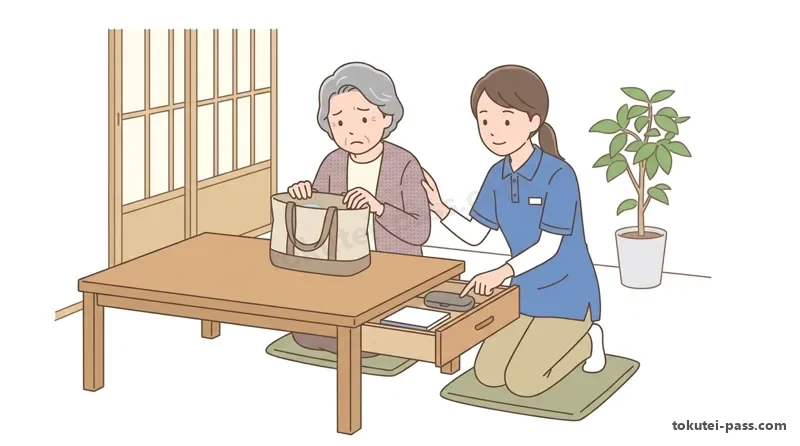
たとえば財布をしまった場所を忘れた際に「身近な家族や介護職に盗まれた」と訴える「もの盗られ妄想」もBPSDの一つであり、否定や説得をせず不安を受け止めて一緒に探す対応が適切です。
For example, Delusion of Theft (forgetting where a wallet was put and accusing family or care workers of stealing it) is a BPSD; the appropriate response is not to deny or argue, but to accept the person's anxiety and look for it together.
Key points
- 中核症状には記憶障害・見当識障害(時間→場所→人物の順)・遂行機能障害・失語失行失認がある
Core symptoms include memory impairment, disorientation (time -> place -> person), executive dysfunction, and aphasia/apraxia/agnosia - BPSDは中核症状に身体不調(便秘・脱水等)や不適切な環境・対応が加わって生じる
BPSD arises when physical discomfort (constipation, dehydration) or inappropriate environment/care interacts with core symptoms - 「もの盗られ妄想」や「帰宅願望」に対しては、否定せず本人の気持ちに寄り添って対応する
For delusions of theft or desire to go home, empathize with the person's feelings rather than denying or arguing
| Word | Meaning |
|---|---|
| 中核症状 | Core symptoms |
| 見当識障害 | Disorientation |
| 遂行機能障害 | Executive dysfunction |
| BPSD(行動・心理症状) | BPSD (Behavioral and Psychological Symptoms of Dementia) |
アルツハイマー型認知症と血管性認知症の原因と臨床特徴
Causes and Clinical Features of Alzheimer's Type Dementia and Vascular Dementia
認知症の原因疾患で最も多い「アルツハイマー型認知症」は、脳内に異常なたんぱく質(アミロイドベータやタウたんぱく)が蓄積し、記憶を司る「海馬」や側頭葉・頭頂葉から脳全体が徐々に萎縮する変性疾患です。
Alzheimer's type dementia, the most common cause of dementia, is a neurodegenerative disease in which abnormal proteins (amyloid-beta and tau protein) accumulate in the brain, causing gradual atrophy starting from the Hippocampus (governing memory) and temporal/parietal lobes to the entire brain.
アルツハイマー型は女性に多く、発症時期がはっきりとしないまま緩やかに進行(潜行性発症・緩徐進行)し、初期からの著明な近時記憶障害や見当識障害・もの盗られ妄想・とりつくろい反応が特徴です。
Alzheimer's type is more common in women, progresses slowly with an insidious onset, and is characterized by prominent early recent memory impairment, disorientation, delusions of theft, and covering-up responses (confabulation/glossing over).
一方、「血管性認知症」は脳梗塞や脳出血などの脳血管障害によって脳組織が壊死することで発症し、高血圧・糖尿病・脂質異常症・喫煙等の生活習慣病リスクを持つ男性に比較的多くみられます。
In contrast, Vascular Dementia develops when brain tissue undergoes necrosis due to cerebrovascular disorders such as cerebral infarction or hemorrhage, and is relatively more common in men with lifestyle disease risks like hypertension, diabetes, dyslipidemia, and smoking.
血管性認知症では、脳血管発作が起こるたびに段階的に症状が進む「階段状進行」を示し、記憶障害が強くても判断力や専門知識・病識が保たれる「まだら認知症」が特徴です。
Vascular dementia shows a Stepwise Progression that worsens in stages with each cerebrovascular attack, and is characterized by Patchy Dementia, where judgment, specialized knowledge, and insight into the illness remain preserved despite severe memory loss.
また血管性認知症では、ちょっとした刺激で泣いたり怒ったりする「感情失禁」がみられるほか、初期から片麻痺・歩行障害・構音障害・嚥下障害・頻尿などの身体症状を伴いやすい点に注意します。
Vascular dementia also frequently features Emotional Incontinence (crying or getting angry easily over minor stimuli) and early physical neurological symptoms such as hemiplegia, gait disturbance, dysarthria, dysphagia, and urinary frequency.
Key points
- アルツハイマー型はアミロイドベータ蓄積と海馬の萎縮により、近時記憶障害から緩やかに進行する
Alzheimer's type involves amyloid-beta accumulation and hippocampal atrophy, progressing slowly from recent memory impairment - 血管性認知症は脳梗塞等が原因であり、「階段状進行」「まだら認知症」「感情失禁」が特徴
Vascular dementia is caused by strokes and features stepwise progression, patchy dementia, and emotional incontinence - 血管性認知症では初期から麻痺・歩行障害・嚥下障害などの神経症状を合併しやすい
Vascular dementia often presents with early neurological signs such as paralysis, gait disturbance, and dysphagia
| Word | Meaning |
|---|---|
| アルツハイマー型認知症(海馬萎縮) | Alzheimer's type dementia (hippocampal atrophy) |
| 血管性認知症 | Vascular dementia |
| 階段状進行・まだら認知症 | Stepwise progression and Patchy dementia |
| 感情失禁 | Emotional incontinence |
レビー小体型認知症・前頭側頭型認知症・若年性認知症の特徴
Features of Dementia with Lewy Bodies, Frontotemporal Dementia, and Early-Onset Dementia
「レビー小体型認知症」は、大脳皮質や脳幹にレビー小体という異常なたんぱく質が集まる変性疾患で、初期には記憶障害が目立たず、頭がはっきりしている時とぼんやりしている時が日や時間で変わる「認知機能の変動」がみられます。
Dementia with Lewy Bodies (DLB) is a degenerative disease in which abnormal protein deposits called Lewy bodies accumulate in the cerebral cortex and brainstem; memory loss may be less noticeable early on, while Fluctuating Cognition (alternating between clear and hazy states by day or hour) is prominent.
レビー小体型の主要症状として、実際にはいない子供や虫・小動物が鮮明に見える「具体的で生々しい幻視」、小刻み歩行や筋固縮・転倒を伴う「パーキンソン症状(パーキンソニズム)」、大声の寝言や体動を伴う「レム睡眠行動障害」があります。
Major symptoms of DLB include Vivid and Concrete Visual Hallucinations (clearly seeing non-existent children, insects, or small animals), Parkinsonism (shuffling gait, muscle rigidity, falls), and REM Sleep Behavior Disorder (loud sleep talking and thrashing).
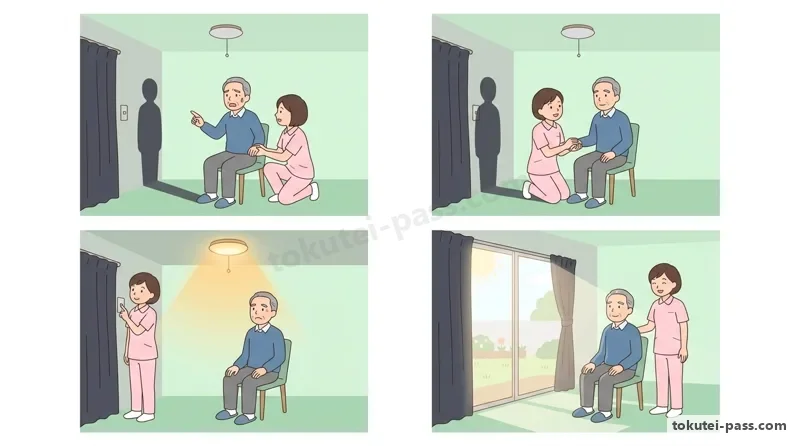
またレビー小体型では起立性低血圧や便秘などの自律神経症状や、抗精神病薬に対する「薬剤過敏性」があるため、転倒防止や幻視を頭ごなしに否定せず照明・環境を整えるケアが重要です。
DLB also involves autonomic symptoms (orthostatic hypotension, constipation) and Hypersensitivity to Antipsychotic Drugs, so care must focus on fall prevention and adjusting lighting/environment without flatly denying visual hallucinations.
「前頭側頭型認知症(ピック病等)」は前頭葉と側頭葉前方が限局的に萎縮する疾患で、初期には記憶は保たれやすいものの、理性のブレーキが効かなくなる「脱抑制・反社会的行動(万引きや信号無視等)」や「人格変化」が現れます。
Frontotemporal Dementia (FTD, including Pick's disease) involves localized atrophy of the frontal and anterior temporal lobes; memory is relatively spared early on, but Disinhibition and Antisocial Behavior (shoplifting, ignoring traffic lights due to loss of rational restraint) and Personality Changes emerge.
さらに前頭側頭型では、毎日決まった時刻に同じコースを歩き続ける「常同行動(時刻表的生活)」や甘い物ばかり好む食行動変化がみられ、65歳未満で発症する「若年性認知症(男性に多く就労・経済支援が課題)」でも重要な原因となります。
FTD also presents with Stereotypic Behavior (timetable-like living, walking the exact same route at the same hour daily) and dietary changes (craving sweets); it is also an important cause of Early-Onset Dementia (onset under age 65, more common in men, where employment retention and financial support are key issues).
Key points
- レビー小体型は「認知機能の変動」「具体的な幻視」「パーキンソン症状」「レム睡眠行動障害」が特徴
Dementia with Lewy Bodies features fluctuating cognition, vivid visual hallucinations, parkinsonism, and REM sleep behavior disorder - 前頭側頭型は前頭葉・側頭葉の萎縮により「脱抑制」「人格変化」「常同行動(時刻表的生活)」が現れる
Frontotemporal dementia involves frontal/temporal atrophy causing disinhibition, personality change, and stereotypic timetable behavior - 65歳未満で発症する「若年性認知症」では、就労継続・経済問題と若年性認知症支援コーディネーターとの連携が重要
In Early-Onset Dementia (onset <65 years), employment continuation, financial support, and coordination with Early-Onset Dementia Support Coordinators are vital
| Word | Meaning |
|---|---|
| レビー小体型認知症(幻視・パーキンソニズム) | Dementia with Lewy bodies (visual hallucinations, parkinsonism) |
| レム睡眠行動障害 | REM sleep behavior disorder |
| 前頭側頭型認知症(脱抑制・常同行動) | Frontotemporal dementia (disinhibition, stereotypic behavior) |
| 若年性認知症(65歳未満発症) | Early-onset dementia (onset under age 65) |
パーソン・センタード・ケアと認知症ケアの専門的技法
Person-Centered Care and Specialized Dementia Care Techniques
イギリスの心理学者トム・キットウッドが提唱した「パーソン・センタード・ケア」は、認知症を持つ人を「一人の人間(Person)」として尊重し、その人の視点や立場に立って理解しケアを行うという理念です。
Person-Centered Care, proposed by British psychologist Tom Kitwood, is the philosophy of respecting a person with dementia as an individual (Person) and understanding and providing care from their perspective and standpoint.
キットウッドは、認知症の人の心理的ニーズを「愛(Love)」を中心とした5つの花びら(「くつろぎ[Comfort]」「自分らしさ[Identity]」「結びつき[Attachment]」「たずさわること[Occupation]」「共にあること[Inclusion]」)で示しました。
Kitwood illustrated the psychological needs of people with dementia as five petals surrounding Love at the center: Comfort, Identity, Attachment, Occupation, and Inclusion.
フランスで開発された「ユマニチュード(Humanitude)」は、「見る」「話す」「触れる」「立つ」の4つの柱を組合わせ、「あなたのことを大切に思っています」というメッセージを届ける知覚・感情・言語による包括的ケア技法です。
Humanitude, developed in France, is a comprehensive care methodology using perception, emotion, and language that combines four pillars—Gaze (Looking), Speech (Talking), Touch, and Verticality (Standing)—to convey the message I care about you.
アメリカのソーシャルワーカーであるナオミ・フェイルが体系化した「バリデーション(Validation)」は、認知症の人の混乱した言動の背後にある過去の未解決の感情や欲求を否定せずに共感的に認め、傾聴や反復(リフレージング)・ミラーリングなどで感情表出を促す技法です。
Validation, systematized by American social worker Naomi Feil, empathetically acknowledges the unresolved past emotions and needs behind a person's confused speech and behavior without denial, encouraging emotional expression through active listening, rephrasing, and mirroring.
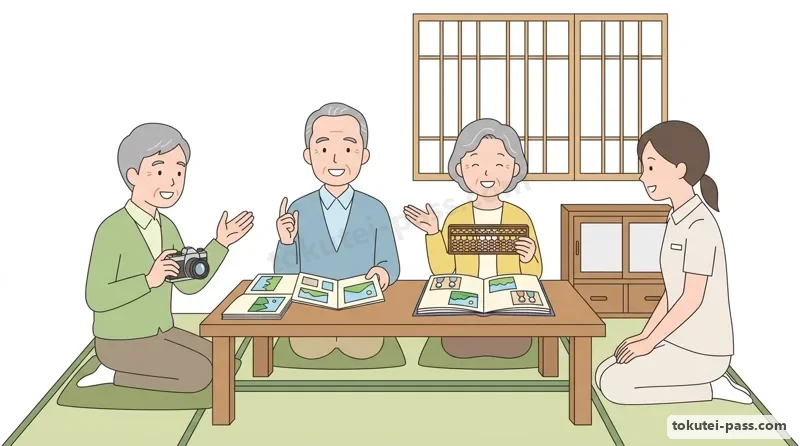
また精神科医バトラーが提唱した「回想法(レミニッセンス)」は、昔の写真や生活道具などを用いて過去の懐かしい体験を楽しく語り合うことで、精神的安定や自尊感情の回復・コミュニケーションの活性化を図る手法です。
Reminiscence Therapy, proposed by psychiatrist Robert Butler, uses old photographs and household items to enjoyably converse about nostalgic past experiences, promoting emotional stability, restoration of self-esteem, and active communication.
Key points
- キットウッドの「パーソン・センタード・ケア」は「愛」を中心に5つの心理的ニーズ(くつろぎ・自分らしさ・結びつき・たずさわる・共にある)を重視
Kitwood's Person-Centered Care places Love at the center of five psychological needs (Comfort, Identity, Attachment, Occupation, Inclusion) - 「ユマニチュード」は「見る・話す・触れる・立つ」の4つの柱を用いるケア技法
Humanitude is a care methodology built on four pillars: Looking, Talking, Touching, and Standing - フェイルの「バリデーション」は感情の承認、バトラーの「回想法」は過去の回想による情緒安定を図る
Feil's Validation focuses on emotional acknowledgment, while Butler's Reminiscence Therapy fosters emotional stability by recalling the past
| Word | Meaning |
|---|---|
| パーソン・センタード・ケア(トム・キットウッド) | Person-Centered Care (Tom Kitwood) |
| ユマニチュード(見る・話す・触れる・立つ) | Humanitude (Looking, Talking, Touching, Standing) |
| バリデーション(ナオミ・フェイル) | Validation therapy (Naomi Feil) |
| 回想法(ロバート・バトラー) | Reminiscence therapy (Robert Butler) |
認知症の人の意思決定支援と薬物療法・環境支援
Decision-Making Support, Pharmacotherapy, and Environmental Support for People with Dementia
厚生労働省の「認知症の人の日常生活・社会生活における意思決定支援ガイドライン」では、認知機能が低下していても本人には意思があり、本人の意思を起点として多職種や家族と丁寧に支援する原則が示されています。
The Ministry of Health, Labour and Welfare's Guidelines for Decision-Making Support in Daily and Social Life for People with Dementia state the principle that even with cognitive decline, the person has their own will, and support must start from that will with careful collaboration among professionals and family.
意思決定支援では、まず「人的・物的環境を整えて意思形成を支援」し、わかりやすい言葉や写真・実物を示して「意思表明を支援」し、本人の生活歴や価値観を踏まえて「意思実現を支援」します。
Decision-making support proceeds through three steps: arranging human and physical environments to Support Will Formation, using clear language, photos, or real objects to Support Will Expression, and drawing on life history and values to Support Will Realization.
認知症の薬物療法では、進行を遅らせる抗認知症薬としてコリンエステラーゼ阻害薬(ドネペジル・ガランタミン・リバスチグミン:悪心や下痢・徐脈等に注意)やNMDA受容体拮抗薬(メマンチン:めまい・眠気等に注意)が使われます。
In pharmacotherapy to slow progression, anti-dementia drugs such as cholinesterase inhibitors (donepezil, galantamine, rivastigmine: watch for nausea, diarrhea, bradycardia) and NMDA receptor antagonists (memantine: watch for dizziness, drowsiness) are used.
BPSDに対しては、まず身体不調(便秘・疼痛・脱水)や環境不適合を見直す「非薬物療法」を第一選択とし、向精神薬を使用する場合も過鎮静・ふらつき・転倒・嚥下機能低下などの副作用を観察します。
For BPSD, Non-Pharmacological Therapy—reviewing physical discomfort (constipation, pain, dehydration) and environmental mismatch—is the first-line choice; if psychotropic drugs are used, staff must closely monitor side effects such as oversedation, unsteadiness, falls, and impaired swallowing.
住環境の工夫(環境支援)としては、なじみの家具を残して急激な環境変化を避け、トイレのドアに文字や絵表示をつけたりのれんを外して見通しをよくしたり、便器と床・手すりの色のコントラストを明確にする配慮が有効です。
Effective environmental support includes keeping familiar furniture to avoid abrupt environmental changes, placing text/pictograms on toilet doors or removing curtains for clear visibility, and creating clear color contrast between the toilet bowl, floor, and handrails.
Key points
- 意思決定支援は「意思形成支援 → 意思表明支援 → 意思実現支援」の3つのプロセスで行う
Decision-making support follows three processes: Supporting Will Formation -> Supporting Will Expression -> Supporting Will Realization - BPSDへの対応は環境調整やケアの見直しなどの「非薬物療法」を最優先とする
Non-pharmacological therapy (environmental adjustment and care review) is the top priority when responding to BPSD - 環境支援では、なじみの環境維持と、トイレの絵表示や色のコントラスト調整が効果的
In environmental support, maintaining familiar surroundings, toilet pictograms, and clear color contrast are highly effective
| Word | Meaning |
|---|---|
| 意思決定支援ガイドライン | Decision-Making Support Guidelines |
| 抗認知症薬(ドネペジル・メマンチン等) | Anti-dementia drugs (donepezil, memantine, etc.) |
| 非薬物療法 | Non-pharmacological therapy |
| 環境支援(色のコントラスト・見通し) | Environmental support (color contrast, visibility) |
家族介護者支援と地域における認知症支援体制
Family Caregiver Support and Community Dementia Support Systems
認知症の人を介護する家族は、先が見通せない不安や夜間対応による睡眠不足から心身ともに疲弊しやすいため、家族の苦労や感情を労い傾聴するとともに、介護負担を軽減する支援が不可欠です。
Families caring for a person with dementia easily become physically and mentally exhausted from uncertainty about the future and sleep deprivation due to nighttime care, making it essential to empathetically listen to their struggles and reduce their care burden.
家族が休息をとるための「レスパイトケア(短期入所生活介護・小規模多機能型居宅介護等)」の活用や、認知症の人と家族・地域住民・専門職が気軽に集い相談・交流できる「認知症カフェ」への参加を促します。
Care workers encourage the use of Respite Care (short-term residential care, small-scale multifunctional in-home care, etc.) so families can rest, as well as participation in Dementia Cafes where people with dementia, families, residents, and professionals can casually gather and consult.
地域の医療・介護連携体制として、市町村の地域包括支援センターなどに配置され、医療や介護につながっていない初期の認知症疑いの人の家庭を訪問して集中的に支援する「認知症初期集中支援チーム」があります。
As a community medical-care coordination system, Initial-Phase Intensive Support Teams for Dementia—placed in Community General Support Centers—consist of multiple professionals who visit homes of people with suspected early dementia not yet connected to medical or care services.
また都道府県や政令指定都市が指定する専門医療機関である「認知症疾患医療センター」は、認知症の鑑別診断やBPSD・身体合併症の急性期治療、専門医療相談を担います。
Medical Centers for Dementia, specialized hospitals designated by prefectures or ordinance-designated cities, handle differential diagnosis, acute treatment of BPSD and physical complications, and specialized medical consultations.
さらに各市町村は、認知症の進行段階(状態)に応じていつ・どこで・どのような医療や介護サービスを受けられるかを示した「認知症ケアパス」を作成・公表し、地域全体で暮らしを支えています。
Furthermore, each municipality creates and publishes a Dementia Care Path that shows when, where, and what medical and care services are available according to the stage of dementia progression, supporting daily life across the entire community.
Key points
- 家族支援ではレスパイトケア(休息支援)や「認知症カフェ」、家族の会(ピアサポート)の活用が重要
Family support relies on Respite Care, Dementia Cafes, and family peer-support associations - 「認知症初期集中支援チーム」は複数の専門職が訪問し、医療・介護への早期接続を支援する
Initial-Phase Intensive Support Teams for Dementia visit homes as a multidisciplinary team to connect individuals early to medical and care services - 「認知症疾患医療センター」は鑑別診断・急性期対応、「認知症ケアパス」は状態別のサービス目安を示す
Medical Centers for Dementia provide differential diagnosis and acute care, while the Dementia Care Path outlines stage-specific services
| Word | Meaning |
|---|---|
| 認知症カフェ | Dementia Cafe |
| 認知症初期集中支援チーム | Initial-Phase Intensive Support Team for Dementia |
| 認知症疾患医療センター | Medical Center for Dementia |
| 認知症ケアパス | Dementia Care Path |
Understanding Dementia
Practice this chapter in the appOfficial references
- 公益財団法人社会福祉振興・試験センター「介護福祉士国家試験 試験科目別出題基準(認知症の理解)」 — https://www.sssc.or.jp/kaigo/kijun/index.html
- 厚生労働省「共生社会の実現を推進するための認知症基本法・認知症施策推進基本計画」 — https://www.mhlw.go.jp/stf/seisakunitsuite/bunya/hukushi_kaigo/kaigo_koureisha/ninchi/index.html