Understanding Disabilities
障害の理解
National Exam for Certified Care Workers 介護福祉士 · 介護福祉士国家試験(筆記) · Written by Tokutei Pass based on the official study texts; not copied verbatim.
国際生活機能分類(ICF)と障害の理念・合理的配慮
International Classification of Functioning (ICF), Philosophy of Disability, and Reasonable Accommodation
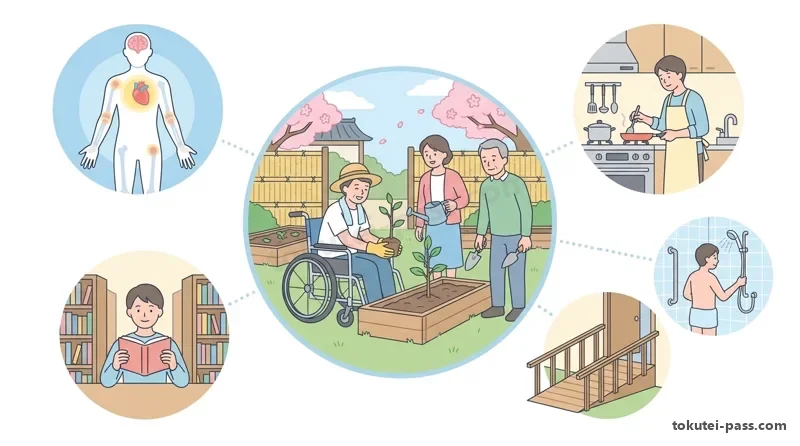
世界保健機関(WHO)が1980年に発表した「国際障害分類(ICIDH)」は、「疾病 → 機能・形態障害 → 能力障害 → 社会的不利」という一方向のマイナス面(医学モデル)をとらえていました。
The International Classification of Impairments, Disabilities, and Handicaps (ICIDH), published by the World Health Organization (WHO) in 1980, viewed disability as a one-way negative progression (medical model): Disease -> Impairment -> Disability -> Handicap.
これに対し2001年に採択された「国際生活機能分類(ICF)」は、「生きることの全体像」を示すプラスの視点を取り入れ、「健康状態」「生活機能(心身機能・身体構造/活動/参加)」「背景因子(環境因子/個人因子)」の6要素が双方向に作用し合うモデルとなりました。
In contrast, the International Classification of Functioning, Disability and Health (ICF), adopted in 2001, introduced a positive perspective showing the whole picture of living, modeling bidirectional interactions among six components: Health Condition, Functioning (Body Functions & Structures / Activities / Participation), and Contextual Factors (Environmental Factors / Personal Factors).
障害福祉の歴史では、1959年のデンマークでバンク・ミケルセンが提唱した「ノーマライゼーション」、1970年代にアメリカのエド・ロバーツが始めた「自立生活(IL)運動」、1981年の国際障害者年のテーマ「完全参加と平等」が重要です。
In the history of disability welfare, key milestones include Normalization proposed by Bank-Mikkelsen in Denmark in 1959, the Independent Living (IL) Movement started by Ed Roberts in the US in the 1970s, and the 1981 International Year of Disabled Persons theme Full Participation and Equality.
また2006年の国連「障害者権利条約」では「私たちのことを、私たちぬきに決めないで(Nothing About Us Without Us)」が掲げられ、障害は個人の欠陥ではなく社会的障壁との相互作用で生じるという「社会モデル」が確立しました。
The 2006 UN Convention on the Rights of Persons with Disabilities championed the slogan Nothing About Us Without Us and established the Social Model of disability, which views disability not as an individual defect but as arising from interaction with social barriers.
日本の「障害者差別解消法」では、2024年(令和6年)4月の改正施行により、行政機関等だけでなく「民間事業者」に対しても、過重な負担がない範囲での「合理的配慮の提供」が努力義務から「法的義務」へと強化されました。
Under Japan's Act for Eliminating Discrimination against Persons with Disabilities, following the April 2024 (Reiwa 6) amendment enforcement, the Provision of Reasonable Accommodation (within limits not imposing an undue burden) was strengthened from an obligation to endeavor to a Legal Obligation for Private Businesses as well as administrative agencies.
Key points
- ICFは「心身機能・身体構造(生命)」「活動(生活)」「参加(社会)」と「環境因子・個人因子」の相互作用をとらえる
ICF captures bidirectional interactions among Body Functions & Structures (biological), Activities (daily life), Participation (social), and Environmental/Personal Factors - エド・ロバーツの自立生活(IL)運動は、介助を受けながらも自ら自己決定することが自立であると示した
Ed Roberts's Independent Living (IL) Movement showed that independence means making one's own decisions even while receiving care assistance - 2024年4月から改正障害者差別解消法により「民間事業者の合理的配慮の提供」も法的義務となった
Since April 2024, under the amended Disability Discrimination Elimination Act, providing reasonable accommodation is a legal obligation for private businesses too
| Word | Meaning |
|---|---|
| 国際生活機能分類(ICF) | International Classification of Functioning, Disability and Health (ICF) |
| 自立生活(IL)運動 | Independent Living (IL) Movement |
| 障害の社会モデル | Social Model of Disability |
| 合理的配慮の法的義務化 | Mandatory Reasonable Accommodation |
障害受容の心理的プロセスとエンパワメント・ストレングス視点
Psychological Process of Disability Acceptance, Empowerment, and Strengths Perspective
中途障害を負った人が自らの障害を受け入れていく心理的過程について、リハビリテーション医学者の「上田敏」は5つの段階から成る「障害受容のステージ理論」を提唱しました。
Regarding the psychological process by which a person with an acquired disability comes to accept their disability, rehabilitation physician Satoshi Ueda proposed a five-stage Stage Theory of Disability Acceptance.
その5段階は、①心身ともに麻痺したような「ショック期」→ ②障害を認めず治ると信じる「否認期」→ ③回復しない現実に直面し怒や抑うつに陥る「混乱期」→ ④前向きに努力を始める「解決への努力期」→ ⑤新しい価値観を築く「受容期」です。
The five stages are: (1) Shock Stage (physical and mental numbness) -> (2) Denial Stage (refusing to acknowledge the disability and believing it will be cured) -> (3) Confusion Stage (facing the reality of non-recovery and falling into anger or depression) -> (4) Effort Toward Resolution Stage (beginning positive efforts) -> (5) Acceptance Stage (building new values).
障害受容とは「あきらめ」や「屈服」ではなく、障害を持つ自分の価値を認め直す「価値観の転換」であり、直線的に進むだけでなく行きつ戻りつ揺れ動きながら進みます。
Disability acceptance is not resignation or surrender, but a Transformation of Values (re-recognizing one's worth with a disability), and it progresses not just linearly but while wavering back and forth.
介護福祉職は、混乱期や否認期にある利用者に対して安易な励ましや説得をせず、苦しみや葛藤に共感的に寄り添いながら安全・安心な環境を整えて見守ります。
For users in the confusion or denial stages, care workers avoid easy encouragement or persuasion, empathetically accompanying their suffering and conflict while maintaining a safe and secure environment.
また支援においては、障害による「できないこと(欠損)」ばかりに目を向けるのではなく、本人の持つ強みや好きなこと・環境資源に着目する「ストレングス視点」と、本来の力を引き出す「エンパワメント」が重視されます。
In support, rather than focusing only on what cannot be done (deficits), emphasis is placed on the Strengths Perspective (focusing on the person's strengths, preferences, and environmental resources) and Empowerment (drawing out inherent potential).
Key points
- 上田敏の障害受容5段階は「ショック期 → 否認期 → 混乱期 → 解決への努力期 → 受容期」
Satoshi Ueda's 5 stages of disability acceptance: Shock -> Denial -> Confusion -> Effort Toward Resolution -> Acceptance - 障害受容はあきらめではなく「価値観の転換」であり、感情の揺れに共感的に寄り添う
Disability acceptance is a Transformation of Values rather than giving up; empathetically accompany emotional fluctuations - 本人の強みや可能性に着目する「ストレングス視点」と「エンパワメント」が支援の基本
The Strengths Perspective (focusing on strengths and potential) and Empowerment form the foundation of support
| Word | Meaning |
|---|---|
| 上田敏の障害受容5段階 | Satoshi Ueda's 5 Stages of Disability Acceptance |
| 価値観の転換 | Transformation of values |
| ストレングス視点 | Strengths perspective |
| エンパワメント | Empowerment |
視覚障害・聴覚言語障害・肢体不自由の医学的特徴と支援
Medical Features and Support for Visual, Hearing/Speech, and Physical Disabilities
「視覚障害」の原因疾患としては、眼圧上昇等で視野が狭くなる「緑内障(日本の中途失明原因第1位)」、夜盲(鳥目)や求心性視野狭窄(輪状暗点)が進む遺伝性の「網膜色素変性症」、および「糖尿病網膜症」が代表的です。
Representative causes of Visual Impairment include Glaucoma (narrowing of the visual field due to elevated intraocular pressure, etc.—the #1 cause of acquired blindness in Japan), Retinitis Pigmentosa (a hereditary disease causing night blindness and concentric visual field constriction/ring scotoma), and Diabetic Retinopathy.
「聴覚障害」は、外耳〜中耳の障害による「伝音難聴(補聴器で音を大きくすると効果的)」と、内耳(蝸牛)〜聴神経・脳の障害による「感音難聴(音が歪み語音明瞭度が低下する)」および「混合性難聴」に分かれ、手話・筆談・要約筆記・聴導犬等で支援します。
Hearing Impairment is divided into Conductive Hearing Loss (outer to middle ear disorder; amplifying sound with a hearing aid is effective), Sensorineural Hearing Loss (inner ear / cochlea to auditory nerve/brain disorder; sound distorts and speech discrimination drops), and Mixed Hearing Loss, supported via sign language, written communication, summary note-taking, and hearing dogs.
「肢体不自由」のうち「脊髄損傷」は、損傷部位より下の運動麻痺・感覚麻痺・膀胱直腸障害・自律神経障害(体温調節障害・起立性低血圧)を生じ、頸髄損傷では「四肢麻痺」、胸髄・腰髄損傷では両下肢の「対麻痺」となります。
Among Physical Disabilities, Spinal Cord Injury causes motor and sensory paralysis, bladder/rectal dysfunction, and autonomic dysfunction (thermoregulation impairment, orthostatic hypotension) below the lesion level: Cervical cord injury causes Tetraplegia (quadriplegia), while thoracic or lumbar cord injury causes Paraplegia of both lower limbs.
脊髄損傷(特に第6胸髄以上)では、膀胱に尿がたまることなどの刺激で発作的な異常高血圧・頭痛・発汗・徐脈が起こる「自律神経過反射」や、感覚消失による重度の「褥瘡」に厳重な注意が必要です。
In spinal cord injury (especially at or above T6), strict attention must be paid to Autonomic Dysreflexia (paroxysmal severe hypertension, headache, sweating, and bradycardia triggered by stimuli such as a full bladder) and severe Pressure Ulcers due to sensory loss.
また周産期の脳病変による「脳性麻痺」には、筋緊張が亢進する「痙直型(最も多い)」や、不随意運動がみられ二次的な頸椎症性脊髄症を起こしやすい「アテトーゼ型」があり、緊張を和らげる安楽な姿勢保持を行います。
Cerebral Palsy (due to perinatal brain lesions) includes the Spastic Type (increased muscle tone, most common) and the Athetoid Type (involuntary movements, prone to secondary cervical spondylotic myelopathy), requiring comfortable positioning that relieves tension.
Key points
- 中途失明原因第1位は緑内障であり、網膜色素変性症は夜盲と求心性視野狭窄が特徴
Glaucoma is the #1 cause of acquired blindness in Japan; Retinitis Pigmentosa features night blindness and concentric visual field constriction - 頸髄損傷は「四肢麻痺」、胸腰髄損傷は「対麻痺」となり、褥瘡・体温調節障害・自律神経過反射に注意
Cervical cord injury causes tetraplegia and thoracic/lumbar injury causes paraplegia; watch for pressure ulcers, thermoregulation issues, and autonomic dysreflexia - 脳性麻痺には痙直型や不随意運動を伴うアテトーゼ型があり、二次障害(頸椎症等)を予防する
Cerebral palsy includes spastic and athetoid types, requiring prevention of secondary disabilities such as cervical myelopathy
| Word | Meaning |
|---|---|
| 網膜色素変性症(夜盲・視野狭窄) | Retinitis pigmentosa (night blindness, visual field constriction) |
| 感音難聴・伝音難聴 | Sensorineural hearing loss and Conductive hearing loss |
| 脊髄損傷(四肢麻痺・対麻痺) | Spinal cord injury (tetraplegia, paraplegia) |
| 脳性麻痺(痙直型・アテトーゼ型) | Cerebral palsy (spastic type, athetoid type) |
神経難病(ALS・パーキンソン病・脊髄小脳変性症・筋ジストロフィー)の理解
Understanding Intractable Neurological Diseases (ALS, Parkinson's, Spinocerebellar Degeneration, Muscular Dystrophy)
「筋萎縮性側索硬化症(ALS)」は運動神経(上位・下位運動ニューロン)のみが選択的に変性し、全身の筋萎縮・筋力低下・球麻痺(構音障害・嚥下障害)・呼吸筋麻痺が進行する指定難病です。
Amyotrophic Lateral Sclerosis (ALS) is a designated intractable disease in which only motor neurons (upper and lower motor neurons) selectively degenerate, causing progressive systemic muscle atrophy and weakness, bulbar palsy (dysarthria, dysphagia), and respiratory muscle paralysis.
ALSでは進行しても最後まで保たれる「4つの陰性徴候」として、①眼球運動(瞬きや視線入力で意思伝達可能)、②膀胱直腸機能、③感覚神経(痛みや知覚は正常)、④褥瘡ができにくいこと(+意識・知能も正常)が極めて重要です。
In ALS, the Four Negative Signs (functions preserved until the end) are critically important: (1) Ocular movements (communication possible via blinking or eye-tracking devices), (2) Bladder and rectal function, (3) Sensory nerves (pain and sensation remain normal), and (4) Resistance to pressure ulcers (plus clear consciousness and intelligence).
「パーキンソン病」は中脳黒質のドパミン神経細胞減少により生じ、4大運動症状として①安静時振戦(手足の震え)、②筋固縮(歯車様固縮)、③無動・寡動(仮面様顔貌・小声)、④姿勢反射障害(前傾姿勢・小刻み歩行・すくみ足・突進現象)がみられます。
Parkinson's Disease arises from loss of dopaminergic neurons in the substantia nigra of the midbrain and presents with Four Major Motor Symptoms: (1) Resting tremor, (2) Muscle rigidity (cogwheel rigidity), (3) Akinesia/Bradykinesia (masked facies, soft voice), and (4) Postural reflex disturbance (stooped posture, shuffling gait, freezing of gait, festination).
パーキンソン病では重症度を「ホーエン・ヤール分類(Ⅰ〜Ⅴ度:Ⅲ度から姿勢反射障害が出現)」で評価し、抗パーキンソン病薬(L-ドパ)の薬効時間が短くなる「ウェアリング・オフ現象」や便秘・起立性低血圧に配慮し、床に目印(テープ)を貼るなど「すくみ足対策」を行います。
Parkinson's severity is assessed by the Hoehn and Yahr Scale (Stages I–V: postural instability appears at Stage III); care addresses the Wearing-Off Phenomenon (shortened duration of L-dopa effect), constipation, and orthostatic hypotension, and uses floor tape visual cues for freezing of gait.
また小脳系の変性により歩行時のふらつきやろれつが回らないなどの「運動失調」を主症状とする「脊髄小脳変性症」や、遺伝子変異により骨格筋が壊死・変性し筋力低下が進む「筋ジストロフィー(デュシェンヌ型・ベッカー型等)」も代表的な難病です。
Other representative intractable diseases include Spinocerebellar Degeneration (characterized primarily by cerebellar Ataxia such as unsteady gait and slurred speech) and Muscular Dystrophy (progressive muscle weakness from genetic necrosis/degeneration of skeletal muscle fibers, such as Duchenne and Becker types).
Key points
- ALSの4つの陰性徴候(保たれる機能)は「眼球運動・膀胱直腸機能・感覚・褥瘡になりにくいこと」
The 4 Negative Signs (preserved functions) of ALS are ocular movement, bladder/rectal function, sensation, and rarity of pressure ulcers - パーキンソン病の4大症状は「安静時振戦・筋固縮・無動寡動・姿勢反射障害」であり、ウェアリング・オフに注意
The 4 cardinal symptoms of Parkinson's are resting tremor, rigidity, akinesia/bradykinesia, and postural reflex disturbance; watch for wearing-off - 脊髄小脳変性症は「運動失調」、筋ジストロフィーは「筋線維の変性による進行性筋力低下」が特徴
Spinocerebellar degeneration features ataxia, while muscular dystrophy features progressive muscle weakness from muscle fiber degeneration
| Word | Meaning |
|---|---|
| 筋萎縮性側索硬化症(ALS・4つの陰性徴候) | Amyotrophic Lateral Sclerosis (ALS and 4 negative signs) |
| パーキンソン病(ホーエン・ヤール分類) | Parkinson's disease (Hoehn and Yahr scale) |
| ウェアリング・オフ現象・すくみ足 | Wearing-off phenomenon and Freezing of gait |
| 脊髄小脳変性症・筋ジストロフィー | Spinocerebellar degeneration and Muscular dystrophy |
内部障害(心臓・腎臓・呼吸器・ストーマ等)と消化器難病
Internal Disabilities (Heart, Kidney, Respiratory, Stoma, etc.) and Intractable Digestive Diseases
身体障害者福祉法における「内部障害」には、心臓機能障害・じん臓機能障害・呼吸器機能障害・ぼうこう又は直腸機能障害・小腸機能障害・ヒト免疫不全ウイルス(HIV)による免疫機能障害・肝臓機能障害の7種類があります。
Internal Disabilities under the Act on Welfare of Physically Disabled Persons comprise seven types: cardiac, renal, respiratory, bladder or rectal, small intestine, HIV-induced immune, and liver functional impairments.
内部障害は外見からは障害がわかりにくいため周囲の理解不足に悩みやすく、心臓ペースメーカー装着者への配慮や、慢性閉塞性肺疾患(COPD)等による在宅酸素療法(HOT:火気厳禁・2m以上離す)の安全管理が重要です。
Because internal disabilities are invisible from the outside, individuals often suffer from lack of public understanding; care requires precautions for cardiac pacemaker users and strict fire safety (no open flames, keep >2m away) for Home Oxygen Therapy (HOT) users with COPD.
慢性腎不全で「血液透析(週3回・1回4時間程度)」を受けている人では、腕の「シャント(動静脈吻合部)」側での血圧測定や腕時計・荷物持ち・圧迫を避け、水分・塩分・カリウム(生野菜や果物)・リンの摂取制限を守ります。
For individuals with chronic renal failure undergoing Hemodialysis (3 times/week, ~4 hours/session), staff must avoid blood pressure measurement, wristwatches, heavy loads, or compression on the Shunt (arteriovenous fistula) arm, and observe restrictions on water, salt, potassium (raw vegetables/fruits), and phosphorus.
大腸がんや膀胱がん等で腹壁に造設された人工肛門(コロストミー・イレオストミー)や人工膀胱(ウロストミー)を「ストーマ」と呼び、ストーマには括約筋や痛覚がないため装具(パウチ)で管理し、周囲皮膚のただれを観察します。
An artificial anus (colostomy, ileostomy) or artificial bladder (urostomy) surgically created on the abdominal wall for colorectal or bladder cancer is called a Stoma; because a stoma lacks sphincter muscles and pain sensation, it is managed with a pouch while monitoring peristomal skin irritation.
なお「ストーマ」の部位によって便の性状が異なり、回腸や上行結腸ストーマでは「水様便〜泥状便(消化酵素による皮膚かぶれに注意)」、下行結腸やS状結腸ストーマでは「普通便(固形便)」となります。
Stool consistency differs by stoma site: an ileostomy or ascending colostomy produces watery to muddy stool (requiring caution against skin erosion from digestive enzymes), whereas a descending or sigmoid colostomy produces normal formed stool.
Key points
- 内部障害は7種類(心臓・腎臓・呼吸器・膀胱直腸・小腸・HIV免疫・肝臓)あり、外見から分かりにくい
There are 7 types of internal disabilities (heart, kidney, respiratory, bladder/rectal, small intestine, HIV immune, liver), which are not externally visible - 血液透析者は「シャント側の圧迫・血圧測定禁止」と「水分・塩分・カリウム・リンの制限」が重要
For hemodialysis patients, prohibit compression/BP measurement on the shunt arm and restrict water, salt, potassium, and phosphorus - ストーマ(人工肛門)は回腸・上行結腸では水様〜泥状便、S状結腸では固形便となる
A stoma at the ileum/ascending colon outputs watery-to-muddy stool, while a sigmoid colostomy outputs solid formed stool
| Word | Meaning |
|---|---|
| 内部障害(7種類) | Internal disabilities (7 types) |
| 在宅酸素療法(HOT・火気厳禁) | Home Oxygen Therapy (HOT - strictly no open flames) |
| 血液透析とシャント管理 | Hemodialysis and Shunt management |
| ストーマ(人工肛門・人工膀胱) | Stoma (colostomy, ileostomy, urostomy) |
高次脳機能障害の主要症状(注意障害・遂行機能障害・半側空間無視等)とケア
Major Symptoms of Higher Brain Dysfunction (Attention, Executive, Unilateral Spatial Neglect, etc.) and Care
「高次脳機能障害」とは、脳梗塞・脳出血などの脳血管疾患や交通事故等による頭部外傷後に脳が損傷を受け、記憶・注意・遂行機能・社会的行動等の認知機能に障害が残った状態です。
Higher Brain Dysfunction refers to residual cognitive impairments in memory, attention, executive function, or social behavior resulting from brain damage after cerebrovascular disease (cerebral infarction, hemorrhage) or traumatic brain injury from traffic accidents.
代表的な4大症状は、①物を置いた場所や約束を忘れる「記憶障害(メモ帳やアラーム活用で補う)」、②気が散りやすく2つのことを同時にできない「注意障害(静かな環境で1つずつ伝える)」です。
The four major symptoms begin with: (1) Memory Impairment (forgetting where items were placed or appointments—compensated with notebooks and alarms) and (2) Attention Disorder (easily distracted, unable to do two things at once—convey one thing at a time in a quiet environment).
さらに③計画を立てて順序よく行動できない「遂行機能障害(手順書やチェックリストを示す)」、④感情のコントロールが難しく怒りっぽくなったり意欲が低下したりする「社会的行動障害」があります。
They also include: (3) Executive Dysfunction (inability to plan and act in sequence—provide step-by-step manuals and checklists) and (4) Social Behavior Disorder (difficulty controlling emotions, irritability, or decreased motivation).
また「右大脳半球(頭頂葉等)」の損傷で多くみられる「左半側空間無視」では、視力自体はあっても空間の左側半分を認識できず、食卓の左側のおかずを残したり左肩を壁にぶつけたりします。
In Left Unilateral Spatial Neglect, commonly caused by right cerebral hemisphere (parietal lobe) damage, the person cannot recognize the left half of space despite intact eyesight, leaving food on the left side of the tray or bumping their left shoulder into walls.
左半側空間無視の人には、認識しやすい右側から声をかけたり、お盆を回転させたり左側を向くよう具体的に声かけを行います。また麻痺がないのに服の袖を通す向きがわからなくなる「着衣失行」では、上下・裏表に目印をつけて支援します。
For left unilateral spatial neglect, approach from the easily recognized right side, rotate the meal tray, or verbally cue the person to look left. For Dressing Apraxia (inability to orient sleeves despite no paralysis), support by placing color markers on top/bottom and inside/outside of clothes.
Key points
- 高次脳機能障害の4大症状は「記憶障害・注意障害・遂行機能障害・社会的行動障害」
The 4 major symptoms of higher brain dysfunction are Memory Impairment, Attention Disorder, Executive Dysfunction, and Social Behavior Disorder - 右脳損傷で多い「左半側空間無視」では、左側の食事の見落としや障害物への衝突に注意する
In Left Unilateral Spatial Neglect (from right brain damage), watch for overlooked food on the left and collisions with obstacles - 「着衣失行」では服の上下・前後がわからなくなるため、襟元等に色印をつけて声かけする
In Dressing Apraxia, the person loses track of top/bottom and front/back of clothing, so attach colored marks to collars and give verbal cues
| Word | Meaning |
|---|---|
| 高次脳機能障害 | Higher brain dysfunction |
| 注意障害・社会的行動障害 | Attention disorder and Social behavior disorder |
| 左半側空間無視 | Left unilateral spatial neglect |
| 着衣失行・観念失行 | Dressing apraxia and Ideational apraxia |
知的障害・発達障害(ASD・ADHD・LD)・精神障害の理解
Understanding Intellectual, Developmental (ASD, ADHD, LD), and Psychiatric Disabilities
「知的障害」とは、「発達期(おおむね18歳未満)」に現れ、知的機能(IQおおむね70未満)の遅れと、日常生活や社会生活への「適応行動の困難」が共にみられる状態であり、都道府県知事等から「療育手帳」が交付されます。
Intellectual Disability manifests during the Developmental Period (generally under age 18) with both subaverage intellectual functioning (IQ generally below 70) and Difficulties in Adaptive Behavior in daily and social life; prefectural governors issue a Rehabilitation (Ryoiku) Handbook.
「発達障害者支援法」における発達障害には、①対人関係・コミュニケーションの困難と強いこだわり(興味の限局・常同行動)・感覚過敏を特徴とする「自閉症スペクトラム障害(ASD)」があります。
Under the Act on Support for Persons with Developmental Disabilities, developmental disabilities include: (1) Autism Spectrum Disorder (ASD), characterized by difficulties in social interaction and communication, strong restricted/repetitive patterns, and sensory hypersensitivity.
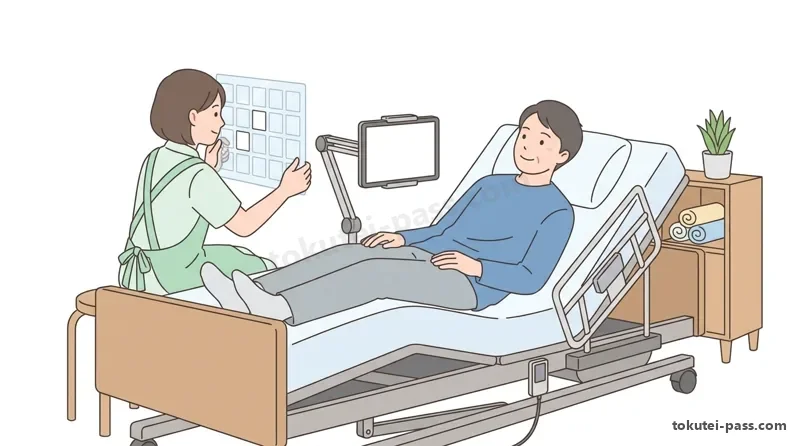
ASDの人は口頭での曖昧な指示や急な予定変更に強い不安(パニック)を起こしすいため、写真や絵カード・スケジュール表を用いて「視覚的に構造化(TEACCHプログラム等)」し、見通しを持てるように支援します。
Because individuals with ASD easily experience severe anxiety or panic from vague verbal instructions or sudden schedule changes, support uses Visual Structuring (such as the TEACCH program) with photos, picture cards, and written schedules to provide predictability.
発達障害にはさらに、②不注意(集中困難・忘れ物)と多動性・衝動性を特徴とする「注意欠如・多動症(ADHD)」、③知的発達全体の遅れはないが「読む・書く・計算する」などの特定領域のみが困難な「学習障害(LD/限局性学習症)」があります。
Developmental disabilities further include: (2) Attention-Deficit/Hyperactivity Disorder (ADHD, characterized by inattention, hyperactivity, and impulsivity) and (3) Learning Disorders (LD / Specific Learning Disorder, where overall intelligence is normal but specific skills like reading, writing, or calculation are impaired).
「精神障害」の代表である「統合失調症」では、急性期に幻聴や妄想などの「陽性症状」、慢性期(休息期〜回復期)に感情鈍麻・意欲低下・自閉(ひきこもり)などの「陰性症状」がみられ、服薬継続と地域生活支援(精神障害者保健福祉手帳等)を行います。
In Schizophrenia, a representative Psychiatric Disability, acute phases feature Positive Symptoms (auditory hallucinations, delusions) and chronic/recovery phases feature Negative Symptoms (blunted affect, avolition, social withdrawal), supported through medication adherence and community life support (Mental Disability Health and Welfare Handbook).
Key points
- 知的障害は「発達期(おおむね18歳未満)」に生じ、知的機能と適応行動の双方に支援を要する
Intellectual disability arises during the developmental period (<18 years) and requires support for both intellectual function and adaptive behavior - ASD(自閉症スペクトラム障害)には、絵カードや予定表による「視覚的構造化」と具体的で肯定的な声かけが有効
For ASD (Autism Spectrum Disorder), Visual Structuring with picture cards/schedules and concrete, affirmative phrasing are effective - 統合失調症は幻覚・妄想の「陽性症状」と、意欲低下・感情鈍麻の「陰性症状」に分かれる
Schizophrenia involves Positive Symptoms (hallucinations, delusions) and Negative Symptoms (avolition, emotional blunting)
| Word | Meaning |
|---|---|
| 知的障害(療育手帳) | Intellectual disability (Rehabilitation/Ryoiku Handbook) |
| 自閉症スペクトラム障害(ASD・視覚的構造化) | Autism Spectrum Disorder (ASD and visual structuring) |
| 注意欠如・多動症(ADHD)・学習障害(LD) | ADHD and Learning Disorders (LD) |
| 統合失調症(陽性症状・陰性症状) | Schizophrenia (positive symptoms and negative symptoms) |
障害者の地域生活支援体制・補装具と家族支援(きょうだい児等)
Community Living Support System, Prosthetics/Orthotics, and Family Support (Siblings, etc.)
障害者総合支援法にもとづき障害福祉サービスを利用する際には、指定特定相談支援事業所の「相談支援専門員」が本人の希望やアセスメントを踏まえて「サービス等利用計画」を作成します。
When using disability welfare services under the Comprehensive Support for Persons with Disabilities Act, a Consultation Support Specialist at a designated consultation support office creates a Service Utilization Plan based on the person's wishes and assessment.
また各福祉サービス事業所(生活介護・就労継続支援・グループホーム等)では、「サービス管理責任者」がサービス等利用計画に沿って「個別支援計画」を作成し、定期的なモニタリングを行います。
At each welfare service provider (living care, continuous employment support, group home, etc.), a Service Management Representative creates an Individual Support Plan aligned with the Service Utilization Plan and conducts periodic monitoring.
身体機能を支える用具として、身体の欠損や損なわれた機能を補う「補装具(義肢・装具・車いす・電動車いす・歩行器・盲人安全つえ・補聴器・重度障害者用意思伝達装置)」と、市町村の地域生活支援事業による「日常生活用具(特殊寝台・ストーマ装具・点字器等)」があります。
Assistive equipment is divided into Prosthetics and Orthotics (artificial limbs, braces, wheelchairs, electric wheelchairs, walkers, white canes, hearing aids, communication devices for severely disabled persons) and Daily Living Aids (special beds, stoma appliances, braille devices, etc.) provided under municipal community life support projects.
食事用の柄が太いスプーンやソックスエイド・ボタンエイドなどの「自助具」を作成・適合調整する際には、応用動作訓練の専門職である「作業療法士(OT)」と連携することが適切です。
When fabricating and fitting Self-Help Devices (such as thick-handled spoons, sock aids, or button aids), it is appropriate to collaborate with an Occupational Therapist (OT), the specialist in applied activity training.
さらに家族支援においては、親の高齢化に伴う「8050問題」や「親亡き後」の備え、および障害のある兄弟姉妹を持つ「きょうだい児(ヤングケアラー問題や将来の介護負担への不安)」の心情に配慮し、短期入所(レスパイト)や地域移行支援につなげます。
In family support, care addresses the 8050 Problem (aging parents in their 80s caring for children in their 50s), preparation for After Parents Pass Away, and the feelings of Siblings of Persons with Disabilities (Kyodai-ji: young carer issues and anxiety over future care burdens), connecting families to short-stay respite and community transition support.
Key points
- 相談支援専門員が「サービス等利用計画」を、事業所のサービス管理責任者が「個別支援計画」を作成する
A Consultation Support Specialist creates the Service Utilization Plan; the provider's Service Management Representative creates the Individual Support Plan - 「補装具(義肢・装具・車いす・補聴器等)」と「日常生活用具」、作業療法士(OT)による「自助具」を区別する
Distinguish Prosthetics/Orthotics (limbs, braces, wheelchairs, hearing aids), Daily Living Aids, and Self-Help Devices (fitted with an OT) - 家族支援ではレスパイトケアのほか、「親亡き後」や「きょうだい児」の不安・負担への支援が重要
Family support must address respite care, preparation for After Parents Pass Away, and support for Siblings (Kyodai-ji)
| Word | Meaning |
|---|---|
| 相談支援専門員(サービス等利用計画) | Consultation Support Specialist (Service Utilization Plan) |
| サービス管理責任者(個別支援計画) | Service Management Representative (Individual Support Plan) |
| 補装具と日常生活用具 | Prosthetics/Orthotics and Daily Living Aids |
| 自助具(作業療法士:OT) | Self-help devices (Occupational Therapist: OT) |
Understanding Disabilities
Practice this chapter in the appOfficial references
- 公益財団法人社会福祉振興・試験センター「介護福祉士国家試験 試験科目別出題基準(障害の理解)」 — https://www.sssc.or.jp/kaigo/kijun/index.html
- 厚生労働省・内閣府「障害者総合支援法・障害者差別解消法(令和6年4月改正)」 — https://www.mhlw.go.jp/stf/seisakunitsuite/bunya/hukushi_kaigo/shougaishahukushi/index.html