
Fundamentals of Caregiving (Kaigo no Kihon)
介護の基本
National Exam for Certified Care Workers 介護福祉士 · 介護福祉士国家試験(筆記) · Written by Tokutei Pass based on the official study texts; not copied verbatim.
介護の社会化と求められる介護福祉士像
Socialization of Care and the Ideal Certified Care Worker
少子高齢化や核家族化に伴い、家族だけで介護を担うことには限界が生じ、2000年の介護保険制度創設によって社会全体で介護を支える「介護の社会化」が進められました。
With declining birthrates, an aging population, and nuclear families, family-only caregiving reached its limits; the establishment of the Long-Term Care Insurance System in 2000 promoted the 'socialization of care' (Kaigo no Shakaika).
現代では、育児と介護が同時に重なる「ダブルケア」、本来大人が担うべきケアを18歳未満の子どもが担う「ヤングケアラー」、80代の親と50代のひきこもりの子が地域から孤立する「8050問題」など複合的課題が深刻化しています。
Today, complex challenges have intensified, including 'Double Care' (simultaneous childcare and eldercare), 'Young Carers' (children under 18 providing care), and the '8050 Problem' (isolated parents in their 80s and socially withdrawn children in their 50s).
こうした背景のもと、「求められる介護福祉士像」では、尊厳と自立を支えるケアの実践や、高い倫理観および多職種協働・地域づくりの力が明確に掲げられています。
Against this backdrop, the 'Ideal Certified Care Worker Profile' emphasizes care that upholds dignity, independence support, high ethical standards, and multidisciplinary collaboration.
介護福祉職は単なる身辺の世話係ではなく、科学的根拠に基づく専門的知識と技術をもって利用者の心身と生活全体を総合的に支える国家資格の専門職です。
Care workers are not mere personal attendants, but professionals who support users' physical, mental, and overall lives using evidence-based knowledge and skills.
また、地域共生社会の実現に向けて、施設内や在宅だけでなく地域社会の多様なフォーマル・インフォーマル資源とつながりながら支援を展開する視点が不可欠です。
Furthermore, toward realizing a Community-Based Inclusive Society, it is essential to provide support while connecting with community resources beyond facility walls.
Key points
- ダブルケア(育児+介護)・ヤングケアラー・8050問題など現代の複合的課題の理解
Understand modern complex issues: Double Care (childcare + nursing care), Young Carers, and the 8050 Problem - 求められる介護福祉士像:尊厳と自立を支える専門的実践と多職種協働
Ideal Certified Care Worker: Professional practice supporting dignity and independence alongside multidisciplinary teamwork
| Word | Meaning |
|---|---|
| 介護の社会化 | Socialization of care (Kaigo no Shakaika) |
| ダブルケア・ヤングケアラー | Double Care and Young Carers |
| 8050問題 | The 8050 Problem |
| 求められる介護福祉士像 | Ideal Certified Care Worker Profile |
社会福祉士及び介護福祉士法と職業倫理
Certified Social Worker and Certified Care Worker Act and Professional Ethics
「社会福祉士及び介護福祉士法」第2条では、介護福祉士の業を「心身の状況に応じた介護」と「利用者およびその介護者等への介護に関する指導」と定義しています。
Article 2 of the 'Certified Social Worker and Certified Care Worker Act' defines the duties of a Certified Care Worker as 'providing care suited to physical and mental conditions' and 'providing guidance on caregiving to caregivers and others.'
介護福祉士は有資格者のみがその名称を名乗れる「名称独占資格」であり、一度登録すれば5年ごとの資格更新制度や更新講習の義務はありません。
Certified Care Worker is an 'exclusive title qualification' (Meisho Dokusen) where only license holders may use the title, and once registered, there is no 5-year periodic renewal requirement.
同法には、誠実義務、信用失墜行為の禁止、秘密保持義務(退職後も一生継続し違反時は罰則あり)、福祉・保健医療サービス等との連携(医師の医療行為との関係を含む)、資質向上の責務が規定されています。
The Act stipulates the duty of sincerity, prohibition of acts damaging credibility, duty of confidentiality (continuing even after retirement, with penalties for violation), collaboration with health and medical services, and responsibility for self-improvement.
「日本介護福祉士会倫理綱領」では、利用者本位、自立支援、専門的サービスの提供、プライバシーの保護、総合的サービスの提供と積極的な連携・協力、利用者ニーズの代弁、後継者の育成の7項目が示されています。
The 'Japan Association of Certified Care Workers Code of Ethics' sets forth 7 principles: user-oriented care, independence support, specialized service provision, privacy protection, comprehensive service and active collaboration, advocacy for user needs, and nurturing successors.
個人情報保護の観点から、家族や外部機関へ利用者の個人情報を提供する際は、原則として事前に利用者本人の同意を得なければなりません。
From a personal information protection standpoint, prior consent from the user themselves must in principle be obtained before sharing their information with family members or external agencies.
Key points
- 介護福祉士は「名称独占」であり、更新制度はない(秘密保持義務は退職後も継続)
Certified Care Worker is an 'exclusive title qualification' with no renewal system (confidentiality duty continues after retirement) - 日本介護福祉士会倫理綱領の7項目(利用者本位・代弁・後継者育成など)
7 items of the Japan Association of Certified Care Workers Code of Ethics (user-centeredness, advocacy, training successors, etc.)
| Word | Meaning |
|---|---|
| 名称独占資格 | Exclusive title qualification (Meisho Dokusen) |
| 秘密保持義務と信用失墜行為の禁止 | Duty of confidentiality and Prohibition of acts damaging credibility |
| 資質向上の責務 | Responsibility for professional self-improvement |
| 日本介護福祉士会倫理綱領 | Japan Association of Certified Care Workers Code of Ethics |
利用者主体・個別性・ICFとリハビリテーション
User-Centeredness, Individuality, ICF, and Rehabilitation
介護の基本理念は、利用者一人ひとりの生活歴(ライフヒストリー)や価値観、長年の生活習慣を尊重する「利用者主体」と「個別ケア」にあります。
The fundamental philosophy of caregiving lies in 'user-centeredness' and 'individualized care'—respecting each user's life history, values, and daily habits.
外国人や多様な文化的・宗教的背景をもつ利用者に対しても、食事のタブー(豚肉や牛肉の制限など)や礼拝・生活様式を理解し、その人らしい生活が継続できるよう丁寧に配慮します。
For foreign nationals and users with diverse cultural or religious backgrounds, care workers must understand dietary taboos and lifestyles so users can maintain their own way of living.
ICF(国際生活機能分類)の視点に立ち、できないこと(心身機能の障害)だけでなく、できる「活動」や社会的な「参加」の強みや環境因子・個人因子に着目して支援を考えます。
From the perspective of the ICF (International Classification of Functioning, Disability and Health), support focuses not only on limitations in body functions, but on strengths in 'Activities' and social 'Participation.'
リハビリテーションは「全人間的復権(人間らしく生きる権利の回復)」を意味し、機能訓練にとどまらず、医学的・教育的・職業的・社会的リハビリテーションの4領域が連携して行われます。
Rehabilitation means the 'holistic restoration of human rights and dignity,' carried out through collaboration across 4 domains: medical, educational, vocational, and social rehabilitation.
施設の日課や職員の都合に利用者を合わせるのではなく、利用者一人ひとりの生活リズムに合わせてケアを組み立てる姿勢が常に求められます。
Care workers are expected to tailor care schedules around the user's rhythm of life rather than forcing the user to conform to facility routines.
Key points
- 生活歴や文化・価値観の多様性を尊重する個別ケアの実践
Practice individualized care respecting life history (Seikatsureki), culture, and diverse values - リハビリテーションの4領域(医学的・教育的・職業的・社会的)と全人間的復権
4 domains of rehabilitation (medical, educational, vocational, social) and holistic restoration of human dignity
| Word | Meaning |
|---|---|
| 生活歴(ライフヒストリー) | Life history (Seikatsureki) |
| 国際生活機能分類(ICF:活動と参加) | ICF (Activities and Participation) |
| 全人間的復権 | Holistic restoration of human rights and dignity |
| リハビリテーションの4領域 | 4 domains of rehabilitation (medical, educational, vocational, social) |
ユニバーサルデザイン・福祉マーク・介護ロボットとICT
Universal Design, Welfare Symbols, Care Robots, and ICT
高齢者や障害者の物理的・社会的障壁を後から除去する「バリアフリー」に対し、ロナルド・メイスが提唱した「ユニバーサルデザイン」は年齢や障害の有無にかかわらず最初からすべての人にとって使いやすい設計を目指します。
Unlike 'Barrier-Free,' which removes existing obstacles for older adults and persons with disabilities, 'Universal Design' advocated by Ronald Mace aims to create environments usable by all people from the very beginning.
ユニバーサルデザインの7原則には、公平性、自由度、単純で直感的な使用方法、情報のわかりやすさ、うっかりミスの許容(フェイルセーフ)、少ない身体的負担、接近や使用に適切な空間と大きさが挙げられます。
The 7 Principles of Universal Design are: equitable use, flexibility in use, simple and intuitive use, perceptible information, tolerance for error (fail-safe), low physical effort, and size and space for approach and use.
社会生活を支える標識には、蝶の形をした「聴覚障害者マーク」、耳の形の「耳マーク」、四つ葉のクローバーの「身体障害者マーク」、内部障害や難病など外見からわからない配慮を示す「ヘルプマーク」などがあります。
Social support symbols include the butterfly-shaped 'Hearing Impairment Mark,' the ear-shaped 'Mimi Mark,' the four-leaf clover 'Physical Disability Mark,' and the 'Help Mark' indicating unseen needs for assistance.
また「身体障害者補助犬法」に基づき、盲導犬・介助犬・聴導犬の「ほじょ犬」は、公共施設や公共交通機関、百貨店や飲食店などで同伴を拒否してはなりません。
Under the 'Act on Assistance Dogs for Physically Disabled Persons,' public facilities, public transport, and restaurants must not refuse entry to certified assistance dogs (guide dogs, service dogs, and hearing dogs).
介護現場では、見守りセンサーや装着型・非装着型の移乗支援ロボット、インカムや介護記録ソフトなどの介護ロボット・ICTを導入し、ケアの質向上と職員の身体的・業務的負担軽減を図っています。
In care settings, monitoring sensors, transfer-assist robots, intercoms, and care recording software (ICT) are introduced to improve care quality and reduce staff workload.
Key points
- ロナルド・メイスのユニバーサルデザイン7原則とバリアフリーの違い
Distinction between Ronald Mace's 7 Principles of Universal Design and Barrier-Free - 聴覚障害者マーク(蝶)・身体障害者マーク(四つ葉)・ヘルプマーク・ほじょ犬の理解
Understanding Hearing Impairment Mark (butterfly), Physical Disability Mark (four-leaf clover), Help Mark, and Assistance Dogs
| Word | Meaning |
|---|---|
| ユニバーサルデザインの7原則(ロナルド・メイス) | 7 Principles of Universal Design (Ronald Mace) |
| 聴覚障害者マーク(蝶)と身体障害者マーク(四つ葉) | Hearing Impairment Mark (butterfly) and Physical Disability Mark (four-leaf clover) |
| ヘルプマークと耳マーク | Help Mark and Mimi (Ear) Mark |
| 身体障害者補助犬(盲導犬・介助犬・聴導犬) | Assistance Dogs (Guide dogs, Service dogs, Hearing dogs) |
訪問介護の業務範囲と各種施設・サービスの特徴
Scope of Home Visit Care and Characteristics of Care Facilities
訪問介護(ホームヘルプサービス)は、入浴・排泄・食事介助・体位変換などを行う「身体介護」と、調理・洗濯・掃除・生活必需品の買物などを行う「生活援助」に分かれます。
Home visit care (Home Help) is divided into 'Physical Care' (bathing, excretion, meal assistance) and 'Daily Living Assistance' (cooking, laundry, cleaning, shopping).
「生活援助」は利用者本人の日常生活に直接必要な範囲に限られ、同居家族の食事作りや洗濯、来客の応接、ペットの世話、庭の草むしりや花木の水やり、大掃除、正月料理(おせち)の調理などは算定対象外です。
'Daily Living Assistance' is strictly limited to what is directly necessary for the user's own daily life; cooking for cohabiting family members, entertaining guests, pet care, weeding, major seasonal cleaning, and New Year dishes are excluded.
一方、利用者が自立して生活できるよう、利用者と一緒に声かけや見守りを行いながら調理や洗濯・掃除を行う「自立生活支援のための見守り的援助」は、生活援助ではなく「身体介護」として位置づけられます。
Conversely, 'supervisory assistance for independent living'—such as cooking or doing laundry together with the user to maintain their abilities—is classified as 'Physical Care' rather than Daily Living Assistance.
高齢者向けの住まいや施設には、特別養護老人ホーム(原則として要介護3以上)、介護老人保健施設(リハビリによる在宅復帰支援)、介護医療院、認知症対応型共同生活介護(グループホーム)などがあります。
Housing and facilities for older adults include Intensive Care Homes for the Elderly (Tokuyou — Care Level 3+), Long-Term Care Health Facilities (Rouken — home return rehabilitation), Long-Term Care Medical Facilities, and Dementia Group Homes.
このほか、バリアフリー構造で安否確認(見守り)や生活相談サービスを必須とする「サービス付き高齢者向け住宅(サ高住)」や、無料または低額で利用できる「軽費老人ホーム(ケアハウス)」なども地域生活を支えています。
Additionally, 'Elderly Housing with Supportive Services' (Sakouju) providing safety checks and life consultation, and low-cost 'Care Houses' support community living.
Key points
- 生活援助の対象外:家族分の家事・ペットの世話・草むしり・大掃除・来客応接
Excluded from Daily Living Assistance: housework for family, pet care, weeding, major cleaning, guest reception - 自立支援のために利用者と共に行う見守り的援助は「身体介護」に該当する
Supervisory assistance performed together with the user to support independence is classified as 'Physical Care'
| Word | Meaning |
|---|---|
| 身体介護と生活援助 | Physical Care (Shintai Kaigo) and Daily Living Assistance (Seikatsu Enjo) |
| 自立生活支援のための見守り的援助 | Supervisory assistance for independent living (Mimamoriteki Enjo) |
| サービス付き高齢者向け住宅(サ高住) | Elderly Housing with Supportive Services (Sakouju) |
| 軽費老人ホーム(ケアハウス) | Low-Cost Home for the Elderly (Care House) |
チームアプローチと多職種連携
Team Approach and Multidisciplinary Collaboration
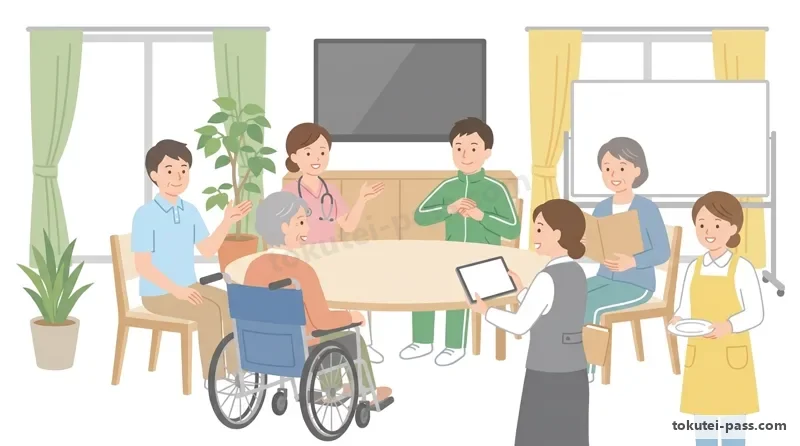
利用者の多様で複雑なニーズに応えるためには、介護福祉職だけでなく保健・医療・福祉の各専門職が共通目標に向かって協働する「チームアプローチ」が不可欠です。
To meet diverse user needs, a 'Team Approach' where health, medical, and welfare professionals collaborate toward shared goals is essential.
チームモデルには、各専門職が独立して個別に関わる「マルチディシプリナリーモデル」、職種間で密に連携・情報共有する「インターディシプリナリーモデル」、専門職の役割の枠を超えて柔軟に協働する「トランスディシプリナリーモデル」があります。
Team models include 'Multidisciplinary' (each profession works independently), 'Interdisciplinary' (professions coordinate and share information), and 'Transdisciplinary' (working collaboratively across traditional role boundaries).
リハビリテーションの専門職では、座る・立つ・歩くといった基本動作能力の回復を担う理学療法士(PT)、応用動作や作業活動・社会適応を担う作業療法士(OT)、音声言語や聴覚・嚥下訓練を担う言語聴覚士(ST)がいます。
Rehabilitation specialists include Physical Therapists (PT — basic movements like sitting up and walking), Occupational Therapists (OT — applied daily activities and crafts), and Speech-Language-Hearing Therapists (ST — speech and swallowing training).
また、栄養管理を行う管理栄養士、専門的な口腔衛生指導を行う歯科衛生士、医師の処方に基づき義肢装具を作製・適合する義肢装具士、ケアプランを作成する介護支援専門員などが連携します。
Other collaborating professionals include Registered Dietitians (nutrition management), Dental Hygienists (oral hygiene guidance), Prosthetists and Orthotists (prosthetics and braces), and Care Managers (care plan creation).
地域では、厚生労働大臣から委嘱され住民の相談に応じる非常勤特別職の「民生委員(児童委員を兼務)」や、支援が届いていない人のもとへ積極的に出向く「アウトリーチ(訪問支援)」も重要な役割を果たします。
In the community, volunteer 'Commissioned Welfare Volunteers' (Minsei-iin, who also serve as Child Welfare Volunteers) and 'Outreach' (proactively visiting people who have not reached support services) play vital roles.
Key points
- PT(基本動作)・OT(応用動作・作業)・ST(言語・嚥下)・管理栄養士・歯科衛生士の役割
Roles of PT (basic movements), OT (applied activities), ST (speech/swallowing), Registered Dietitian, and Dental Hygienist - マルチ・インター・トランスディシプリナリーモデルの違いとアウトリーチの意義
Differences among Multidisciplinary, Interdisciplinary, and Transdisciplinary models, and the role of Outreach
| Word | Meaning |
|---|---|
| 理学療法士(PT)・作業療法士(OT)・言語聴覚士(ST) | Physical Therapist (PT), Occupational Therapist (OT), Speech Therapist (ST) |
| 管理栄養士と歯科衛生士 | Registered Dietitian and Dental Hygienist |
| 民生委員(児童委員を兼務) | Commissioned Welfare Volunteer (Minsei-iin / Child Welfare Volunteer) |
| アウトリーチ(訪問支援) | Outreach (proactive home visit support) |
リスクマネジメント・身体拘束廃止と服薬支援
Risk Management, Elimination of Physical Restraint, and Medication Support
ハインリッヒの法則(1件の重大事故の背後には29件の軽微な事故と300件のヒヤリ・ハットが存在する)に基づき、日常のヒヤリ・ハット報告書を集積・原因分析して重大事故を未然に防ぎます。
Based on Heinrich's Law (behind 1 major accident lie 29 minor accidents and 300 near-misses or Hiyari-Hatto), facilities collect and analyze Hiyari-Hatto reports to prevent accidents before they occur.
万が一事故が発生した場合は、まず利用者の救命・安全確保と医療職への連絡を最優先し、その後に管理者報告や家族への説明、客観的事実に基づく事故報告書の作成、委員会での再発防止策の検討を行います。
If an accident occurs, saving life, ensuring user safety, and contacting medical staff take top priority, followed by explaining to the family, completing an accident report, and formulating recurrence prevention measures.
介護保険施設等では、利用者の尊厳を損ない心身機能を低下させる「身体拘束(4点ベッド柵・車いすベルト・ミトン手袋・つなぎ服・居室の施錠・向精神薬の過剰投与など11行為)」は原則禁止です。
In long-term care facilities, 'physical restraint' (11 designated actions that harm dignity and physical function, such as 4-point bed rails, wheelchair belts, mitten gloves, jumpsuits, and excessive psychotropic medication) is prohibited in principle.
生命または身体を保護するため緊急やむを得ない場合でも、「切迫性」「非代替性」「一時性」の3要件をすべて満たし、組織的決定と詳細な記録・家族への説明と同意が厳格に義務づけられています。
Even in unavoidable emergencies to protect life or body, all 3 conditions—'Imminence' (Seppakusei), 'Non-substitutability' (Hidaitaisei), and 'Temporariness' (Ichijisei)—must be met, alongside organizational approval, record-keeping, and family consent.
服薬支援では「正しい利用者・薬・量・時間・方法」を確認し、複数の薬を1回分ずつまとめる「一包化」は薬剤師の専門業務であるため、介護福祉職が勝手に行ってはなりません。
In medication support, workers verify the 'right person, drug, dose, time, and method'; packaging multiple medications into single-dose packets (Ippouka) is the exclusive duty of a Pharmacist and must never be done by care workers.
Key points
- ハインリッヒの法則(1:29:300)とヒヤリ・ハット分析による事故防止
Heinrich's Law (1:29:300) and accident prevention through Hiyari-Hatto analysis - 身体拘束が例外として認められる3要件:切迫性・非代替性・一時性
3 mandatory conditions for exceptional physical restraint: Imminence, Non-substitutability, and Temporariness
| Word | Meaning |
|---|---|
| ハインリッヒの法則(1:29:300)とヒヤリ・ハット | Heinrich's Law (1:29:300) and Near-Miss (Hiyari-Hatto) |
| 身体拘束廃止の3要件(切迫性・非代替性・一時性) | 3 conditions for exceptional physical restraint (Imminence, Non-substitutability, Temporariness) |
| 事故報告書と再発防止策 | Accident report and Recurrence prevention measures |
| 薬剤師による一包化 | Single-dose packaging (Ippouka — Pharmacist's exclusive duty) |
施設内感染対策・防災対策(BCP)と労働安全衛生
Infection Control, Disaster Preparedness (BCP), and Occupational Safety and Health
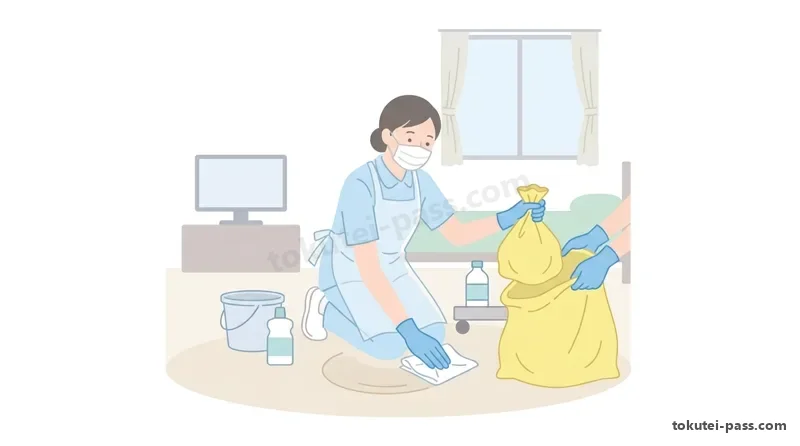
施設内感染対策の基本は「標準予防策(スタンダード・プリコーション)」であり、液体石けんと流水による手洗いを徹底します。ノロウイルスの嘔吐物や排泄物にはアルコールが効きにくいため、次亜塩素酸ナトリウムで消毒します。
The foundation of facility infection control is 'Standard Precautions,' centered on thorough handwashing with liquid soap and running water. Because alcohol is less effective against Norovirus vomit, sodium hypochlorite is used for disinfection.
空気感染する結核・麻しん・水痘(N95マスク着用)、飛沫感染するインフルエンザ、循環式浴槽などのエアロゾルで感染するレジオネラ症など、感染経路別の予防対策も重要です。
Route-specific measures are also crucial: airborne precautions (N95 mask) for tuberculosis, measles, and varicella; droplet precautions for influenza; and aerosol prevention in bath circulation systems for Legionella.
防災対策では、全介護事業所に業務継続計画(BCP)の策定と研修・訓練が義務化されています。災害警戒レベルでは「レベル3=高齢者等避難」「レベル4=全員避難(避難指示)」であり、浸水時は建物上階への「垂直避難」も行います。
For disaster preparedness, formulating a Business Continuity Plan (BCP) is mandatory for all care providers. Under the 5 Disaster Alert Levels, 'Level 3 = Evacuation of Older Adults, etc.' and 'Level 4 = Evacuation Instruction for All'; during flooding, 'vertical evacuation' to upper floors is also used.
一般の指定避難所での生活が困難な要配慮者には「福祉避難所」や災害派遣福祉チーム(DWAT)が支援を行います。またハザードマップの図記号(洪水・内水氾濫・津波・土砂災害)の理解も求められます。
Vulnerable individuals who struggle in general shelters are supported at 'Welfare Evacuation Shelters' and by Disaster Welfare Assistance Teams (DWAT). Workers must also recognize disaster hazard symbols.
労働安全衛生法により、事業者は常時使用する労働者に年1回以上、深夜業(夜勤)従事者には6か月以内ごとに1回の定期健康診断を行い、50人以上の事業場では年1回のストレスチェックと腰痛予防対策を実施します。
Under the Industrial Safety and Health Act, employers must provide regular health checkups at least once a year for regular workers, once every 6 months for night-shift workers, an annual Stress Check at workplaces with 50 or more employees, and lower-back pain prevention measures.
Key points
- ノロウイルスは次亜塩素酸ナトリウム消毒、結核は空気感染、警戒レベル3は高齢者等避難
Disinfect Norovirus with sodium hypochlorite; TB is airborne; Disaster Alert Level 3 is Evacuation of Older Adults - 健康診断は通常年1回・夜勤従事者は6か月に1回、ストレスチェックは50人以上で年1回義務
Health checkups: once a year normally, once every 6 months for night-shift workers; Stress Check mandatory annually for 50+ staff
| Word | Meaning |
|---|---|
| 次亜塩素酸ナトリウムと空気感染対策(N95マスク) | Sodium hypochlorite disinfection and Airborne precautions (N95 mask) |
| 業務継続計画(BCP)と災害派遣福祉チーム(DWAT) | Business Continuity Plan (BCP) and Disaster Welfare Assistance Team (DWAT) |
| 警戒レベル3(高齢者等避難)と垂直避難 | Alert Level 3 (Evacuation of Older Adults) and Vertical evacuation |
| 労働安全衛生法(夜勤6か月ごと健診・ストレスチェック) | Industrial Safety and Health Act (6-month night-shift checkups and Stress Check) |
Basics of Care
Practice this chapter in the appOfficial references
- 公益財団法人社会福祉振興・試験センター「介護福祉士国家試験 試験科目別出題基準」 — https://www.sssc.or.jp/kaigo/kijun/index.html
- 厚生労働省「社会福祉士及び介護福祉士法・介護保険制度の概要」 — https://www.mhlw.go.jp/stf/seisakunitsuite/bunya/hukushi_kaigo/kaigo_koureisha/index.html