
Communication Techniques (Communication Gijutsu)
コミュニケーション技術
National Exam for Certified Care Workers 介護福祉士 · 介護福祉士国家試験(筆記) · Written by Tokutei Pass based on the official study texts; not copied verbatim.
利用者とのコミュニケーションの基本と質問・傾聴の技法
Fundamentals of Communication with Users and Questioning / Listening Skills
介護場面のコミュニケーションでは、相手の語りを遮らずに耳と心を傾ける「傾聴」、ありのままの感情を受け止める「受容」、相手の立場に立って理解する「共感的理解(ロジャーズ)」が基本となります。
In care communication, the foundations are 'Active Listening' (Keichou — listening attentively without interrupting), 'Acceptance' (Juyou — receiving feelings as they are), and 'Empathic Understanding' (Rogers — understanding from the user's perspective).
質問技法には、「はい」「いいえ」や単語で答えられる「閉じられた質問(クローズド・クエスチョン)」と、相手が自由に考えや気持ちを語れる「開かれた質問(オープン・クエスチョン)」があり、状況に応じて使い分けます。
Questioning techniques include 'Closed Questions' (answerable with Yes/No or single words) and 'Open Questions' (allowing the person to freely express thoughts and feelings), used appropriately according to the situation.
相手の言葉の重要な部分をそのまま返して「聴いています」という姿勢を示す「繰り返し(伝え返し)」や、曖昧な感情や問題点を整理して確認する「明確化」も有効な技法です。
'Repetition / Restatement' (returning key words from the user's speech to show attentive listening) and 'Clarification' (organizing and confirming vague feelings or issues) are also effective techniques.
話が長くなった際や面接の区切りには、話の要点をまとめて確認する「要約」を行い、おしゃべりが苦手な利用者には介護福祉職が適切な範囲で体験を語る「自己開示」によって安心感を高めます。
When a conversation grows long or at the end of an interview, 'Summarization' confirms key points; for users reluctant to talk, appropriate 'Self-Disclosure' by the care worker builds reassurance.
また言語だけでなく、目線の高さを合わせる、穏やかな表情とうなずき、適度なあいづちや沈黙の尊重など、非言語的コミュニケーションを調和させることが信頼関係の構築につながります。
Beyond verbal language, harmonizing non-verbal communication—matching eye level, gentle facial expressions, nodding, timely back-channeling, and respecting silence—fosters trust.
Key points
- 閉じられた質問(はい/いいえで回答)と開かれた質問(自由に語る)の適切な使い分け
Appropriate use of Closed Questions (Yes/No answers) and Open Questions (free expression) - 傾聴・繰り返し(伝え返し)・明確化・要約・自己開示の各技法の目的
Purposes of Active Listening, Repetition/Restatement, Clarification, Summarization, and Self-Disclosure
| Word | Meaning |
|---|---|
| 開かれた質問(オープン・クエスチョン)と閉じられた質問 | Open Questions and Closed Questions |
| 繰り返し(伝え返し)と明確化 | Repetition (Restatement) and Clarification |
| 要約と自己開示 | Summarization and Self-Disclosure |
| 傾聴・受容・共感的理解 | Active Listening, Acceptance, and Empathic Understanding |
家族とのコミュニケーションと意向の調整
Communication with Families and Coordinating Differing Wishes
利用者の生活を支える上で家族は重要なパートナーであると同時に、介護負担や将来への不安を抱える「支援の対象者」でもあります。
In supporting a user's life, family members are both vital partners and 'recipients of support' who carry caregiving burdens and anxiety about the future.
家族が介護の愚痴や苦労を語った際には、安易に助言や批判をするのではなく、これまでの介護の労をねぎらいながらその気持ちを丁寧に受け止めて傾聴します。
When family members express complaints or hardships about caregiving, rather than rushing to advise or criticize, care workers should acknowledge their efforts and listen empathetically.
在宅生活や施設利用においては、「自宅で暮らし続けたい利用者」と「安全のために施設入所を望む家族」のように、本人と家族の意向が対立することが少なくありません。
In home or facility care, wishes often conflict between the user ('wanting to continue living at home') and the family ('wanting facility admission for safety').
そのような場合、介護福祉職はどちらか一方の意見だけを正当化したり押しつけたりせず、双方の思いや不安の背景を聴き取り、橋渡しをする調整役を担います。
In such cases, care workers must not justify or impose only one side's opinion, but listen to the background thoughts and anxieties of both parties and act as a coordinating bridge.
そして介護支援専門員や多職種と情報共有し、本人の尊厳と家族の生活の双方を守れる具体的な支援策(サービス利用や環境調整)を一緒に検討します。
By sharing information with the Care Manager and multidisciplinary team, workers help explore concrete support measures (service adjustments or environmental modifications) that protect both the user's dignity and the family's life.
Key points
- 家族の日頃の介護負担や不安をねぎらい、批判せずに共感的に傾聴する
Acknowledge the family's daily caregiving burden and anxiety, listening empathetically without criticism - 利用者と家族の意向が異なる際は、一方を押しつけず双方の思いを聴いて調整する
When user and family wishes differ, avoid imposing one side and coordinate by listening to both perspectives
| Word | Meaning |
|---|---|
| 家族の介護負担(レスパイトの必要性) | Family caregiving burden (need for respite care) |
| 本人と家族の意向の相違と調整 | Discrepancy and coordination between user and family wishes |
| 代弁(アドボカシー)と橋渡し | Advocacy and bridging communication |
| 家族支援の視点 | Family support perspective |
聴覚障害・老人性難聴のある人とのコミュニケーション
Communication with Persons with Hearing Impairment or Age-Related Hearing Loss
加齢に伴う「老人性難聴」は内耳から聴神経の機能が低下する「感音性難聴」であり、特に高音域から聞こえにくくなり、言葉の聞き分け(語音明瞭度)が低下します。
'Age-related hearing loss' (Presbycusis) is a 'sensorineural hearing loss' caused by functional decline from the inner ear to the auditory nerve, characterized by difficulty hearing high-pitched sounds and reduced speech discrimination.
感音性難聴の人に耳元で大声で怒鳴るように話すと、音が割れてかえって聞き取りにくくなり、不快感や威圧感を与えるため、やや低めの落ち着いた声でゆっくりはっきりと話します。
Shouting loudly into the ear of a person with sensorineural hearing loss distorts sounds, making speech harder to understand and causing discomfort or intimidation; speak slowly and clearly in a calm, slightly lower-pitched voice.
会話の環境として、テレビを消すなど周囲の騒音を抑え、聞こえやすい耳の側から声をかけ、相手の正面で顔や口の動き(口話)がよく見える明るい位置で話します。
For the conversation environment, reduce background noise such as turning off the TV, approach from the better-hearing side, and speak directly in front of the person in a well-lit area so facial expressions and lip movements are clearly visible.
マスク着用時は口元が隠れて声もこもるため、身振りやジェスチャー、筆談、イラストや実物の提示などの視覚的情報を積極的に併用します。
When wearing a mask hides the mouth and muffles the voice, actively combine visual information such as gestures, written notes, illustrations, or showing actual objects.
補聴器を使用している場合は、電池切れや耳垢の詰まり、装着のずれによるハウリング(ピーピー音)がないかを日常的に確認します。
If the user wears a hearing aid, check daily for dead batteries, earwax blockage, or whistling feedback (howling) caused by improper fitting.
Key points
- 老人性難聴(感音性難聴)は高音域が聞こえにくく、大声で叫ぶと音が歪んで逆効果になる
Age-related hearing loss (sensorineural) impairs high-frequency hearing; shouting distorts sound and is counterproductive - 静かな場所で正面から口元や表情を見せ、筆談や身振りなど視覚的手段を併用する
Speak in a quiet place facing the user so lip movements are visible, combining visual aids like written communication and gestures
| Word | Meaning |
|---|---|
| 老人性難聴(感音性難聴) | Age-related hearing loss (Presbycusis / Sensorineural hearing loss) |
| 語音明瞭度の低下 | Decline in speech discrimination |
| 口話(読話)と筆談・手話 | Lip-reading, Written communication, and Sign language |
| 補聴器のハウリング確認 | Checking hearing aid feedback (howling) |
視覚障害のある人とのコミュニケーション
Communication with Persons with Visual Impairment
視覚障害(全盲・弱視・視野狭窄・夜盲など)のある人に突然身体へ触れると驚かせてしまうため、必ず先に自分の名前を名乗り、これから行う動作を声に出して伝えてから触れます。
Suddenly touching a person with visual impairment (total blindness, low vision, visual field constriction, night blindness) startles them; always state your name first and verbally explain the action before touching.
物の位置や方向を伝える際、「これ」「それ」「あそこ」といった指示代名詞ではわからないため、「あなたの右手から20センチ前」のように具体的な言葉で説明します。
When explaining the location or direction of objects, demonstrative pronouns like 'this,' 'that,' or 'over there' convey no meaning; use concrete descriptions such as '20 centimeters in front of your right hand.'
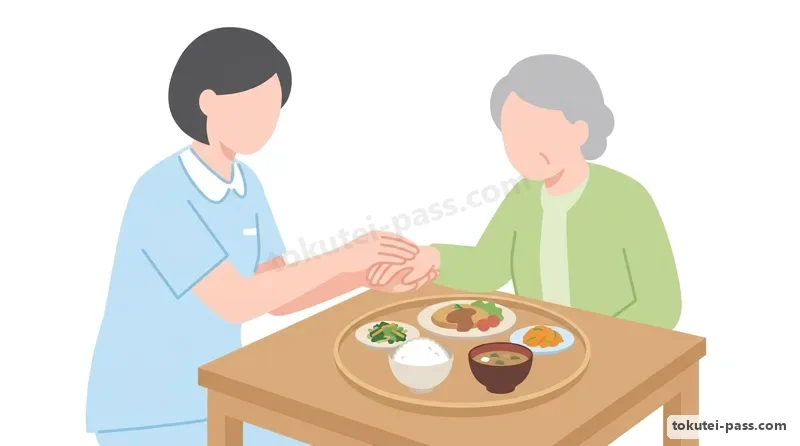
食事の配膳位置やテーブル上の配置を説明するときは、時計の文字盤に例えて「6時の位置にご飯、12時の位置におかずがあります」と伝える「クロックポジション」が有効です。
When explaining meal placement on a tray or items on a table, the 'Clock Position' method—likening the layout to a clock face ('rice is at 6 o'clock, main dish is at 12 o'clock')—is highly effective.
また、利用者が覚えている家具や日用品の配置を無断で変えないようにし、掃除等で動かした場合は必ず元の定位置に戻します。
Never rearrange furniture or daily items that the user has memorized without permission, and always return items moved during cleaning to their exact original positions.
弱視(ロービジョン)の人には、大きく太い文字、背景とのコントラストが明確な配色(黒地に白文字や黄色文字)、拡大読書器や音声読み上げ機器、点字などを活用します。
For persons with low vision, utilize large bold print, high-contrast color schemes (white or yellow text on a black background), video magnifiers, screen readers, and Braille.
Key points
- 触れる前に必ず名乗って声をかけ、「これ・あそこ」などの指示代名詞を使わず具体的に伝える
Always identify yourself and speak before touching; avoid vague pronouns ('this/over there') and describe locations concretely - 時計の文字盤で位置を示す「クロックポジション」の活用と、室内の物を勝手に動かさない配慮
Use the 'Clock Position' for meals and never move indoor items without returning them to their fixed places
| Word | Meaning |
|---|---|
| クロックポジション(時計の文字盤による位置説明) | Clock Position (explaining layout using a clock face) |
| 指示代名詞(これ・それ・あそこ)の回避 | Avoiding demonstrative pronouns (this, that, over there) |
| 弱視(ロービジョン)とコントラスト配色 | Low vision and high-contrast color schemes |
| 点字・音声読み上げソフト・拡大読書器 | Braille, voice reading devices, and video magnifiers |
失語症・構音障害・知的障害・ASDのある人とのコミュニケーション
Communication with Persons with Aphasia, Dysarthria, Intellectual Disabilities, or ASD
脳血管疾患等による「運動性失語(ブローカ失語)」は、相手の話は比較的理解できるものの言葉がうまく出ないため、「はい」「いいえ」で答えられる質問や絵カード・文字盤を活用し、焦らせずに待ちます。
In 'Motor Aphasia' (Broca's aphasia) following cerebrovascular disease, comprehension is relatively preserved but speaking is difficult; use Yes/No questions, picture cards, or letter boards and wait patiently without rushing.
一方、「感覚性失語(ウェルニッケ失語)」は滑らかに話せても言葉の意味理解が困難で言い間違い(錯語)が多いため、短い文とともに実物や写真・ジェスチャーを示して伝えます。
Conversely, in 'Sensory Aphasia' (Wernicke's aphasia), speech is fluent but verbal comprehension is impaired with frequent word substitutions (paraphasia); use short sentences paired with real objects, photos, and gestures.
発声や発音の筋肉が麻痺する「構音障害」では、言語理解や読み書き能力は保たれているため、五十音表や筆談、携帯用会話補助装置などが有効です。
In 'Dysarthria' caused by paralysis of speech muscles, language comprehension and reading/writing abilities remain intact, making 50-sound kana boards, written notes, and portable communication devices effective.
知的障害のある人には、抽象的・曖昧な表現を避け、具体的でわかりやすい短い言葉で一度に1つずつ伝え、理解できたかを確認しながら進めます。
For persons with intellectual disabilities, avoid abstract or ambiguous expressions; convey one thing at a time using short, concrete, easy-to-understand words while confirming comprehension.
自閉スペクトラム症(ASD)のある人は耳からの言葉よりも視覚的情報の方が理解しやすいため、絵カードやスケジュール表で「いつ・どこで・何をするか」を見通せるように構造化します。
Persons with Autism Spectrum Disorder (ASD) process visual information more easily than spoken words alone; use picture cards and visual schedules ('visual structuring') so they can foresee 'when, where, and what' will happen.
Key points
- 運動性(ブローカ)失語は理解良好・発話困難(「はい/いいえ」質問が有効)、感覚性(ウェルニッケ)失語は理解困難
Motor (Broca's) aphasia has good comprehension but difficulty speaking (Yes/No questions work well); Sensory (Wernicke's) aphasia impairs comprehension - 構音障害は言語理解が保たれるため筆談や五十音表が有効、ASDには視覚的構造化が有効
Dysarthria preserves language comprehension so written notes/kana boards work well; visual structuring is effective for ASD
| Word | Meaning |
|---|---|
| 運動性失語(ブローカ失語)と感覚性失語(ウェルニッケ失語) | Motor aphasia (Broca's) and Sensory aphasia (Wernicke's) |
| 構音障害と五十音表 | Dysarthria and 50-sound kana board |
| 絵カード・コミュニケーションボード | Picture cards and Communication boards |
| 視覚的構造化(スケジュール提示) | Visual structuring (presenting schedules visually) |
認知症・抑うつ状態のある人とのコミュニケーション
Communication with Persons with Dementia or Depressive States
認知症のある人は、記憶障害や見当識障害によって強い不安や混乱を抱えています。そのため、忘れていることや事実と異なる言動を指摘・否定・説得・叱責しないことが鉄則です。
Persons with dementia experience strong anxiety and confusion due to memory impairment and disorientation. Therefore, the golden rule is never to point out mistakes, deny, argue with, or scold them.
「財布を盗まれた」という物盗られ妄想や、「家に帰りたい」という帰宅願望に対しては、「大変でしたね」「心配ですね」とまず不安な感情を受け止め、一緒に探したりお茶を飲みながら話を聴いたりして安心感を届けます。
When facing delusions of theft ('someone stole my wallet') or a desire to go home ('I want to go home'), first accept their anxious feelings ('That must be worrying') and search together or chat over tea to provide reassurance.
一度に多くの情報を早口で伝えると混乱を招くため、視線を合わせて穏やかな笑顔で、短くシンプルに1つずつ声をかけます。
Giving too much information rapidly causes confusion; match their eye level with a gentle smile and speak in short, simple phrases one item at a time.
一方、「抑うつ状態(うつ病)」のある人は、自責感や無力感が強く、自分を追い詰めている状態にあります。
Meanwhile, persons in a 'depressive state' (depression) suffer from intense self-blame and helplessness, already pushing themselves to the limit.
そのため「頑張ってください」「元気を出して」といった安易な励ましは本人の心理的負担をさらに強めるため避け、「つらいですね」と苦痛に寄り添いながら見守る関わりを行います。
Therefore, avoid casual encouragement like 'Do your best!' (Ganbatte) or 'Cheer up!', which increases psychological pressure; instead, empathize with their distress ('It must be hard for you') and watch over them calmly.
Key points
- 認知症の妄想や帰宅願望には否定や説得をせず、不安な感情を受容して一緒に行動する
Do not deny or argue with delusions or desire to go home in dementia; accept their anxious feelings and act together - 抑うつ状態の人には「頑張れ」と励まさず、つらい気持ちに共感して休息と見守りを優先する
Do not tell depressed individuals to 'Do your best!'; empathize with their pain and prioritize rest and supportive observation
| Word | Meaning |
|---|---|
| 物盗られ妄想と帰宅願望への対応 | Responding to delusions of theft and desire to go home |
| 否定・説得・叱責の禁止 | Prohibition of denial, persuasion, and scolding |
| 感情の受容と共感 | Acceptance and empathy toward feelings |
| 抑うつ状態への「頑張れ」の回避 | Avoiding 'Do your best!' encouragement in depressive states |
介護記録の記述原則(客観的事実と主観的判断)と個人情報保護
Principles of Care Recording (Objective Facts vs. Subjective Judgments) and Privacy Protection
介護記録は、チーム全体でケアの継続性と一貫性を保ち、介護過程の評価や医療職・家族との情報共有を行うための重要な公的文書です。
Care records are vital official documents that maintain continuity and consistency of care across the team, evaluate the care process, and share information with medical staff and families.
記録を書く際は「5W1H(いつ・どこで・だれが・なにを・なぜ・どのように)」を意識し、観察した「客観的事実(利用者の発言やバイタル数値など)」と介護福祉職の「主観的判断・推測(〜と思う、〜だろう)」を明確に区別して記載します。
When writing records, apply '5W1H' and clearly distinguish between observed 'Objective Facts' (exact user quotes, vital signs) and the care worker's 'Subjective Judgments or Speculations' ('I think...', 'probably...').
利用者の発言や訴えは「 」(かぎ括弧)を用いてそのまま正確に記録し、ケアの実施後は記憶が曖昧にならないうちに速やかに記録することが原則です。
User statements and complaints should be recorded verbatim using quotation marks, and records must in principle be written promptly after care before memory fades.
また、介護記録やフェイスシートには重大な個人情報やプライバシーが含まれているため、スタッフルームの鍵のかかる保管庫で管理し、パソコンやタブレット端末にはパスワードを設定して情報漏洩を防ぎます。
Because care records and face sheets contain sensitive personal information and privacy details, store them in locked cabinets in the staff room and set passwords on computers and tablets to prevent data leaks.
SNS等のインターネット上へ業務中に知り得た情報や写真を投稿することは、たとえ名前を伏せていても秘密保持義務違反およびプライバシー侵害となるため厳禁です。
Posting information or photos obtained during work onto social media (SNS)—even anonymously—violates the duty of confidentiality and infringes privacy, and is strictly prohibited.
Key points
- 介護記録では「客観的事実」と「主観的解釈・推測」を明確に区別して5W1Hで記述する
In care records, clearly separate 'Objective Facts' from 'Subjective Interpretations' using 5W1H - 利用者の発言はそのまま記録し、記録物の施錠管理とSNS等への情報漏洩防止を徹底する
Record user quotes verbatim, store records in locked cabinets, and strictly prevent social media (SNS) leaks
| Word | Meaning |
|---|---|
| 客観的事実と主観的判断の区別 | Distinguishing Objective Facts and Subjective Judgments |
| 5W1Hによる正確な介護記録 | Accurate care recording using 5W1H |
| フェイスシートと介護経過記録 | Face Sheet and Care Progress Records |
| 個人情報保護と情報漏洩防止 | Personal information protection and preventing data leaks |
申し送り・サービス担当者会議・事例検討会とチームコミュニケーション
Shift Handovers, Service Representative Meetings, Case Studies, and Team Communication
勤務交代時に行う「申し送り」では、次の勤務者が安全かつ継続的にケアを引き継げるよう、利用者のいつもと違う状態変化や医療職からの指示など重要事項を簡潔・正確に伝達します。
During 'Shift Handovers' (Moushiokuri), concisely and accurately convey unusual changes in user condition and medical instructions so the next shift can continue care safely.
「報告・連絡・相談(ホウレンソウ)」を徹底し、ヒヤリ・ハットや体調変化を発見した際は、自己判断で抱え込まずに速やかにリーダーや医療職へ報告します。
Practice thorough 'Reporting, Contacting, and Consulting' (Hou-Ren-Sou); when discovering near-misses or physical changes, report promptly to leaders or medical staff rather than handling them alone.
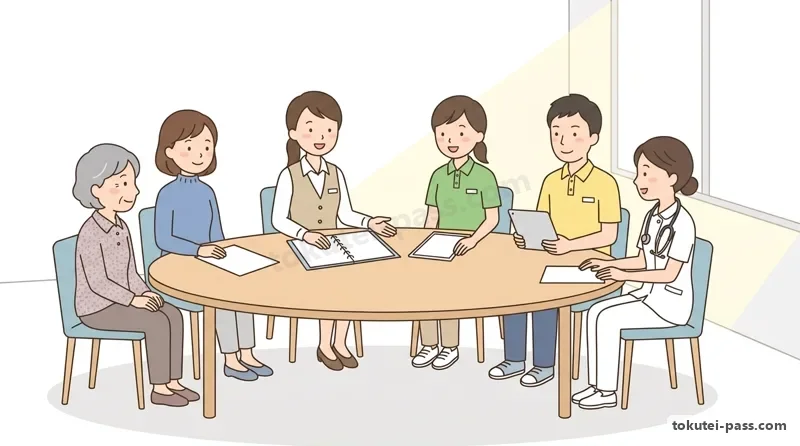
多職種が集まってケアプランの目標や役割分担を協議する「サービス担当者会議」や施設内の「ケアカンファレンス」では、介護福祉職は日常の生活場面で捉えた利用者の意向やできる力を専門的視点から発信します。
In 'Service Representative Meetings' and facility 'Care Conferences' where multidisciplinary staff discuss care plan goals and roles, care workers share the user's wishes and daily strengths observed on the floor.
また、実践事例を持ち寄って多角的に検討し気づきを深める「事例検討会」では、発表者を批判するのではなく、参加者全員が建設的に意見を出し合ってケアの質向上につなげます。
In 'Case Study Meetings' (Jirei Kentoukai) aimed at examining practice cases from multiple angles, participants engage in constructive discussion to improve care quality without criticizing the presenter.
事例検討会などで配布資料を作成する際は、個人が特定されないよう氏名や地名を記号化(匿名化)し、終了後に資料をすべて回収するなど倫理的配慮を徹底します。
When preparing handouts for case study meetings, strictly protect personal information by anonymizing names and locations with symbols and collecting all handouts after the session.
Key points
- 申し送りは状態変化など重要事項を簡潔に引き継ぎ、ホウレンソウ(報告・連絡・相談)を徹底する
Keep shift handovers concise regarding status changes and practice thorough Reporting, Contacting, and Consulting (Hou-Ren-Sou) - 事例検討会では発表者を批判せず建設的に討議し、資料の匿名化と回収を徹底する
In case study meetings, hold constructive discussions without criticizing the presenter, and enforce anonymization and handout collection
| Word | Meaning |
|---|---|
| 申し送りと報告・連絡・相談 | Shift handover (Moushiokuri) and Hou-Ren-Sou (Report, Contact, Consult) |
| サービス担当者会議とケアカンファレンス | Service Representative Meeting and Care Conference |
| 事例検討会と建設的討議 | Case study meeting (Jirei Kentoukai) and constructive discussion |
| 事例資料の匿名化と回収 | Anonymization and collection of case study materials |
Communication Skills
Practice this chapter in the appOfficial references
- 公益財団法人社会福祉振興・試験センター「介護福祉士国家試験 試験科目別出題基準」 — https://www.sssc.or.jp/kaigo/kijun/index.html
- 厚生労働省「介護福祉士養成課程 カリキュラム(コミュニケーション技術)」 — https://www.mhlw.go.jp/stf/seisakunitsuite/bunya/hukushi_kaigo/seikatsuhogo/kaigo-fukushishi/index.html