Front Desk Operations Basics (Reservations, Check-in, In-House Service & Billing)
フロント業務の基本(予約・チェックイン・滞在対応・精算)
Accommodation (Hotel) · 宿泊分野 · Written by Tokutei Pass based on the official study texts; not copied verbatim.
宿泊施設の4分類とフロント(レセプション)の役割
Four Types of Accommodation Facilities and the Role of the Front Desk
宿泊施設は大きく4つに分かれます。「旅館」は畳の和室や温泉、地元食材の夕食・朝食を提供する日本伝統の施設です。「シティホテル」は都市部にあり、多彩な客室やレストラン、宴会場、会議室を備えています。
Accommodation facilities are broadly divided into four types. A 'Ryokan' is a traditional Japanese inn offering tatami rooms, hot springs (Onsen), and dinner and breakfast made with local ingredients. A 'City Hotel' is located in urban areas and features diverse guest rooms, restaurants, banquet halls, and meeting rooms.
「ビジネスホテル」は駅の近くなどに立地し、出張客向けに機能的なシングルルームを中心に提供します。「リゾートホテル」は海や山、高原などの観光地にあり、長期滞在や休養・アクティビティに適しています。
A 'Business Hotel' is typically located near train stations and mainly provides functional single rooms for business travelers. A 'Resort Hotel' is situated in tourist destinations such as beaches, mountains, or highlands, suited for long stays, relaxation, and leisure activities.
ホテルや旅館には、フロントや客室係が属する「宿泊部門」、レストランやバーを運営する「料飲部門」、婚礼や会議を扱う「宴会部門」、客室清掃を担う「ハウスキーピング部門」、企画広報や管理部門があります。
Hotels and ryokan consist of several departments: the 'Rooms Division' (front desk and room attendants), 'Food and Beverage (F&B) Division' operating restaurants and bars, 'Banquet Division' handling weddings and conferences, 'Housekeeping Division' for room cleaning, plus Marketing/PR and Administration.
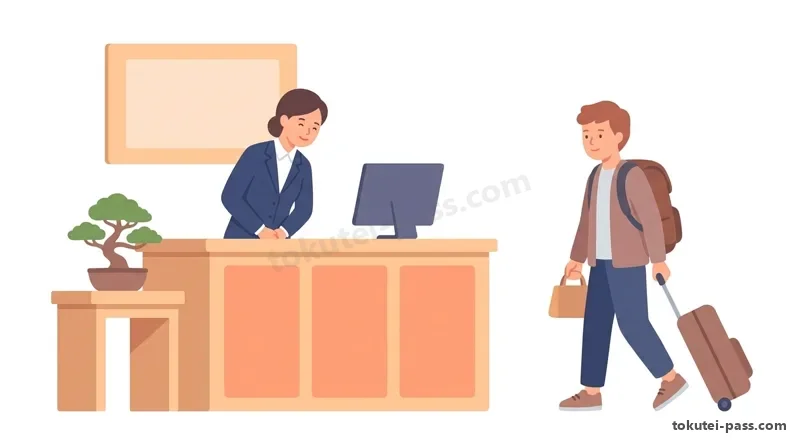
その中でフロント(レセプション)は、ご到着時のお出迎えからご出発時のお見送りまで各種手続きや案内を担う「宿泊施設の顔」です。施設全体の第一印象を左右するため、正しい礼儀作法と丁寧な言葉遣いが不可欠です。
Among these, the front desk (reception) serves as the 'face of the accommodation facility', handling all procedures and guidance from welcoming arriving guests to seeing off departing guests. Because it shapes the overall impression of the property, proper etiquette and polite language are essential.
Key points
- 宿泊施設の代表4分類は、旅館・シティホテル・ビジネスホテル・リゾートホテルである。
The four main types of lodging facilities are Ryokan, City Hotels, Business Hotels, and Resort Hotels. - フロント(レセプション)はお出迎えからお見送りまでを担う「宿泊施設の顔」である。
The front desk (reception) is the 'face of the facility', responsible for guest care from arrival to departure. - 館内には宿泊部門・料飲部門・宴会部門・ハウスキーピング部門などがあり連携して運営される。
Departments such as Rooms, Food & Beverage, Banquet, and Housekeeping work together to operate the facility.
| Word | Meaning |
|---|---|
| 宿泊施設の顔 | face of the accommodation facility |
| 旅館・シティホテル | traditional Japanese inn (Ryokan) and City Hotel |
| ビジネスホテル・リゾートホテル | Business Hotel and Resort Hotel |
| 宿泊部門・料飲部門 | Rooms Division and Food & Beverage (F&B) Division |
| 礼儀作法 | etiquette and proper manners |
客室タイプと空室・満室、宿泊プラン・料金の仕組み
Room Types, Vacancy Status, Accommodation Plans, and Rate Structure
客室タイプはベッド数や構造で区分されます。1人用ベッド1台の「シングルルーム」、2人用の大型ベッド1台の「ダブルルーム」、ベッド2台の「ツインルーム」、3台の「トリプルルーム」、リビング付きの高級な「スイートルーム」があります。
Guest room types are classified by bed count and layout: a 'Single Room' has one bed for one guest, a 'Double Room' has one large bed for two guests, a 'Twin Room' has two beds, a 'Triple Room' has three beds, and a 'Suite Room' is a luxury room with a separate living area.
また、畳敷きで布団を敷く「和室」、カーペットにベッドを置く「洋室」、両方を備えた「和洋室」、隣り合う2部屋を内扉で行き来できる家族向けの「コネクティングルーム」などの特徴を正確に把握しておきます。
Other room types include 'Washitsu' (Japanese-style room with tatami mats and futon bedding), 'Yoshitsu' (Western-style room with beds on carpet), 'Wayoshitsu' (combined Japanese-Western room), and 'Connecting Rooms' (two adjacent rooms linked by an internal door, ideal for families).
予約の問い合わせを受けたら、希望日に部屋が空いている「空室」か、全室埋まっていて予約できない「満室」かをすぐ確認します。プランには夕食・朝食付きの「1泊2食付き」、朝食のみの「B&B」、食事なしの「素泊まり」、日帰りの「デイユース」があります。
When receiving a booking inquiry, staff must check whether rooms are available on the requested date ('Vacant / Kushitsu') or completely booked so no reservation can be made ('Full / Manshitsu'). Plans include '1 Night 2 Meals' (dinner and breakfast), 'B&B' (breakfast only), 'Room Only (Sudomari)', and 'Day-use'.
日本の宿泊施設では、基本の宿泊料金のほか、サービス料、自治体が課す「宿泊税」、温泉施設を利用する際にかかる「入湯税」などが発生する場合があるため、料金やチェックイン・アウト時間の詳細を事前に理解して案内します。
At lodging facilities in Japan, in addition to the base room rate, guests are often charged a service charge, a local 'Accommodation Tax', and a 'Bathing Tax (Nyutozei)' when staying at hot spring facilities. Staff must understand rate details and check-in/out times to answer inquiries accurately.
Key points
- ダブルは大型ベッド1台、ツインはベッド2台、コネクティングルームは内扉でつながる2室である。
A Double Room has 1 large bed, a Twin Room has 2 beds, and Connecting Rooms link 2 rooms via an inner door. - 部屋が空いている状態を「空室」、空きがなく予約できない状態を「満室」という。
When rooms are available it is called 'Vacant (Kushitsu)'; when no rooms are available it is called 'Full (Manshitsu)'. - 宿泊料金以外にサービス料・宿泊税・入湯税などが加算される場合がある。
In addition to the room rate, service charges, accommodation tax, and bathing tax may apply.
| Word | Meaning |
|---|---|
| シングル・ダブル・ツイン | Single, Double, and Twin rooms |
| スイートルーム・和洋室 | Suite Room and Japanese-Western room (Wayoshitsu) |
| コネクティングルーム | Connecting Room |
| 空室・満室 | Vacant (Kushitsu) and Full / No Vacancy (Manshitsu) |
| 素泊まり・デイユース | Room Only (Sudomari) and Day-use plan |
| 宿泊税・入湯税 | Accommodation Tax and Hot Spring Bathing Tax |
予約受付の経路とお客様情報の必須確認項目
Reservation Channels and Mandatory Guest Information to Confirm
宿泊予約の経路には、電話やメール、施設の自社ウェブサイト(ダイレクトブッキング)、店舗型の旅行会社(リアルエージェント)、インターネット上の旅行代理店である「OTA」、予約なしで当日来館する「ウォークイン」があります。
Reservation channels include telephone, email, the facility's own website (Direct Booking), brick-and-mortar travel agencies (Real Agents), online travel agencies ('OTAs'), and 'Walk-in' guests who arrive directly on the day without a prior reservation.
予約を受ける際には、無断不泊(ノーショー)を防ぎ最高のおもてなしを準備するため、お客様の個人情報を正確に聞き取り適切に管理します。必須項目は「宿泊日(泊数)」「氏名」「連絡先(電話番号・メールアドレス)」です。
When accepting a booking, staff must accurately collect and securely manage the guest's personal information to prevent no-shows and prepare the best hospitality. Mandatory items include 'Stay date (and nights)', 'Full name', and 'Contact details (phone number, email address)'.
さらに「宿泊人数(大人・子ども)」「部屋タイプ・プラン」「交通手段と到着予定時間」、そして命に関わる「食事のアレルギーの有無」を必ず確認します。車での来館なら駐車場、遅い到着なら夕食時間の調整が必要になります。
Furthermore, staff must confirm the 'Number of guests (adults and children)', 'Room type and plan', 'Mode of transportation and estimated arrival time', and life-critical 'Food allergies'. Arrival by car requires parking arrangements, and late arrival requires adjusting dinner times.
電話で予約を受けるときは、手元にメモと筆記用具を用意し、3コール以内に出て施設名と自分の名前を名乗ります。4コール以上待たせた場合は「お待たせいたしました」と詫び、聞き取った予約内容は必ず「復唱」して確認します。
When taking phone reservations, prepare a notepad and pen beforehand, answer within 3 rings, and state the facility name and your name. If answering after 4 or more rings, apologize for the wait, take notes carefully, and always 'repeat back (Fukusho)' the reservation details to confirm.
Key points
- 予約時は「宿泊日・氏名・連絡先・宿泊人数・交通手段と到着予定時間・食事のアレルギー」を確認する。
Confirm at booking: Stay date, Name, Contact info, Number of guests, Transport & arrival time, and Food allergies. - 事前確認により、予約当日に連絡なく来ない「ノーショー」を防ぎ、適切な受入準備を行う。
Confirming these details in advance prevents no-shows and allows the facility to prepare optimal service. - 予約電話は3コール以内に出て名乗り、予約内容をメモしながら必ず復唱確認する。
Answer phone calls within 3 rings, state your name, take notes, and repeat back the booking details.
| Word | Meaning |
|---|---|
| ウォークイン | Walk-in guest (without prior reservation) |
| ノーショー(無断不泊) | No-show (failing to arrive without notice) |
| 到着予定時間 | estimated time of arrival |
| 食事のアレルギー確認 | confirming food allergies |
| 復唱 | repeating back information to confirm (Fukusho) |
予約のキャンセル・変更調整と宿泊後の問い合わせ対応
Handling Cancellations, Modifications, and Post-Stay Inquiries
お客様の都合で宿泊予約を取消し(キャンセル)される場合は、宿泊施設が宿泊約款などで定めた「キャンセルポリシー」に従い、解約日に応じたキャンセル料(違約金)をお支払いいただく必要があります。
When a guest cancels a reservation for personal reasons, they are required to pay a cancellation fee (penalty) in accordance with the 'Cancellation Policy' stipulated in the facility's Accommodation Terms and Conditions (Shukuhaku Yakkan).
キャンセル料の割合は宿泊日に近づくほど高くなり、当日キャンセルや無断不泊(ノーショー)では宿泊料金の100%となるのが一般的です。予約受付時にもキャンセル規定を丁寧に案内しておくとトラブルを防げます。
The cancellation fee percentage increases as the stay date approaches, typically reaching 100% of the room rate for same-day cancellations or no-shows. Explaining the cancellation policy clearly at the time of booking helps prevent disputes.
ただし、大型台風や大地震などの自然災害により公共交通機関が運休し、お客様の責めによらず来館できなくなった場合には、宿泊約款に基づきキャンセル料をいただかない(免除する)取扱いとなります。
However, if public transportation is suspended due to force majeure such as a severe typhoon or earthquake and the guest cannot arrive through no fault of their own, the cancellation fee is waived under the Accommodation Terms and Conditions.
また、予約人数や日程の変更、アレルギー対応の追加、宿泊後の忘れ物の問い合わせなど、いかなる問い合わせであっても、まず「宿泊日」と「予約者名」を必ず確認し、どのお客様の案件かを特定してから対応します。
For any inquiry via phone, email, or website—such as modifying booking details or asking about lost items after check-out—always confirm the 'Stay date' and 'Name of the person who made the reservation' first to accurately identify the guest before responding.
Key points
- 予約取消時は、施設が定めるキャンセルポリシー(宿泊約款)に従いキャンセル料を請求する。
When a booking is canceled, charge the cancellation fee according to the facility's Cancellation Policy. - 台風や災害による交通機関の運休など不可抗力の場合は、キャンセル料を徴収しない。
Waive cancellation fees when guests cannot arrive due to natural disasters or public transport suspension. - 予約変更や宿泊後の忘れ物の問い合わせでは、必ず「宿泊日」と「予約者名」を確認して特定する。
For booking changes or post-stay lost item inquiries, always confirm both the 'Stay date' and 'Booker's name' first.
| Word | Meaning |
|---|---|
| キャンセルポリシー | Cancellation Policy |
| 宿泊約款 | Accommodation Terms and Conditions (Shukuhaku Yakkan) |
| キャンセル料(違約金) | cancellation fee (penalty charge) |
| 予約者名の特定 | identifying the reservation holder's name |
チェックイン前の準備と宿泊者名簿・パスポート確認
Pre-Check-in Preparation, Guest Register, and Passport Verification
チェックイン開始前に、当日到着予定の顧客一覧(アライバルリスト)を確認し、記念日やアレルギー、貸出備品などの特別リクエストを点検します。清掃完了後の客室点検(ルームインスペクション)を終え、ルームキーを用意します。
Before check-in begins, review the daily arrival list to check special requests such as anniversaries, allergies, or loaned items. Ensure room inspections are completed after cleaning and prepare the room keys.
チェックインはお客様が施設に入って最初に体験する接客です。清潔感のある身だしなみと正しい姿勢、丁寧な言葉遣いでお迎えし、「宿泊予約の有無」「お客様の氏名」「ご予約人数」「ご予約のプラン」を確認します。
Check-in is the first service experience a guest has upon entering the facility. Welcome guests with neat grooming, proper posture, and polite language, then verify 'Whether they have a reservation', 'Guest name', 'Number of guests', and 'Reserved plan'.
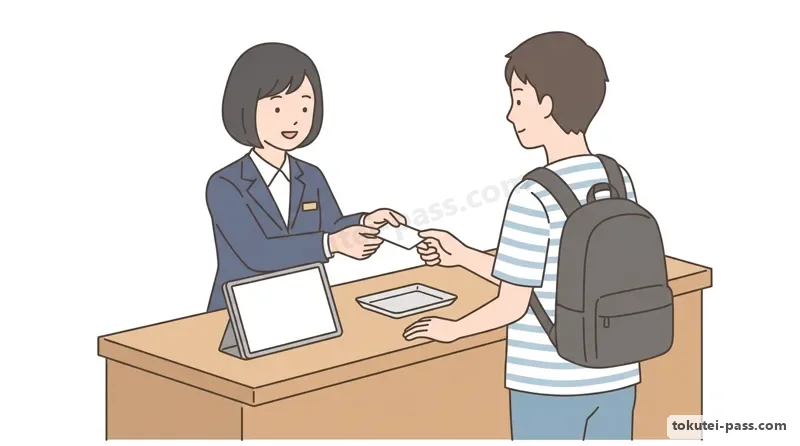
旅館業法に基づき、チェックイン時にはレジストレーションカード(宿泊者名簿・宿帳)に氏名・住所・職業・電話番号などを記入していただきます。記入済みの名簿は重大な個人情報であり、フロント上に放置せず厳重に保管します。
Under the Hotel Business Act, guests must fill out a registration card (Guest Register / Shukuhakusha Meibo) at check-in with their name, address, occupation, and phone number. Because it contains personal information, store it securely and never leave it exposed on the counter.
特に「日本国内に住所を持たない外国人」のお客様が宿泊する場合は、氏名などに加えて「国籍」と「旅券番号」を記入していただき、必ずパスポート(旅券)の提示を受けてコピーを取り、一定期間保存することが法律で義務づけられています。
In particular, when a 'foreign guest who does not have an address in Japan' stays at the facility, Japanese law requires recording their nationality and passport number, asking them to present their passport, and making and keeping a copy of the passport.
Key points
- チェックイン時は予約の有無・氏名・予約人数・予約プランを確認し、宿泊者名簿へ記入してもらう。
At check-in, confirm booking status, name, party size, and plan, and have the guest fill out the Guest Register. - 日本国内に住所を持たない外国人客からは、必ずパスポートの提示を受けてコピーを保管する。
For foreign guests without an address in Japan, it is legally mandatory to check and keep a copy of their passport. - 宿泊者名簿(レジストレーションカード)は個人情報のため、外部に漏れないよう厳重に管理する。
The Guest Register (Registration Card) contains personal data and must be managed strictly to prevent leakage.
| Word | Meaning |
|---|---|
| アライバルリスト | Arrival List |
| ルームインスペクション | Room Inspection |
| 宿泊者名簿(レジストレーションカード) | Guest Register (Registration Card) |
| パスポート(旅券)のコピー保管 | presenting and keeping a copy of the passport |
ルームキーのお渡しと館内設備・非常口の説明
Handing Over the Room Key and Explaining Facilities & Emergency Exits
宿泊手続きと予約内容の確認が終わったら、お部屋のルームキー(またはカードキー)をお渡しします。キーは相手から見て正面の向きにし、防犯上、周囲の他人に部屋番号が聞こえないよう書面を示しながら両手で丁寧に渡します。
Once reservation details are confirmed, hand over the room key (or card key). Orient the key so it faces the guest right-side up, and hand it over with both hands while pointing to the written room number rather than saying the room number aloud for security.
続いて、お客様が館内で迷わず安心して過ごせるよう、客室への行き方(エレベーターの位置)、朝食・夕食会場や大浴場などの場所と利用可能時間をわかりやすく説明します。
Next, so the guest does not get lost inside the building, clearly explain how to reach the guest room, as well as the locations and operating hours of venues such as breakfast/dinner restaurants and the large public bath (Daiyokujo).
さらに、火災や地震などの自然災害時に使用する「非常口」と「避難経路」を必ず丁寧に案内します。客室を利用できる時間は施設が定めた範囲内であり、一般的にはチェックインは14時または15時、チェックアウトは10時または11時です。
Furthermore, always carefully explain the 'Emergency Exits (Hijoguchi)' and 'Evacuation Routes (Hinankeiro)' to be used in case of fire or natural disasters. Room use is within the hours set by the facility; typically check-in is at 14:00 or 15:00, and check-out is at 10:00 or 11:00.
チェックイン前やチェックアウト後にお客様の手荷物を預かる「クローク業務」では、荷物引換証(タグ)をお渡しして大切に保管し、壊れ物や貴重品の有無を確認します。加湿器や充電器などの貸出備品も在庫を管理して対応します。
When storing guest luggage before check-in or after check-out ('Cloak service'), issue a claim tag, check for fragile items or valuables, and store the baggage safely. Also manage inventory for loaned items such as humidifiers and phone chargers.
Key points
- ルームキーは相手から見て正面の向きにし、防犯のため部屋番号を大声で言わずに両手で渡す。
Hand over the room key with both hands facing the guest, without speaking the room number aloud. - 客室や館内施設の案内とともに、火災・災害時の「非常口と避難経路」を必ず説明する。
Along with explaining room directions and facility hours, always explain the emergency exits and evacuation routes. - 一般的な利用時間は、チェックインが14時または15時、チェックアウトが10時または11時である。
Standard hours at most facilities are 14:00 or 15:00 for check-in, and 10:00 or 11:00 for check-out.
| Word | Meaning |
|---|---|
| ルームキー・カードキー | room key and card key |
| 非常口と避難経路 | emergency exit and evacuation route |
| 大浴場 | large public bath (Daiyokujo) |
| クローク業務・貸出備品 | cloak baggage service and loaned amenities |
滞在中の電話対応・他部門理解と客室訪問時のルール
In-House Phone Calls, Other Departments' Duties, and Guest Room Entry Rules
ご滞在中のお客様からフロントへ内線電話があった際は、聞き取りやすいよう「はっきりとゆっくり」話します。ルームサービスの注文やモーニングコール(目覚まし電話)の依頼は内容を復唱して確認し、必ずお客様が受話器を置いてから電話を切ります。
When receiving an internal phone call at the front desk from an in-house guest, speak 'clearly and slowly' so you are easy to understand. Repeat back room service orders or wake-up call requests to confirm, and always wait until the guest hangs up first before hanging up.
フロントには館内設備だけでなく、周辺の飲食店や観光地、交通機関などの館外情報や外貨両替の問い合わせも多く寄せられます。日頃から幅広い地域知識を身につけ、正確に案内できるようにします。
During their stay, guests frequently ask the front desk not only about in-house facilities, but also about nearby restaurants, sightseeing spots, transportation, and currency exchange. Acquire broad local knowledge to answer requests smoothly.
また、玄関でお出迎え・お見送りをし最初にフロントへ案内する「ドアマン」、客室清掃とアメニティ補充を行う「ハウスキーパー」、旅館で部屋案内や食事提供を担う「仲居」、手配専門の「コンシェルジュ」の業務も理解しておきます。
Front desk staff must also understand other departments: the 'Doorman' greets/sees off guests at the entrance and guides arriving guests to the front desk first; the 'Housekeeper' cleans rooms and sets amenities; the 'Nakai' (ryokan only) guides guests to rooms and serves meals; the 'Concierge' handles specialized arrangements.
アメニティのお届けやルームサービスなどで宿泊中の客室に入る際は、必ずドアをノックするか呼び鈴を鳴らし、お客様から「入ってください」と許可を得てから入室します。許可なくむやみに客室内へ入ることは絶対に禁物です。
When entering an occupied guest room to deliver amenities or room service, you must always knock on the door or ring the bell and wait for the guest's permission ('Please come in') before entering. Never enter a guest room without permission.
Key points
- 滞在客からの電話は「はっきりとゆっくり」話し、注文は復唱確認し、お客様が切ってから受話器を置く。
Speak clearly and slowly on in-house calls, repeat back room service orders, and let the guest hang up first. - ドアマン・ハウスキーパー・仲居(旅館のみ)・コンシェルジュなど他部門の役割を把握して連携する。
Understand the duties of the Doorman, Housekeeper, Nakai (ryokan only), and Concierge to coordinate guest care. - 客室へ入る際は必ずノックまたは呼び鈴を鳴らし、「入ってください」と許可を得てから入室する。
Always knock or ring the bell and obtain the guest's permission ('Please come in') before entering a guest room.
| Word | Meaning |
|---|---|
| ルームサービス・モーニングコール | room service and wake-up call (morning call) |
| ドアマン・ハウスキーパー | Doorman and Housekeeper |
| 仲居業務(旅館) | Nakai room attendant duties (Ryokan only) |
| コンシェルジュ | Concierge |
| 入室許可の確認 | confirming permission to enter a guest room |
チェックアウト・館内利用の確認と会計精算・お見送り
Check-out, Verifying In-House Charges, Billing, and Seeing Guests Off
チェックアウト・会計業務は、ご宿泊を終えて出発されるお客様の手続きと精算を行う業務です。出発後の列車や飛行機などのご予定に影響が出ないよう、迅速かつ正確に手続きを進めます。
Check-out and accounting operations involve completing departure procedures and settling payments when guests finish their stay. Proceed smoothly and accurately so as not to affect the guest's post-checkout travel plans.
まずルームキーを返却していただき、宿泊プランに含まれない追加の飲料(ミニバー等)、ルームサービス、マッサージなどの「館内利用」の有無と内容をお客様に確認します。
First, collect the room key and verify any 'In-house charges (Kannai riyo)'—services or beverages used inside the facility that are not included in the accommodation plan, such as extra drinks, minibar items, room service, or massage.
会計(キャッシャー)では、宿泊料金・館内利用分・サービス料・税金を記載した「請求明細書」を発行してお客様に提示し、金額に誤りがないか確認してから、現金やクレジットカード、電子マネーなどで精算します。
In accounting (cashier work), issue an 'Itemized Billing Statement (Seikyu Meisaisho)' listing the room rate, in-house charges, service charge, and taxes, show it to the guest to verify the amount, and process payment via cash, credit card, e-money, or vouchers.
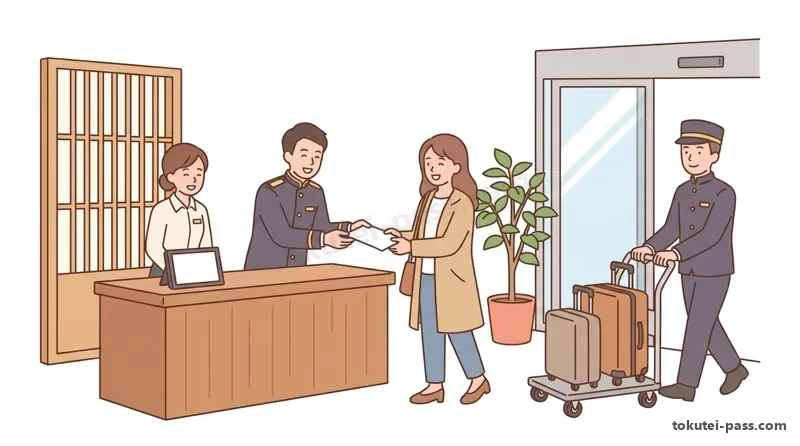
代金を受領したら「領収書」を発行してお渡しします。なお、日本にはチップを受け取る習慣はありませんが、その代わりにサービス料を宿泊料金に含めるか別途加算して請求します。最後に感謝を込めてお見送りします。
After receiving payment, issue and hand over an official 'Receipt (Ryoshusho)'. Note that Japan has no custom of receiving tips; instead, a service charge is either included in the room rate or billed separately. Finally, thank the guest warmly and see them off.
Key points
- プラン外の飲料・ルームサービス・マッサージなどを「館内利用」といい、チェックアウト時に有無を確認する。
Services outside the plan (extra drinks, room service, massage) are called 'In-house charges' and are checked at check-out. - 「請求明細書」を提示して代金を請求し、お支払いいただいた後に「領収書」を発行して渡す。
Show the 'Itemized Billing Statement' to request payment, then issue the 'Receipt' after payment is completed. - 日本にはチップの文化はなく、サービス料を宿泊料金に含めるか別途請求する。
Japan has no tipping custom; a service charge is included in the room rate or billed separately.
| Word | Meaning |
|---|---|
| 館内利用 | in-house charges (Kannai riyo) |
| 会計(キャッシャー) | accounting / cashier operations |
| 請求明細書と領収書 | Itemized Billing Statement and Official Receipt |
| サービス料とチップ | service charge and tipping custom |
試験によく出るポイントと覚え方
Frequently Tested Points and Memory Tips
フロント業務では、「空室(部屋が空いている)」と「満室(空きがない)」、予約確認の必須項目(宿泊日・氏名・連絡先・人数・交通手段と到着予定時間・アレルギー)が頻出です。事前確認の目的は「ノーショー防止」です。
In front desk exams, distinguishing 'Vacant (Kushitsu)' vs 'Full (Manshitsu)' and the 6 mandatory reservation items (Stay date, Name, Contact, Party size, Transport & arrival time, Food allergies) are frequently tested. Remember the purpose of advance confirmation is 'preventing no-shows'.
チェックイン時に「日本国内に住所を持たない外国人客」からパスポートを提示してもらいコピーを保管する義務は、在留外国人とのひっかけ問題としてよく出題されます。
At check-in, the legal requirement to ask for a passport and keep a copy applies to 'foreign guests who do not have an address in Japan'—watch out for distractor options involving foreign residents living in Japan.
客室に入る際の「ノックまたは呼び鈴→『入ってください』の許可を得てから入室」と、電話を切る際の「必ずお客様が切ってから受話器を置く」は実技・学科ともに定番です。
The rule for entering a guest room ('Knock or ring the bell -> wait for the guest to say Please come in') and the phone rule ('Always wait for the guest to hang up first') appear regularly in both written and practical sections.
会計では、支払前に見せるのが「請求明細書」、支払後に渡すのが「領収書」という順序と、「日本にはチップの習慣がなくサービス料を請求する」という点を確実に覚えましょう。
For billing, memorize the document sequence: show the 'Itemized Billing Statement (Seikyu Meisaisho)' BEFORE payment, and hand over the 'Receipt (Ryoshusho)' AFTER payment; also remember Japan has no tipping culture and charges a service fee instead.
Key points
- 予約時確認:宿泊日・氏名・連絡先・人数・交通手段と到着時間・アレルギー(目的=ノーショー防止)。
Booking confirmation items: Stay date, Name, Contact, Party size, Transport & arrival time, Allergies (Goal = Prevent no-shows). - 変更や宿泊後の忘れ物問い合わせ:必ず「宿泊日」と「予約者名」を確認して顧客を特定する。
Booking changes or post-stay lost item inquiries: Always confirm both 'Stay date' and 'Booker's name' to identify the guest. - 外国人客のパスポートコピー保管義務:日本国内に住所を持たない外国人が対象(法律上の義務)。
Passport copy retention duty: Legally required for foreign guests who do not have an address in Japan. - 客室訪問:必ずノック・呼び鈴の後、お客様の「入ってください」の許可を得てから入る。
Entering an occupied room: Always knock or ring the bell and get permission ('Please come in') before entering. - 会計書類の順序:館内利用確認→「請求明細書」提示→代金支払い→「領収書」発行(チップ習慣なし)。
Billing order: Check in-house charges -> Show 'Billing Statement' -> Receive payment -> Issue 'Receipt' (No tipping in Japan).
| Word | Meaning |
|---|---|
| ノーショー防止 | preventing no-shows |
| パスポートの提示とコピー保管 | presenting and copying passports |
| 請求明細書→領収書 | Billing Statement -> Official Receipt sequence |
| 館内利用の確認 | verifying in-house charges |
Front Desk
Practice this chapter in the appOfficial references
- 全国旅館ホテル生活衛生同業組合連合会 特定技能1号評価試験(宿泊分野)学習用テキスト 第1章 フロントで行う主な業務 — https://www.zenryoren.jp/wp/wp-content/uploads/2024/06/240531_TG_manual_Fix2.pdf
- 国土交通省観光庁 宿泊分野特定技能1号評価試験実施要領 — https://www.mlit.go.jp/kankocho/content/001733699.pdf