Safety & Hygiene Management and Other Basic Knowledge (Disaster Preparedness, Emergency Response, Food Poisoning Prevention, Facility & Environment)
安全衛生管理およびその他基礎知識(防災・緊急対応・食中毒予防・施設管理・環境配慮)
Accommodation (Hotel) · 宿泊分野 · Written by Tokutei Pass based on the official study texts; not copied verbatim.
危機(リスク)の理解と日常の防災準備・避難経路確保
Understanding Risks, Daily Disaster Preparedness, and Securing Evacuation Routes
ホテルや旅館などの宿泊施設には毎日多くのお客様が滞在されるため、火災や地震・台風などの災害や事故からお客様の命と安全を守ることは、すべての宿泊スタッフにとって最も重要な任務です。
Because many guests stay at accommodation facilities every day, protecting guests' lives and safety from disasters such as fires and earthquakes is the most important duty of accommodation staff.
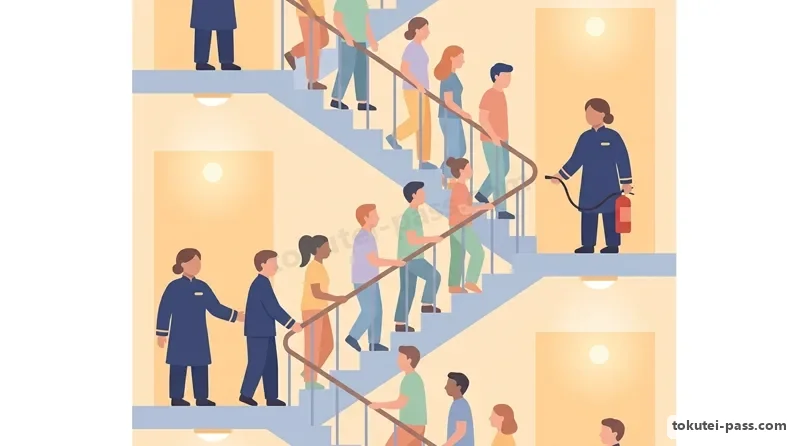
いざという緊急時に慌てず落ち着いて行動できるよう、日頃から「火災や地震などを想定した防災訓練(避難訓練・消火訓練・通報訓練)」に積極的に参加し、施設の「緊急時対応マニュアル」を熟知しておきます。
To act calmly in an emergency, actively participate in regular 'disaster drills for fires and earthquakes (evacuation drills and fire extinguishing drills)' and thoroughly familiarize yourself with the 'Emergency Response Manual'.
また日常業務のなかで、館内の「火災報知器」「消火器や屋内消火栓」、および「各客室の避難器具(避難はしごや救助袋など)」の設置場所と正しい使い方を必ず事前に確認しておきます。
In addition, confirm in advance the locations and operating instructions of in-house 'fire alarms (Kasai hochiki)', 'fire extinguishers (Shokaki)', and 'guest room evacuation equipment (such as evacuation ladders)'.
万一の際にお客様がいつでも安全かつ迅速に屋外へ避難できるよう、「非常口(非常扉)の周辺や避難通路・非常階段には絶対に荷物や備品などの物を置かない」よう毎日点検し整理します。
So that guests can evacuate safely at any time during an emergency, inspect and organize the facility daily, ensuring that you 'never place luggage or objects around emergency exits (Hijoguchi), evacuation corridors, or stairways'.
Key points
- 日頃から防災訓練に参加し、「緊急時対応マニュアル」や避難経路を把握しておく。
Participate regularly in disaster drills and know the 'Emergency Response Manual' and evacuation routes. - 館内の火災報知器・消火器・客室の避難器具の場所と使用方法を確認しておく。
Confirm the locations and usage of fire alarms, fire extinguishers, and guest room evacuation equipment in advance. - いつでも避難できるよう、非常口周辺や避難通路には物を置かず常に整理しておく。
Never place objects around emergency exits or evacuation corridors so guests can evacuate at any time.
| Word | Meaning |
|---|---|
| 防災訓練(避難訓練) | disaster drills and evacuation drills (Bosai kunren / Hinan kunren) |
| 火災報知器・消火器 | fire alarms and fire extinguishers (Kasai hochiki / Shokaki) |
| 非常口・避難通路 | emergency exits and evacuation corridors (Hijoguchi / Hinan tsuro) |
| 緊急時対応マニュアル | emergency response manual (Kinkyuji taio manual) |
急病人・感染症・不審物・不審者への備えと初期対応
Preparedness and Initial Response for Sudden Illness, Infectious Diseases, and Suspicious Objects/Persons
滞在中のお客様が急病になったり大きなけがをされたりした場合に備え、施設近隣の病院(夜間や休日の救急病院を含む)の場所や連絡先を把握しておき、緊急時にはただちに「119番」で救急車を手配します。
In preparation for cases where a staying guest suddenly falls ill or gets injured, know the locations and contact numbers of nearby hospitals (including night emergency hospitals), and call an ambulance immediately by dialing '119' in serious cases.
インフルエンザやノロウイルスなどの「感染症」が館内で発生・拡大しないよう、日頃のこまめな換気や手すり・ドアノブ等のアルコール消毒を徹底し、感染が疑われるお客様がいれば速やかに上司へ報告します。
To prevent the outbreak and spread of 'infectious diseases (Kansensho)' such as influenza or norovirus, practice thorough daily ventilation and alcohol sanitization, and promptly report to your supervisor if any guest is suspected of being infected.
また、ロビーや廊下など館内で持ち主不明の「不審物」を見つけたときは、爆発物や危険物のおそれがあるため「絶対に手を触れたり動かしたりせず」、すぐに上司や警備担当者に報告して指示を仰ぎます。
If you find an unattended 'suspicious object (Fushinbutsu)' inside the facility, 'never touch or move it' because of the danger of explosives; report it immediately to your supervisor or security personnel.
宿泊客以外の「不審者」が客室フロアなどに入り込まないよう常に周囲に目を配り、不審な人物を見かけた際は決して一人で無理に対応せず、上司や複数のスタッフと協力して安全に対応します。
Always pay attention to your surroundings so 'suspicious persons (Fushinsha)' who are not guests do not enter guest room floors; if you spot a suspicious person, do not confront them alone—coordinate with your supervisor and multiple staff members.
Key points
- 急病人発生時に備えて近隣の病院を把握し、緊急時は速やかに119番で救急車を手配する。
Know nearby hospitals in case of sudden guest illness, and promptly call an ambulance via 119 in emergencies. - 館内で不審物を発見した際は、危険防止のため触れずにただちに上司・責任者へ報告する。
When discovering a suspicious object inside the building, do not touch it—immediately report it to a supervisor. - 感染症の予防や不審者への警戒を怠らず、異常があればすぐに報告・情報共有する。
Stay vigilant against infectious diseases and suspicious persons, and immediately report and share any abnormalities.
| Word | Meaning |
|---|---|
| 急病人対応・救急車 | handling sudden illness and ambulances (Kyubyonin taio / Kyukyusha) |
| 感染症予防 | infectious disease prevention (Kansensho yobo) |
| 不審物・不審者 | suspicious objects and suspicious persons (Fushinbutsu / Fushinsha) |
| 触れずに報告する | reporting without touching (Furezuni hokoku suru) |
お客様の安全確保(個人情報保護・火災防止・盲導犬対応)
Ensuring Guest Safety (Personal Information Protection, Fire Prevention, and Guide Dogs)
お客様が安心して宿泊できるよう、レジストレーションカード(宿泊者名簿)やクレジットカード情報、客室番号などの「個人情報」は厳重に管理し、フロント上に放置したり外部へ漏らしたりしてはいけません。
So guests can stay with peace of mind, strictly manage 'personal information (Kojin joho)' such as guest registries, credit card details, and room numbers; never leave them unattended on the front counter or leak them outside.
日常の火災防止対策として、シーツ・浴衣・タオルなどの「リネン類」や段ボール、生ゴミ・紙くずなどの燃えやすい物を、ガスコンロやストーブなどの火気(火の気)の近くに絶対に置かないようにします。
For daily fire prevention, never place flammable items such as 'linens (sheets, towels, etc.)', cardboard boxes, or kitchen waste near open flames or heat sources such as stoves and heaters.
また客室清掃や喫煙所点検の際には、灰皿に残った「タバコの吸い殻」の火が完全に消えているかを必ず目視で確認し、水につけてから不燃性の専用容器に捨てるなど出火防止を徹底します。
When cleaning guest rooms or inspecting smoking areas, always verify that any 'cigarette butts (Tabako no suigara)' left in ashtrays are completely extinguished, dousing them in water before disposal to prevent fires.
ご高齢のお客様や障がいのあるお客様には転倒や事故がないよう丁寧にサポートし、視覚障がいのあるお客様が「盲導犬(や介助犬・聴導犬)」を伴って来館された場合は、法律に基づき決して断らずに受け入れます。
Provide attentive support to elderly guests and guests with disabilities to prevent falls or accidents. If a visually impaired guest arrives with a 'guide dog (Modoken, or service/hearing dog)', never refuse them—accepting assistance dogs is mandated by law.
Key points
- お客様の個人情報は厳重に保護し、第三者に見られたり外部に漏洩したりしないよう管理する。
Strictly protect guests' personal information so it is never seen by third parties or leaked outside. - リネン類やゴミを火気に近づけないこと、タバコの吸い殻の完全消火を確認することで火災を防ぐ。
Prevent fires by keeping linens and garbage away from heat sources and verifying cigarette butts are completely extinguished. - 盲導犬などの補助犬を伴うお客様の宿泊やレストラン利用を決して断ってはならない。
Never refuse accommodation or restaurant entry to guests accompanied by a guide dog (Modoken) or assistance dog.
| Word | Meaning |
|---|---|
| 個人情報保護 | personal information protection (Kojin joho hogo) |
| タバコの吸い殻の消火確認 | confirming cigarette butts are extinguished |
| リネン類(シーツ・タオル等) | linens (sheets, towels, etc.) |
| 盲導犬(身体障害者補助犬) | guide dogs and assistance dogs (Modoken) |
緊急時対応(エレベーター使用禁止・119番と110番・AED)
Emergency Response (Prohibition of Elevators, Dialing 119 vs. 110, and AED)
万一、館内で火災が発生した場合は、大声や非常ベルで周囲に知らせるとともにただちに消防署へ通報し、可能な範囲で消火器等による「初期消火」を行いつつ、お客様を安全な場所へ「避難誘導」します。
In the event a fire breaks out in the facility, alert those around you in a loud voice, notify the fire department, perform 'initial fire extinguishing (Shoki shoka)' with fire extinguishers to the extent possible, and 'guide guests to evacuate (Hinan yudo)' to a safe location.
火災や地震が発生した際、避難のために「エレベーターは絶対に使用してはいけません」。停電や故障により途中で停止して中に閉じ込められる危険があるため、必ず「非常階段」を使って避難誘導します。
When a fire or earthquake occurs, 'never use elevators for evacuation'. Because power outages can cause elevators to stop mid-shaft and trap people inside, always guide guests to evacuate using the 'emergency stairs (Hijo kaidan)'.
日本における緊急通報用電話番号は、火事(火災)や急病人・けが人(救急車)を呼ぶときは「119番」、事件・盗難・交通事故など警察を呼ぶときは「110番」です。緊急時に迷わないよう正確に覚えます。
In Japan, emergency telephone numbers are '119' for fires or medical emergencies (ambulances / fire department), and '110' for crimes, theft, or traffic accidents (police). Memorize both accurately so you never confuse them.
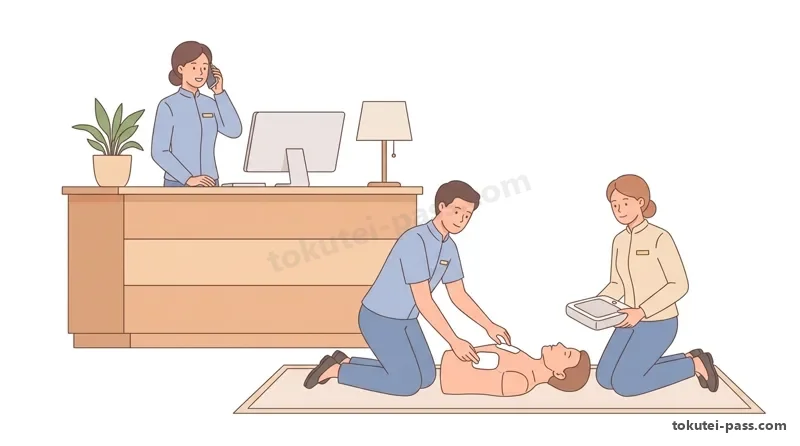
また、心臓がけいれんして血液を全身に送れなくなった人(心肺停止状態)に電気ショックを与えて命を救う医療機器が「AED(自動体外式除細動器)」です。フロントやロビー等の設置場所と使用方法を把握しておきます。
Additionally, the medical device that delivers an electric shock to save the life of a person in cardiac arrest is the 'AED (Automated External Defibrillator)'. Confirm its installation locations (such as the lobby) and how to use it.
Key points
- 火災や地震発生時の避難では「エレベーターは絶対に使わず」、必ず非常階段へ誘導する。
During a fire or earthquake evacuation, 'never use elevators'; always guide guests via the emergency stairs. - 緊急通報番号は、火事・救急車(消防署)が「119番」、事件・事故(警察)が「110番」である。
Emergency numbers in Japan: Fire & Ambulance (Fire Department) is '119'; Crime & Accidents (Police) is '110'. - 「AED(自動体外式除細動器)」は心肺停止時に電気ショックを行う救命機器であり、設置場所を把握しておく。
An 'AED (Automated External Defibrillator)' delivers an electric shock during cardiac arrest; know where it is located.
| Word | Meaning |
|---|---|
| 初期消火と避難誘導 | initial fire fighting and evacuation guidance (Shoki shoka / Hinan yudo) |
| エレベーター使用禁止 | prohibition of elevator use during emergencies |
| 119番(消防・救急)と110番(警察) | 119 (Fire & Ambulance) and 110 (Police) |
| AED(自動体外式除細動器) | AED (Automated External Defibrillator) |
従業員自身の衛生管理と健康管理(うがい・手洗い)
Staff Hygiene Management and Health Management (Gargling & Handwashing)
多くのお客様と接し、お食事や快適な客室を提供する宿泊施設では、そこで働く従業員自身の清潔な身だしなみと日常の衛生習慣が、施設全体の安全と衛生水準を支えています。
At accommodation facilities where staff interact with many guests and provide meals and guest rooms, each employee's clean grooming and hygiene habits support the hygiene standards of the entire facility.
常に洗濯されたしわや汚れのない「清潔な制服」を着用し、髪の毛や爪を短く清潔に整えます。また、お客様に不快感を与えたりお食事の香りを妨げたりするため、強い香りの香水や整髪料はつけません。
Always wear a laundered, 'clean uniform', and keep your hair and fingernails neat and clean. Do not wear strongly scented perfume or hair products, as they can cause discomfort to guests or interfere with meals.
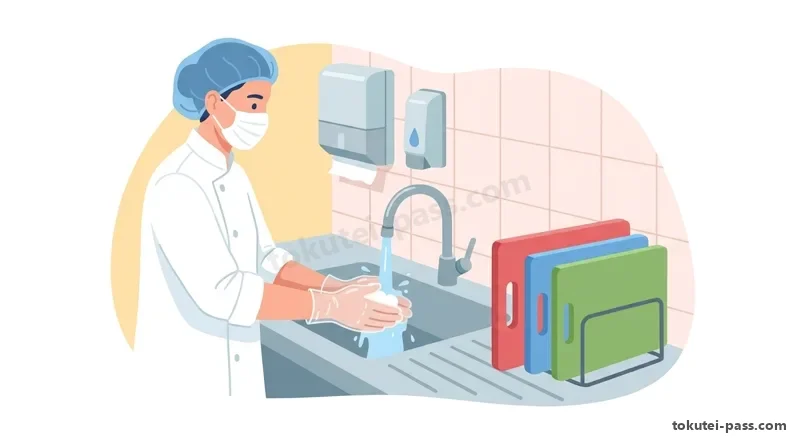
ウイルスや細菌を館内に持ち込まない・広げないための基本として、出勤時やトイレの後、客室清掃作業後、食事提供前などには、こまめな「うがい・手洗い」と手指のアルコール消毒を徹底します。
As the foundation for not bringing in or spreading viruses and bacteria, practice frequent 'gargling and handwashing (Ugai / Tearai)' and alcohol hand sanitization upon arriving at work, after using the restroom, after cleaning, and before serving food.
また日頃から十分な睡眠と栄養をとって健康管理に努め、万一発熱や咳、下痢・おう吐などの体調不良があるときは決して無理に出勤せず、速やかに上司へ報告して指示を仰ぎます。
Maintain your health through sufficient daily sleep and nutrition. If you experience poor health such as fever, diarrhea, or vomiting, do not force yourself to come to work; promptly report to your supervisor and follow their instructions.
Key points
- 常に清潔な制服を着用し、髪や爪を整え、強い香りの香水はつけない。
Always wear a clean uniform, keep hair and nails neat, and do not wear strongly scented perfume. - 感染症や食中毒を防ぐため、日常業務のなかでこまめに「うがい・手洗い」を行う。
To prevent infectious diseases and food poisoning, perform frequent 'gargling and handwashing' during daily work. - 発熱や下痢などの体調不良がある際は、自己判断で隠さず速やかに上司へ報告する。
If you have symptoms such as fever or diarrhea, do not hide them on your own judgment—report promptly to your supervisor.
| Word | Meaning |
|---|---|
| 清潔な制服と身だしなみ | clean uniform and grooming |
| うがい・手洗いの徹底 | thorough gargling and handwashing (Ugai / Tearai) |
| 手指のアルコール消毒 | alcohol hand sanitization |
| 健康管理と体調報告 | health management and reporting health condition |
館内衛生管理(気温・湿度の把握)と食中毒予防の3原則
Facility Hygiene (Checking Temperature & Humidity) and Three Principles of Food Poisoning Prevention
ロビーや客室などの館内および館外(エントランス周辺や駐車場など)は常に清潔に保ち、ゴミや汚れ、水濡れを見つけたときは放置せず「その場ですぐに掃除」して快適で安全な環境を維持します。
Keep both the interior and exterior (such as around the entrance) of the facility clean at all times; whenever you spot trash, dirt, or water spills, do not leave them unattended—'clean them up immediately on the spot'.
また、カビやダニ、害虫、および食中毒菌の発生・繁殖は気象条件に大きく左右されるため、「毎日の天気・気温・湿度」を必ず確認し、こまめな換気や除湿、適切な空調管理を行います。
Because the growth of mold, mites, pests, and food-poisoning bacteria depends heavily on weather conditions, check the 'daily weather, temperature, and humidity (Mainichi no tenki, kion, shitsudo)' and perform appropriate ventilation, dehumidification, and air conditioning.
飲食を提供する宿泊施設において、食中毒の発生はお客様の健康被害や営業停止につながる重大事故です。そのため「食中毒予防の3原則」である「①つけない」「②増やさない」「③やっつける」を厳守します。
In accommodation facilities that serve food and drinks, food poisoning is a serious accident that can lead to suspension of business. Therefore, strictly observe the 'Three Principles of Food Poisoning Prevention': '(1) Do not contaminate (Tsukenai)', '(2) Do not let bacteria multiply (Fuyasanai)', and '(3) Destroy bacteria (Yattsukeru)'.
「①つけない」は丁寧な手洗いや調理器具の洗浄・生の肉や魚の区分保管、「②増やさない」は速やかな冷蔵・冷凍保存(低温管理)、「③やっつける」は中心部までの十分な加熱調理や器具の殺菌消毒です。
'(1) Tsukenai' means handwashing, sanitizing utensils, and separating raw ingredients; '(2) Fuyasanai' means prompt refrigerated/frozen storage (low-temperature control); and '(3) Yattsukeru' means thorough cooking to the core and sterilizing utensils.
Key points
- 館内や館外の汚れは見つけたらすぐに掃除し、「毎日の天気・気温・湿度」を確認してカビや害虫を防ぐ。
Clean up any interior or exterior dirt immediately, and check 'daily weather, temperature, and humidity' to prevent mold and pests. - 食中毒予防の3原則は「①菌をつけない」「②菌を増やさない」「③菌をやっつける」である。
The 3 principles of food poisoning prevention are: '(1) Do not attach (Tsukenai)', '(2) Do not multiply (Fuyasanai)', and '(3) Destroy (Yattsukeru)'. - 手洗い・器具消毒(つけない)、低温保存(増やさない)、十分な加熱(やっつける)を徹底する。
Practice thorough handwashing/utensil sanitization (Tsukenai), low-temperature storage (Fuyasanai), and thorough heating (Yattsukeru).
| Word | Meaning |
|---|---|
| 天気・気温・湿度の確認 | checking daily weather, temperature, and humidity |
| カビ・害虫の予防 | preventing mold and pests (Kabi / Gaichu) |
| 食中毒予防の3原則 | Three Principles of Food Poisoning Prevention |
| つけない・増やさない・やっつける | Do not attach, Do not multiply, Destroy (Tsukenai / Fuyasanai / Yattsukeru) |
施設・設備管理とバックヤードの整理整頓(5S活動)
Facility & Equipment Management and Back-of-House Organization (5S Activities)
お客様に快適で安全に滞在していただくため、客室やロビー・大浴場などの共用部にあるエアコン(空調設備)、照明器具、給排水設備、家具・備品などに故障や破損がないか日常的に点検します。
So that guests can enjoy a comfortable and safe stay, check daily whether air conditioners (HVAC), lighting, plumbing, furniture, and fixtures in guest rooms and public areas have any malfunctions or damage.
もし点検中や清掃中に設備の不具合・異音・水漏れ・破損などを発見した場合は、決してそのまま放置せず、速やかに「施設管理担当者」や上司へ報告して修理を手配します。
If you discover any equipment defect or breakdown, do not leave it unattended; promptly report it to the 'facility management person in charge (Shisetsu kanri tantosha)' or your supervisor to arrange repairs.
またお客様から「階段や浴室に手すりがあると安心」「段差のある場所にスロープがほしい」といった設備面のご意見・ご要望をいただいた際は、漏れなく記録して施設改善(バリアフリー化)に活かします。
When guests share opinions or requests regarding facilities—such as 'it would be nice to have handrails on the stairs or in the bath' or 'I wish there were a ramp over the step'—record them accurately to help improve facility accessibility (barrier-free upgrades).
さらに従業員が働く事務室やリネン室・倉庫などのバックヤード(裏方)も常に整理整頓し、「5S(整理・整頓・清掃・清潔・しつけ)」を実践することで業務効率と職場の安全性を高めます。
Furthermore, keep back-of-house areas (Backyard) such as staff offices and storage rooms neat and organized, practicing '5S (Sort, Set in order, Shine, Standardize, Sustain)' to improve work efficiency and safety.
Key points
- 空調や照明・備品の状態を日常的に確認し、故障や不具合があればすぐに施設管理担当者へ報告する。
Check air conditioning, lighting, and fixtures daily, and immediately report any malfunction to the facility manager. - 手すりやスロープなどお客様からの設備要望を記録・共有し、より安全な施設づくりに活かす。
Record and share guest requests for equipment such as handrails and ramps to help create a safer facility. - バックヤード(裏方)でも5S(整理・整頓・清掃・清潔・しつけ)を徹底する。
Thoroughly practice 5S (Seiri, Seiton, Seiso, Seiketsu, Shitsuke) in back-of-house (backyard) areas as well.
| Word | Meaning |
|---|---|
| 設備・備品の日常点検 | daily inspection of equipment and fixtures |
| 施設管理担当者への報告 | reporting to the facility management person in charge |
| 手すり・スロープ(段差解消) | handrails (Tesuri) and ramps (Slopes) |
| 5S(整理・整頓・清掃・清潔・しつけ) | 5S activities (Seiri, Seiton, Seiso, Seiketsu, Shitsuke) |
環境への対応とSDGs(節電・節水・ゴミの分別・資源保護)
Environmental Considerations and SDGs (Saving Electricity & Water, Waste Sorting & Resource Conservation)
近年、宿泊業界においても地球環境を守り持続可能な社会を目指す「SDGs(持続可能な開発目標)」への積極的な取り組みが強く求められています。
In recent years, the accommodation industry is also expected to actively engage in 'SDGs (Sustainable Development Goals)' to protect the global environment and build a sustainable society.
日常業務のなかで誰でもできる環境配慮の基本は、使っていない部屋やバックヤードの照明・エアコンをこまめに消す「節電」と、清掃や皿洗い時に水を出しっ放しにしない「節水」です。
The basics of environmental consideration in daily work are 'saving electricity (Setsuden)' by turning off lights and air conditioners in unused rooms and back-of-house areas, and 'saving water (Sessui)' by not leaving water running during cleaning or dishwashing.
また、裏紙の活用や書類のデジタルデータ化によって「紙の無駄遣い」を減らし、施設内で出るゴミは自治体や施設のルールに従って「ゴミの分別(燃えるゴミ・資源ゴミ等)」を徹底します。
In addition, reduce 'paper waste' by reusing scrap paper and digitizing documents, and thoroughly practice 'waste sorting (Gomi no bunbetsu: burnable trash, recyclable resources, etc.)' according to local government and facility rules.
さらに、連泊時のシーツ交換を減らすエコ清掃の提案や、使い捨てプラスチック製アメニティの削減、食品ロス(フードロス)の削減、リサイクルや資源保護につながる工夫を積極的に実践します。
Furthermore, actively practice and propose ideas that lead to recycling and resource conservation, such as eco-cleaning (reducing sheet changes for multi-night stays), reducing plastic amenities, and reducing food loss.
Key points
- 照明や空調のこまめな消灯・調整による「節電」と、水を無駄にしない「節水」を心がける。
Practice 'saving electricity (Setsuden)' by turning off unused lights/AC and 'saving water (Sessui)' by avoiding water waste. - 紙の無駄遣いをなくし、ゴミの「分別」とリサイクルを徹底して環境負荷を減らす。
Eliminate paper waste and thoroughly practice 'waste sorting (Bunbetsu)' and recycling to reduce environmental impact. - SDGsの観点から、プラスチック削減や食品ロス削減、資源保護の取り組みを推進する。
From an SDGs perspective, promote initiatives for plastic reduction, food loss reduction, and resource conservation.
| Word | Meaning |
|---|---|
| SDGs(持続可能な開発目標) | SDGs (Sustainable Development Goals) |
| 節電・節水 | saving electricity and saving water (Setsuden / Sessui) |
| ゴミの分別とリサイクル | waste sorting and recycling (Gomi no bunbetsu / Recycle) |
| 資源保護・食品ロス削減 | resource conservation and food loss reduction |
試験でよく出るポイントと覚え方
Frequently Tested Points and Memory Tips
緊急時対応では、「火災・地震発生時の避難にエレベーターは絶対に使わない(非常階段を使う)」「火事・救急車=119番、事件・事故(警察)=110番」「心肺停止時に電気ショックを行う救命機器=AED」の3点が最頻出です。
In emergency response, the 3 most frequently tested items are: 'Never use elevators during a fire or earthquake (use emergency stairs)', 'Fire & Ambulance = 119, Police = 110', and 'Life-saving device for cardiac arrest = AED'.
安全確保とバリアフリーでは、「非常口や避難通路に荷物や物を置かない」「リネン類や生ゴミを火気に近づけない・タバコの吸い殻の消火確認」「盲導犬を伴うお客様は決して断らない」を確実に押さえましょう。
For safety and barrier-free service, firmly remember: 'Never place objects around emergency exits or evacuation corridors', 'Keep linens and garbage away from flames and verify cigarette butts are extinguished', and 'Never refuse a guide dog (Modoken)'.
衛生管理では、「食中毒予防の3原則=①菌をつけない・②菌を増やさない・③菌をやっつける」と、「カビや害虫予防のため毎日の天気・気温・湿度を確認する」がよく出題されます。
In hygiene management, 'Three Principles of Food Poisoning Prevention = (1) Tsukenai (Do not attach), (2) Fuyasanai (Do not multiply), (3) Yattsukeru (Destroy)' and 'Check daily weather, temperature, and humidity to prevent mold and pests' are frequently tested.
施設管理と環境配慮では、「設備の故障や不具合は施設管理担当者に報告する」「バックヤードの整理整頓(5S活動)」「節電・節水・紙の節約・ゴミの分別(SDGs)」が正誤問題の定番です。
In facility and environmental management, 'Report equipment malfunctions to the facility manager', 'Organize back-of-house areas (5S)', and 'Save electricity, save water, and sort garbage (SDGs)' are classic True/False topics.
Key points
- 火災・地震時はエレベーター使用禁止(非常階段で避難)。火事・救急は119番、警察は110番。
Never use elevators during a fire or earthquake (evacuate via emergency stairs). Dial 119 for Fire/Ambulance, 110 for Police. - 非常口や通路に物を置かない。盲導犬を伴うお客様は決して断らない。
Keep emergency exits and corridors clear of objects. Never refuse guests accompanied by a guide dog (Modoken). - 食中毒予防の3原則は「つけない・増やさない・やっつける」。毎日の天気・気温・湿度を確認する。
3 principles of food poisoning prevention: 'Tsukenai, Fuyasanai, Yattsukeru'. Check daily weather, temperature, and humidity. - 設備の不具合は施設管理担当者へ報告し、手すりやスロープ等のお客様要望も記録する。
Report equipment defects to the facility manager, and record guest requests for handrails or ramps. - 節電・節水・紙の節約・ゴミの分別・リサイクルで環境保全(SDGs)に取り組む。
Protect the environment (SDGs) through saving electricity, saving water, saving paper, sorting waste, and recycling.
| Word | Meaning |
|---|---|
| 非常階段での避難誘導 | evacuation guidance via emergency stairs |
| 119番・110番・AED | emergency numbers 119 & 110 and AED |
| つけない・増やさない・やっつける | Tsukenai, Fuyasanai, Yattsukeru (3 principles) |
| 節電・節水・ゴミの分別 | saving electricity, saving water, and sorting waste |
Safety, Hygiene & Basic Knowledge
Practice this chapter in the appOfficial references
- 全国旅館ホテル生活衛生同業組合連合会 特定技能1号評価試験(宿泊分野)学習用テキスト — https://www.zenryoren.jp/execution/
- 全国旅館ホテル生活衛生同業組合連合会 用語集(宿泊分野)学習用テキスト 日本語・英語併記版 — https://www.zenryoren.jp/execution/